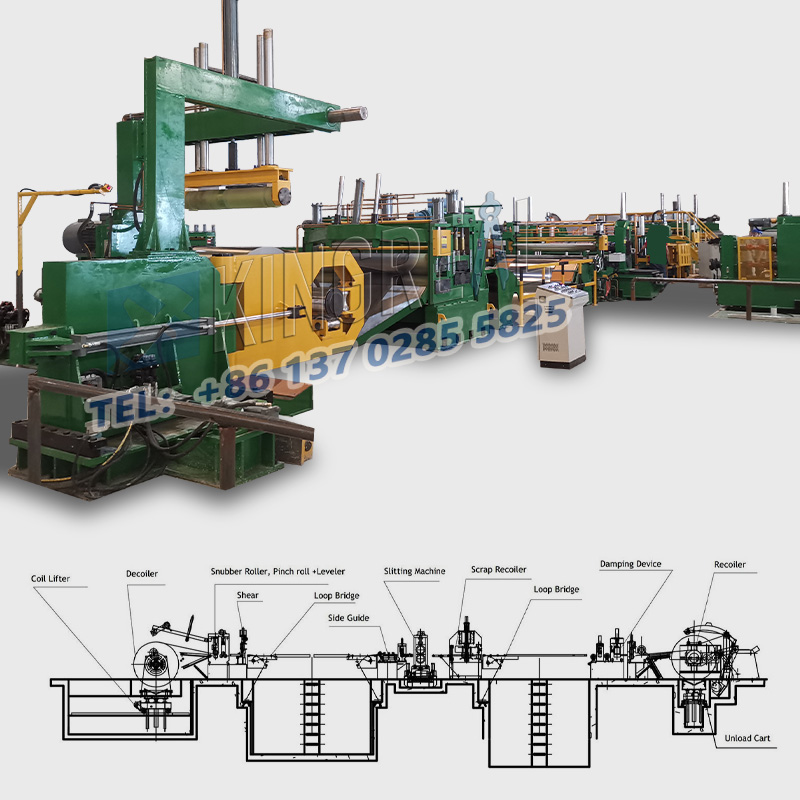
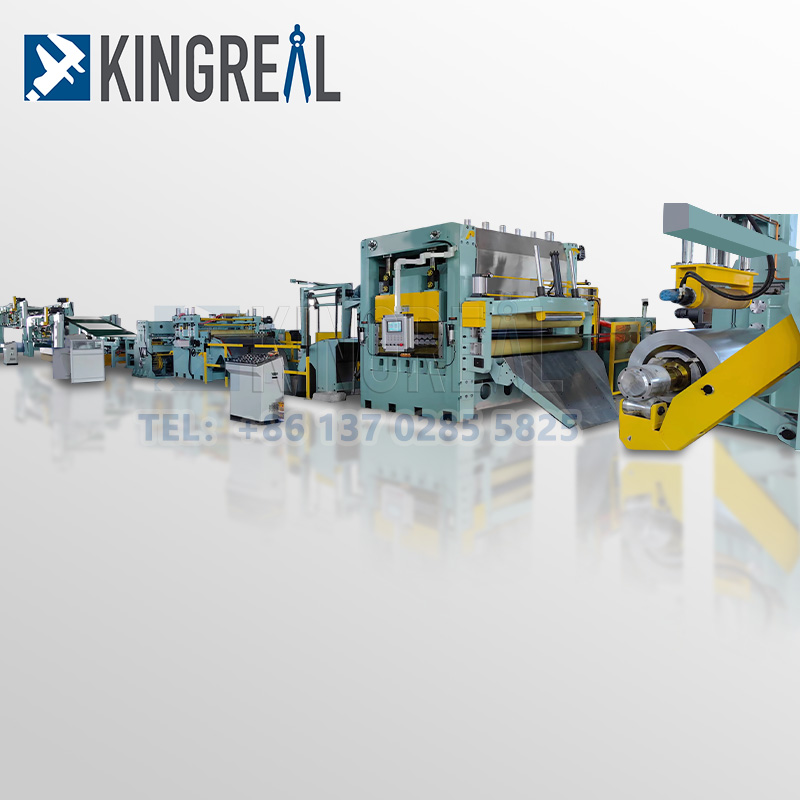
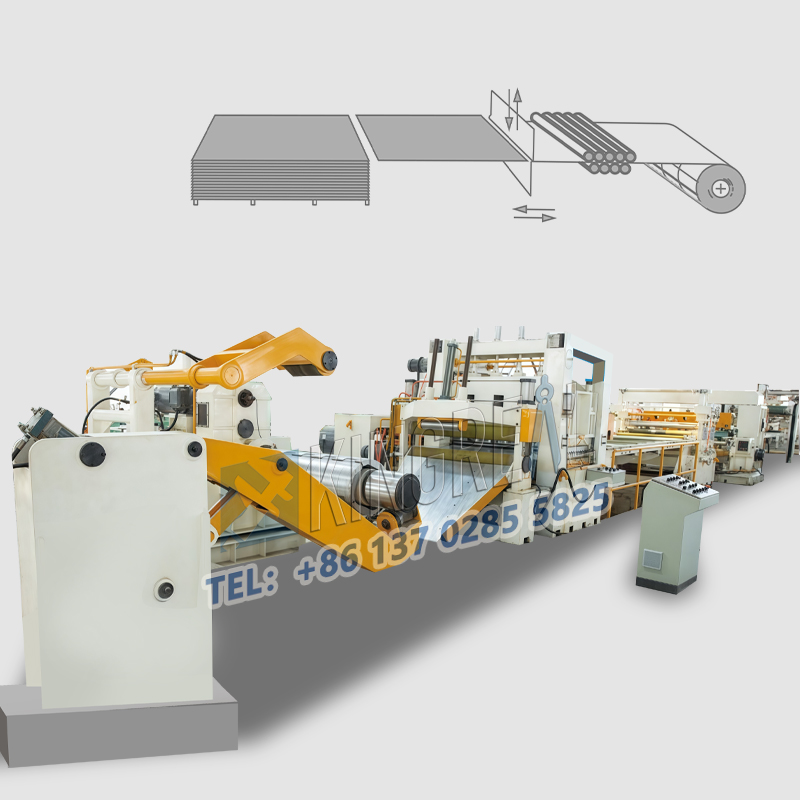
Cut to Length Steel refers to the process of pre-cutting large-format metal coils into sheets of specific lengths and dimensions, tailored to a customer's precise requirements, thereby providing raw materials that are perfectly suited for subsequent processing stages. This process necessitates the use of a sheet metal cut to length machine—essentially a system that utilizes a decoiler to unwind large steel coils, and then employs the sheet metal cut to length line's precision cutting capabilities to transversely shear the material into metal sheets that meet predetermined standards. Currently, cut to length steel processing has become an indispensable preliminary step across a wide range of industries, including automotive manufacturing, home appliance production, construction materials, and hardware fabrication. As the core equipment for this process, the sheet metal cut to length machine directly determines processing efficiency, product precision, and overall production profitability. This article will provide a detailed overview of the core concepts and significance of cut to length steel processing, as well as guidance on selecting high-quality sheet metal cut to length lines best suited for this application.
In the metal processing industry, cut to length steel processing plays a pivotal role: upstream, it bridges the gap between the production and supply of metal coils; downstream, it connects directly to the manufacturing and fabrication of various end products. Consequently, the quality and efficiency of this processing stage directly influence the operational rhythm of the entire supply chain. Simply put, cut to length steel processing efficiently transforms raw metal materials into sheets of specific lengths and dimensions, ready for subsequent operations such as stamping, bending, welding, and assembly. This effectively resolves the inherent challenges associated with handling oversized metal coils—specifically, their unwieldiness and unsuitability for direct processing—while simultaneously avoiding the numerous drawbacks associated with traditional cutting methods. The specific workflow of this process encompasses several distinct stages, including uncoiling, leveling, length measurement, shearing, and stacking. As the central piece of equipment integrating these various stages, the sheet metal cut to length machine orchestrates the entire processing workflow, ultimately yielding metal sheets characterized by high precision, excellent consistency, and strict adherence to customer specifications—thereby laying a solid foundation for high-quality production in downstream industries.
For manufacturing enterprises, the widespread adoption and optimization of cut to length steel processing offer multifaceted benefits: not only does it serve to reduce production costs and enhance operational efficiency, but it also boosts product yield rates and strengthens market competitiveness. In traditional processing models, enterprises often face the necessity of independently procuring large metal coils and subsequently cutting them using manual labor or rudimentary equipment. This approach is not only time-consuming and labor-intensive but also prone to issues such as dimensional deviations and material waste. In contrast, cut to length steel processing—leveraging standardized workflows and high-precision sheet metal cut to length lines—enables the precise utilization and efficient processing of raw materials. This method effectively minimizes material loss, reduces labor costs, and simultaneously ensures dimensional uniformity across every batch of steel sheets.
1)Enhanced Production Efficiency
Compared to traditional manual or semi-automated shearing methods, automated sheet metal cut to length machines significantly boost efficiency in cut to length steel processing, thereby effectively optimizing the entire production workflow. These sheet metal cut to length lines feature a high degree of automation, capable of operating at speeds of up to 80m/min—far exceeding the operational speeds of conventional shearing equipment. They facilitate a continuous, integrated process encompassing coil unwinding, leveling, length measurement, cutting, and stacking, thereby drastically shortening the processing cycle for each batch of steel sheets. Crucially, the sheet metal cut to length machine integrates the entire sequence of cut to length steel processing operations: from coil securing and automatic feeding during unwinding, to precision calibration during leveling, to length configuration during measurement, to precise shearing during cutting, and finally to automatic stacking during material collection. The entire process requires minimal human intervention; operators need only configure relevant parameters—such as cutting length, cutting speed, and sheet thickness—via the control panel, and the sheet metal cut to length line will automatically execute the entire workflow.
2)Improved Sheet Precision
In cut to length steel processing, the precision of the steel sheets directly dictates the quality of subsequent downstream processing; consequently, the precision of the sheet metal cut to length machine itself directly determines the ultimate level of accuracy achieved in the finished sheets. High-quality sheet metal cut to length lines are equipped with a suite of precision components. From leveling and length measurement to the final cutting stage, every single step is meticulously engineered to ensure that the sheets' dimensional accuracy, flatness, and cut-edge quality consistently meet or exceed industry standards. Among its components, the leveling machine stands as one of the critical elements within a sheet metal cut to length machine responsible for ensuring sheet precision. Depending on a client's specific requirements for material flatness, the sheet metal cut to length line can be equipped with two-height, four-height, or six-height leveling rollers. The greater the number of roller layers, the superior the leveling effect; furthermore, properly leveled material effectively prevents dimensional deviations that might otherwise occur during the shearing process. The length-setting and cutting stages of the sheet metal cut to length machine also demonstrate exceptional precision. The NC length-setting unit integrated into the line performs highly accurate length measurements on the sheet material. Through the precise control of the CNC system, it ensures that the length of every single sheet strictly adheres to the client's predetermined specifications, thereby eliminating any length deviations. During the cutting phase, the sheet metal cut to length line employs a hydraulic motor-driven shearing mechanism. This system delivers high cutting speeds and uniform force distribution, enabling rapid material severance while simultaneously guaranteeing clean, burr-free cut edges. To accommodate sheets of varying thicknesses, the blade gap of the shear can be flexibly adjusted manually. This ensures that issues such as material deformation or uneven cuts are avoided during the shearing process, thereby meeting the processing requirements for sheets of diverse specifications. Furthermore, the four-sided shear blades featured on the sheet metal cut to length machine can be rotated to utilize alternate cutting edges. This not only extends the operational lifespan of the blades but also reduces sheet metal cut to length line maintenance costs, thereby maximizing economic efficiency.
To achieve efficient and precise cut to length steel processing, selecting a high-quality sheet metal cut to length machine is paramount. As a premium product within the industry, KINGREAL STEEL SLITTER sheet metal cut to length lines are perfectly tailored to meet a wide spectrum of steel processing requirements—from length-setting to shearing—empowering enterprises to successfully execute their processing projects and enhance their core competitiveness. With over two decades of deep expertise in the field of metal processing equipment, KINGREAL STEEL SLITTER specializes in the R&D, manufacturing, and customization of sheet metal cut to length machines. Leveraging our professional technical proficiency and comprehensive after-sales support, we have earned the recognition of clients across numerous countries and regions worldwide, establishing stable and enduring cooperative partnerships with entities in markets such as Russia and Indonesia. KINGREAL STEEL SLITTER sheet metal cut to length lines boast exceptional versatility, capable of processing metal sheets of various materials and thicknesses. Whether handling common steels—such as carbon steel, stainless steel, or silicon steel—or processing hot-rolled, cold-rolled, aluminum, copper, or PPGI materials, KINGREAL STEEL SLITTER sheet metal cut to length machines execute every task flawlessly without the need for frequent equipment changes or adjustments to core components. In terms of sheet thickness, KINGREAL STEEL SLITTER sheet metal cut to length lines offer an equally broad processing range; they deliver precise cutting for everything from thin sheets (0.2–3 mm) and medium-gauge sheets (0.3–6 mm) to heavy plates (6–25 mm), thereby meeting the diverse processing requirements of various industries and clients.
Choosing a KINGREAL STEEL SLITTER sheet metal cut to length machine provides not only a highly efficient and precise steel processing solution but also access to professional technical support and comprehensive after-sales services. From initial sheet metal cut to length line installation and commissioning to subsequent maintenance and repairs, the KINGREAL STEEL SLITTER team provides end-to-end support to ensure the stable and reliable operation of the sheet metal cut to length machine. Whether addressing the batch processing needs of small-to-medium enterprises or the large-scale production demands of major corporations, KINGREAL STEEL SLITTER sheet metal cut to length lines empower businesses to optimize their production workflows, reduce manufacturing costs, and enhance product quality.