Manufacturing is the cornerstone of the modern economy, especially in industries such as automobiles, electronics, home appliances, and construction, where product quality and production efficiency directly determine market competitiveness. Against this backdrop, precision cut to length lines have become crucial coil processing equipment for improving manufacturing standards. This article will explore the importance of precision cut to length machines in manufacturing, analyzing their demand background, advantages, and the convenience they bring, aiming to help those considering purchasing precision cut to length lines better understand the value of this precision cut to length machine.
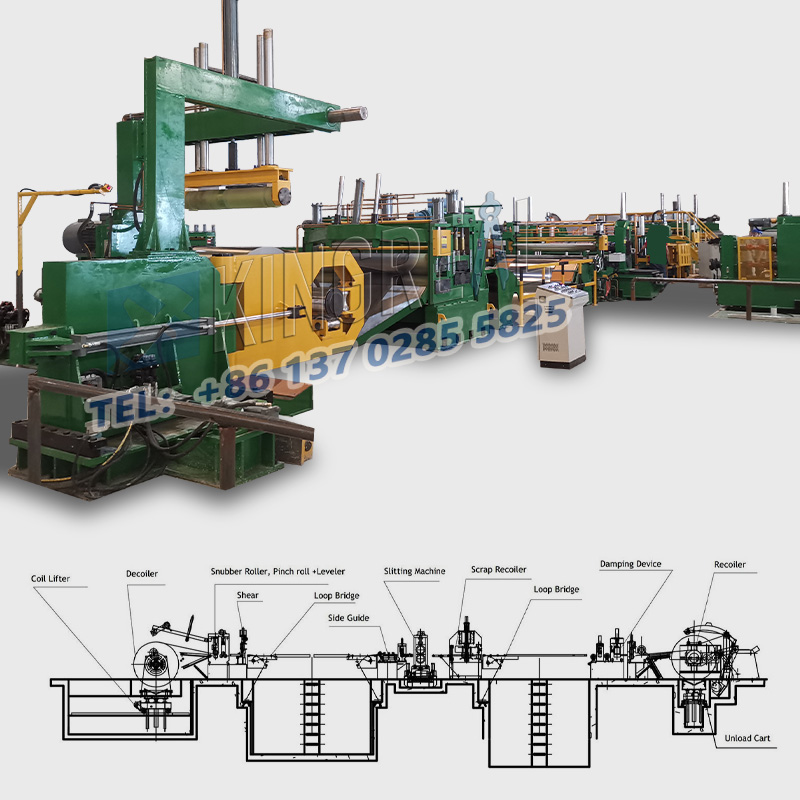
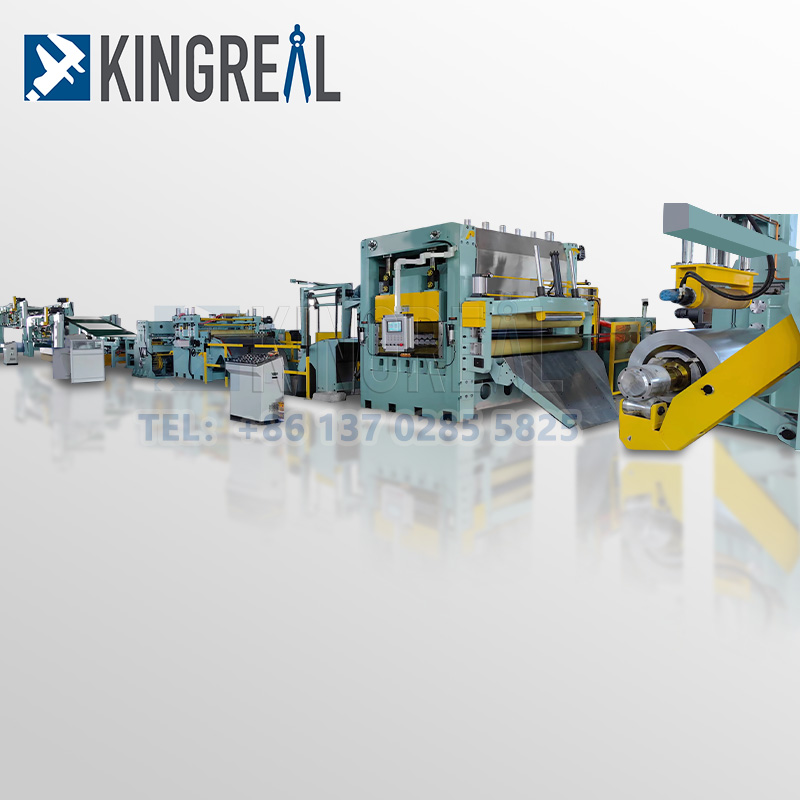
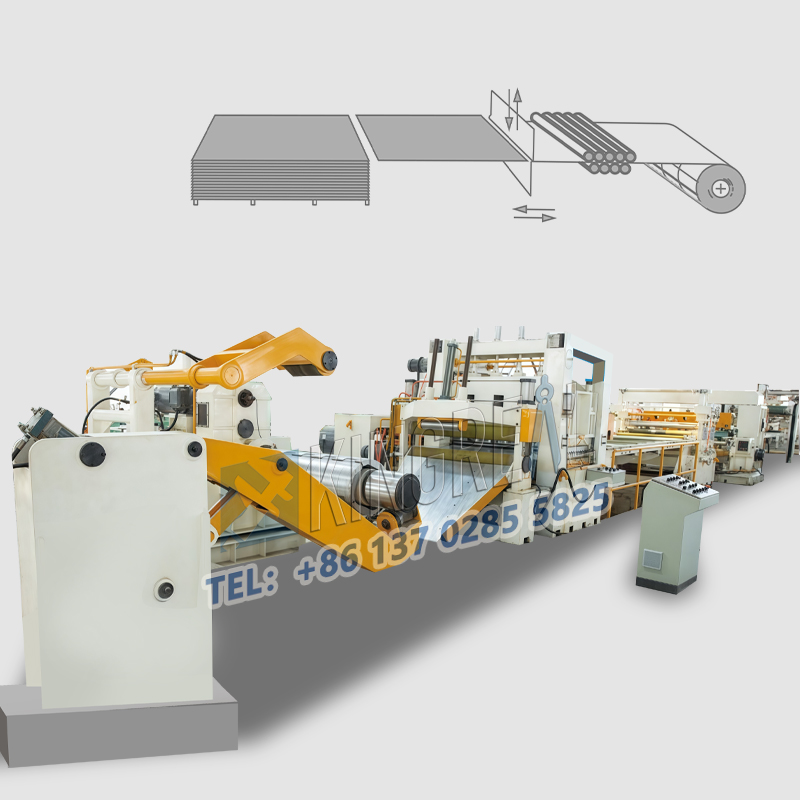
A precision cut to length machine is a fully automated coil processing line that processes coils of materials such as steel, stainless steel, aluminum, copper, and PPGI. It encompasses processes such as uncoiling, leveling, shearing, and stacking, producing high-precision metal sheets that meet customers' specific length requirements. In the production process, shearing has gradually become the most critical step, directly affecting not only the surface quality of the sheared material but also the processing accuracy of the final product.
During the operation of a precision cut to length line, high-precision shearing ensures the straightness and parallelism of the sheared surface of the sheet material, reducing sheet distortion caused by shearing, thereby obtaining high-quality work-pieces. For this reason, precision cut to length machines are widely used in various fields such as machinery, metallurgy, automotive, shipbuilding, electrical engineering, and sheet metal processing. In particular, they are almost indispensable in industries that use large amounts of sheet metal.
(1)Increased Production Efficiency
Precision cut to length machines automate the entire process from uncoiling and leveling the coil to feeding and shearing, significantly improving production efficiency. For example, a high-speed precision cut to length line can complete dozens of cuts per minute, with a daily capacity of several tons, far exceeding the capabilities of traditional manual operations. This efficient production mode can quickly meet the demands of large-scale production, shorten delivery cycles, and thus enhance the company's market responsiveness.
(2) Improved Processing Precision
Precision cut to length machines are typically equipped with advanced CNC systems, servo drives, and high-precision sensors, enabling them to control shearing errors within the micrometer level. The positioning accuracy of the feeding servo system can reach ±0.05mm, while the cut surface has low roughness and low burr height, meeting the processing requirements of precision parts. This high-precision processing capability not only reduces subsequent processing costs but also ensures the quality and consistency of the final product.
(3) Optimized Material Utilization
Through intelligent management and precise shearing technology, the precision cut to length line can increase the utilization rate of coil materials to 92%-95%. Compared to traditional manual nesting, the precision cut to length machine can improve this by 8-10 percentage points, effectively reducing waste of scrap materials, lowering raw material costs, and further increasing the company's profit margin.
(4) Adapting to Diverse Production Needs
Modern manufacturing demands increasingly diverse products. The precision cut to length line can flexibly adapt to different materials and specifications of sheet metal, including various metal materials with thicknesses ranging from 0.2-25mm. Simultaneously, the precision cut to length machine supports shearing requirements for different widths, lengths, and shapes. It can even cut irregularly shaped parts (such as trapezoids and parallelograms) through swing shearing functions and CNC systems, meeting increasingly complex customized production requirements.
(5) Reduced Labor Costs
The precision cut to length line operates automatically after production parameters are set on the control panel, requiring minimal manual intervention. Only 1-2 operators are needed per shift, reducing labor costs by more than 60% compared to traditional production lines. This not only reduces the labor intensity of workers but also improves work safety, avoiding errors caused by manual operation.
(6) Ensuring Product Quality Stability
The standardized production process and precise control of the precision cut to length machine ensure the dimensional consistency and quality stability of each batch of products. This stability effectively reduces errors caused by human factors and improves the product qualification rate. This is especially important for manufacturing companies that want to remain competitive in the market.
In the automotive manufacturing industry, precision cut to length lines can be used to produce body chassis, doors, and other components that require extremely high dimensional accuracy and surface quality. In the electronics industry, precision cut to length machines are used to manufacture the casings of various electronic components, which often have strict requirements for material thickness, hardness, etc. In the home appliance industry, precision cut to length lines are commonly used to cut appliance casings and internal structural parts to meet the needs of different models and brands. In the construction industry, precision cut to length machines can provide high-precision material cutting for metal roofs, walls, etc., ensuring the stability and safety of building structures. Furthermore, the stringent material requirements of the aerospace industry also make precision cut to length lines indispensable equipment.
The importance of precision cut to length machines in manufacturing is self-evident. It not only improves production efficiency and processing precision, and optimizes material utilization, but also reduces labor costs and ensures product quality stability. In an increasingly competitive market environment, investing in precision cut to length lines has become an important measure for manufacturing enterprises to enhance their core competitiveness. This article aims to help you better understand the value and necessity of precision cut to length machines. With the help of this advanced precision cut to length line, the manufacturing industry will be able to enter a new era of high efficiency, precision, and low cost.