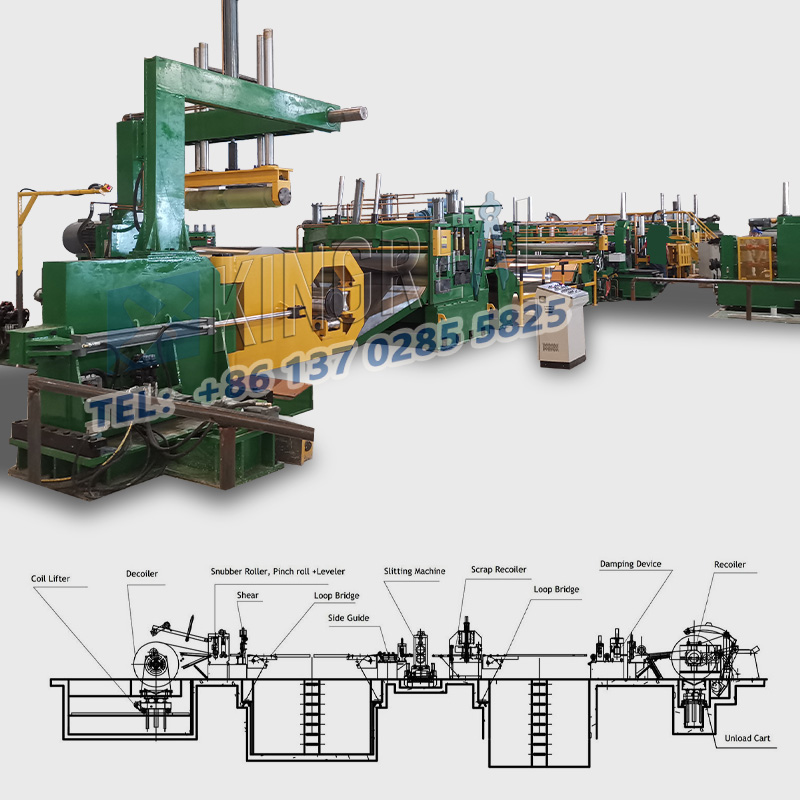
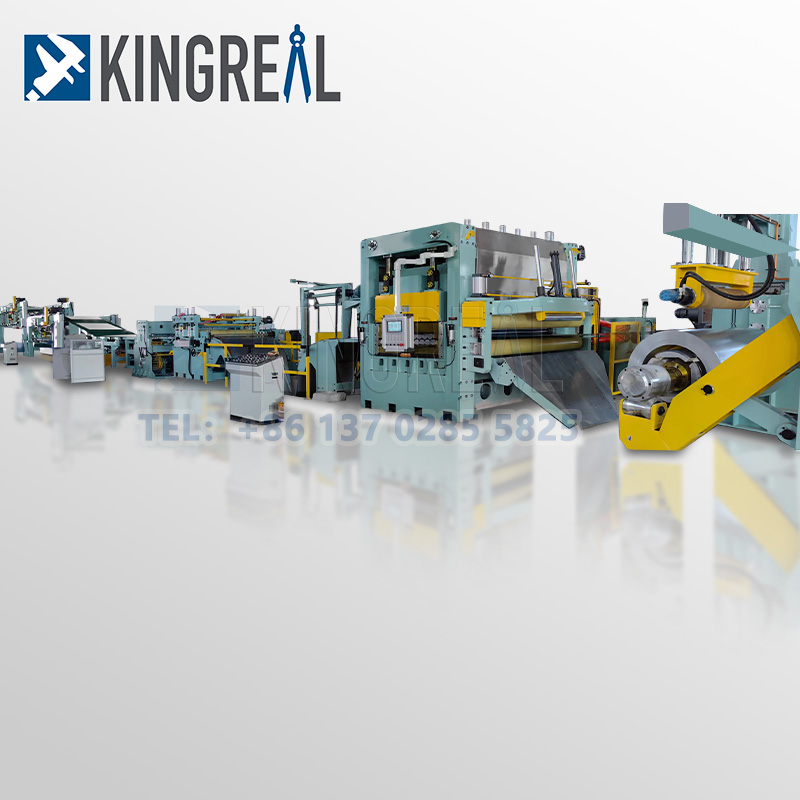
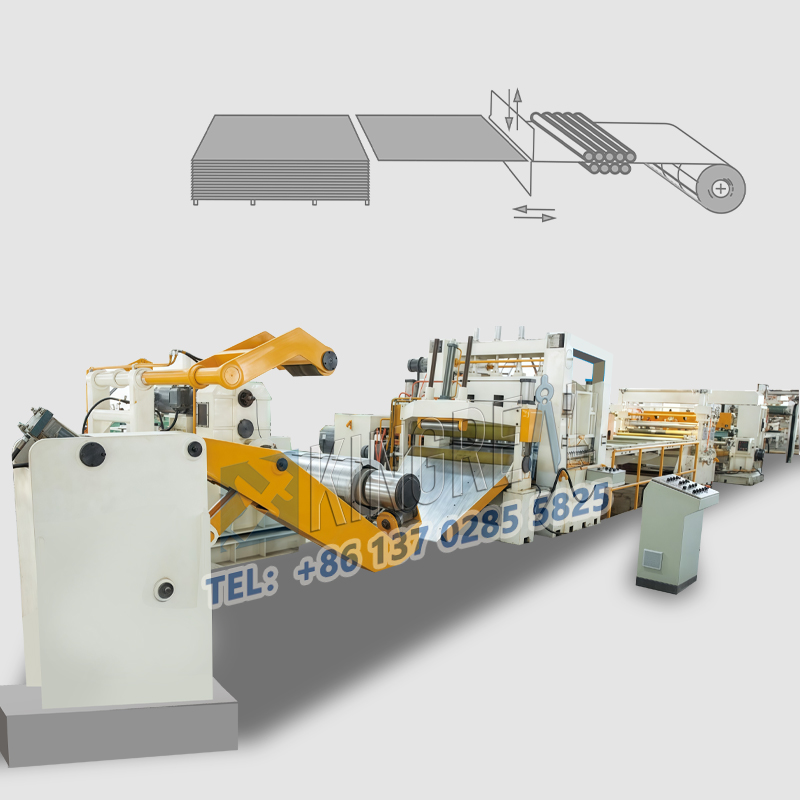
In the metal processing sector, the choice of a steel coil slitting line immediately affects both the quality of the finished output and the cost of production. Many people believe in the field that one steel coil slitting machine can manage all kinds of metal just by switching the blades.
In reality, changes in material qualities—like ductility, yield strength, and surface condition—call for totally different equipment arrangements.
The steel coil slitting line demands different design techniques in terms of power distribution, structural strength, precision control, and surface protection when the materials being processed vary greatly, say carbon steel versus stainless steel.
This essay examines the technical variations in handling these two kinds of materials and offers a professional handbook for choosing the correct steel coil slitting machine.
1. Surface Protection and Material Handling Logic
High-Grip Design for Carbon Steel:
Carbon steel (especially hot-rolled sheet) often features a rough oxide scale or a film of anti-rust oil, combined with high inherent hardness. During the operation of a steel coil slitting line, if the feed rollers lack sufficient grip, the immense inertia generated by heavy steel coils—particularly during high-speed acceleration or emergency braking—can cause the material to slip against the roller surfaces. This, in turn, leads to material pile-ups or the failure of strip-guiding systems.
● Hardened Alloy Rollers: For carbon steel coil slitting lines, pressure rollers and feed rollers are typically made from high-hardness alloy steels (such as GCr15) that have undergone high-frequency quenching, achieving a surface hardness of HRC 58–62.
● Anti-Slip Texturing: To ensure adequate traction in the presence of oil films, some steel coil slitting machines feature finely patterned or sandblasted surfaces on the drive rollers, which increase physical friction and ensure synchronized material transport.
Zero-Scratch & Flexible Design for Stainless Steel:
The market value of stainless steel strips is highly dependent on the integrity of their surface; even the slightest friction can result in product degradation.
● Full Polyurethane (PU) Coating: In steel coil slitting lines designed for stainless steel, every roller that comes into contact with the material must be coated with polyurethane (PU). This material possesses excellent elasticity, allowing it to absorb minor impurities and prevent hard particles from causing indentations or damage to the sheet surface.
● Automatic Film Application: Precision stainless steel coil slitting machines must be equipped with a laminating device. By integrating this process into the steel coil slitting line, a physical barrier—the protective film—is created, effectively eliminating friction between layers during production.
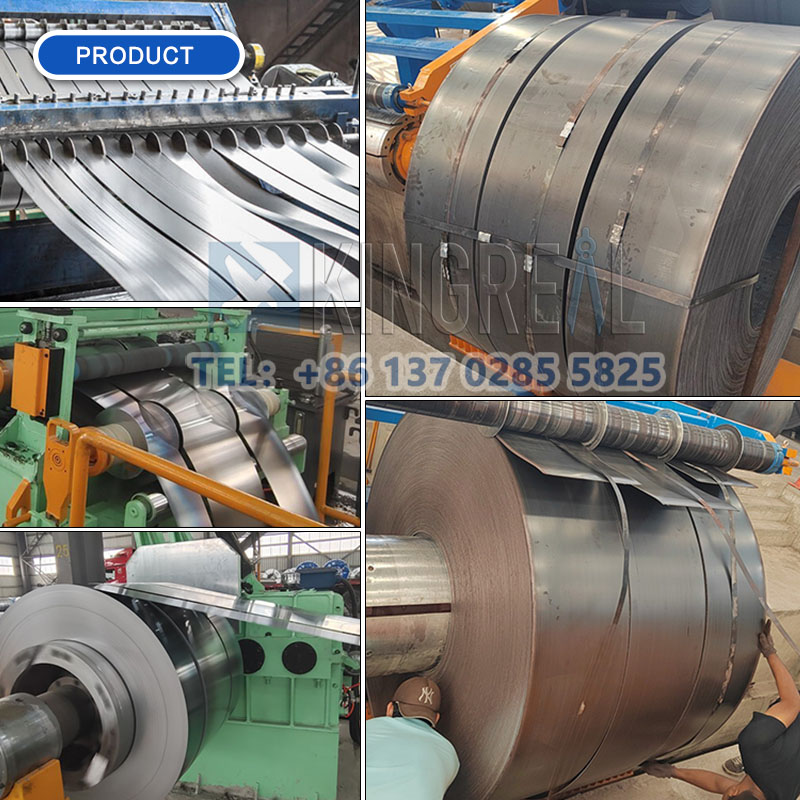 |
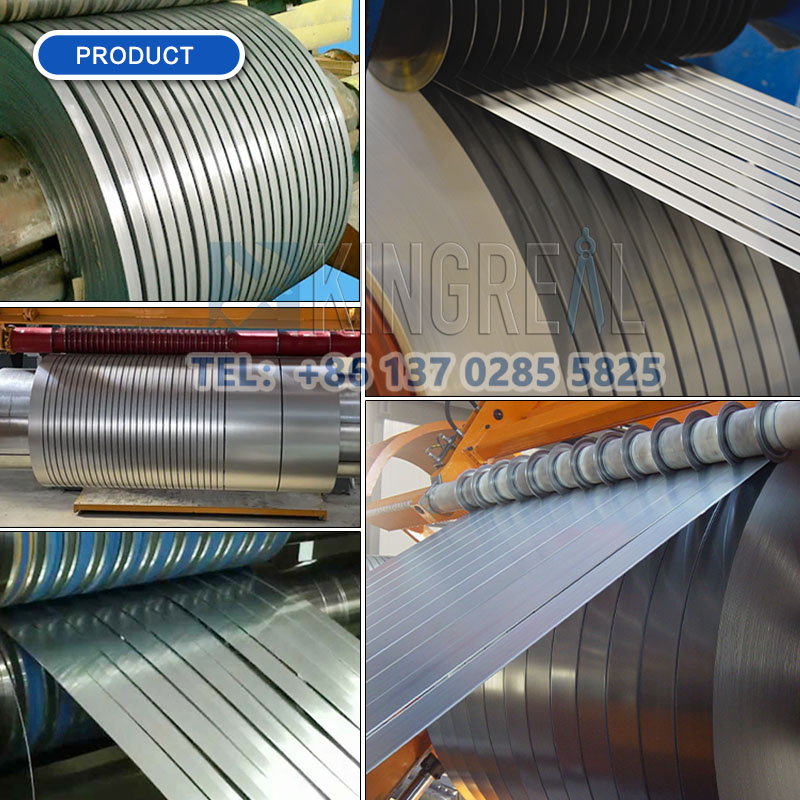 |
| Carbon Steel Strip | Stainless Steel Strip |
2. Comparison of Slitting Precision and Arbor Rigidity
Design for High-Load Impact Resistance (Carbon Steel):
Carbon steel requires significant cutting force; particularly when processing high-strength hot-rolled sheets (such as Q355 grade), the radial counter-force exerted on the slitting arbors is intense.
● Heavy-Duty Arbor Structure: Steel coil slitting lines for carbon steel typically utilize larger-diameter arbors. Increasing the diameter enhances the section modulus, thereby boosting rigidity and preventing arbor deflection or deformation when slitting thick plates.
● Impact-Tough Slitting Blades: Blades are generally made from D2 or SKD11 tool steel. For carbon steel, beyond hardness, the focus is on toughness—the blade's resistance to chipping—as carbon steel may contain hard inclusions or exhibit compositional inconsistencies.
Design for Work-Hardening and Micron-Level Precision (Stainless Steel):
Stainless steel is highly prone to work-hardening. Furthermore, due to its high toughness, if the clearance between blades is too large during slitting, the material will undergo tensile deformation rather than a clean fracture.
● Micron-Level Runout Control: Steel coil slitting machines for stainless steel must be equipped with ultra-precision bearings, keeping both radial and axial runout within 0.005 mm. This level of precision is essential to ensure that the slit edges are free of burrs.
3. Differentiated Tension Control Systems
Simplified & Efficient Tension Logic (Carbon Steel):
Since the surface of carbon steel is relatively rough—and often subject to subsequent processes like coating or rust removal—minor dust contamination is not considered a critical quality defect.
● Felt Tension Pads: Steel coil slitting lines for carbon steel typically employ wool-felt tension pads. Frictional tension is generated by applying direct pressure via pneumatic cylinders. This method offers the advantages of a simple structure and extremely low maintenance costs, while also accommodating significant thickness variations in carbon steel sheets.
Non-destructive tension logic for stainless steel:
Felt-based tension pads—commonly used in carbon steel slitting lines—are strictly prohibited for stainless steel processing. Debris generated by friction, or tiny metal particles embedded within the felt, can cause severe indentations on the material surface under the pressure of the coiling process.
● Belt Tension: This is a standard feature for high-performance stainless steel coil slitting machines. The material is gripped between two synchronously moving belts (top and bottom), with tension generated by the static friction between the belts and the sheet surface. This non-sliding mechanism eliminates the risk of surface scratching.
● Tension Rolls with Differential Speed Control: For ultra-thin stainless steel, PU-covered tension rolls are typically used. Stable tension is generated by controlling the speed differential between the rolls and the recoiler, while precise pneumatic controls allow for fine-tuning of the tension.
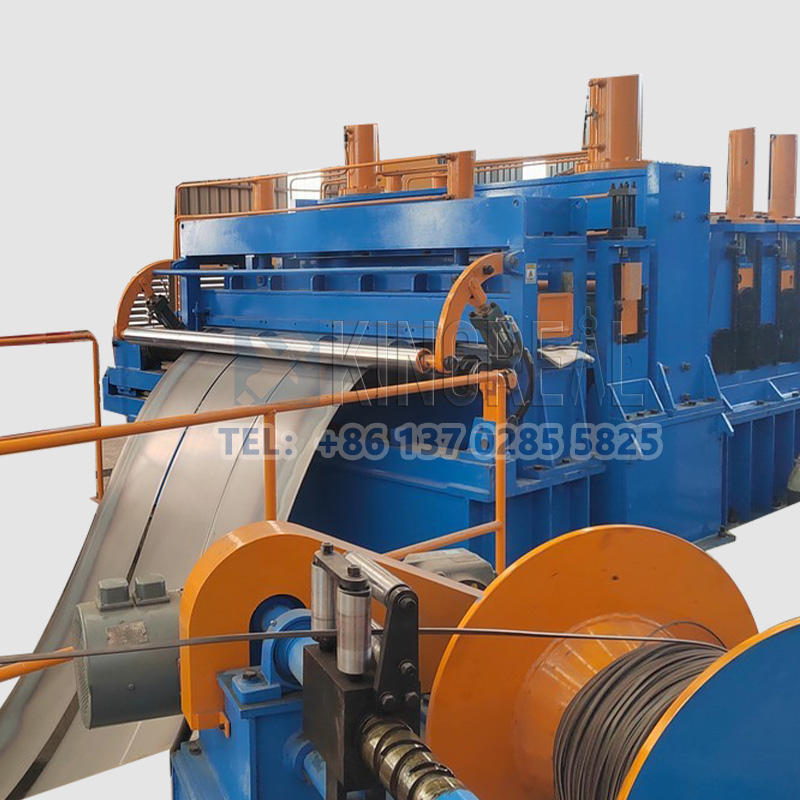 |
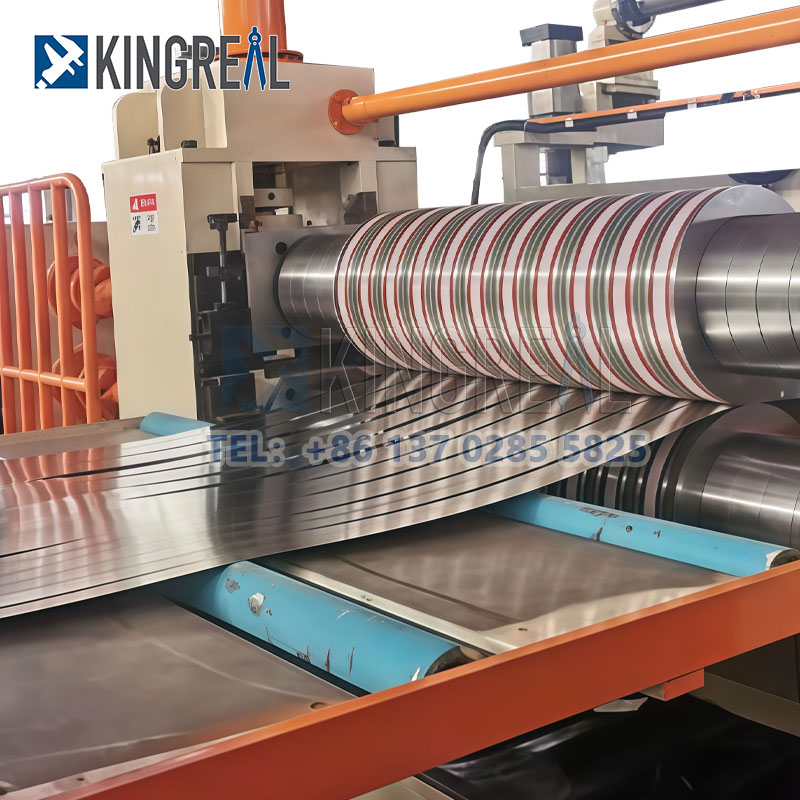 |
| Steel Coil Slitting Line for Carbon Steel |
Steel Coil Slitting Line for Stainless Steel |
4. Comparison of Recoiling Logic and Flatness Control
Heavy-duty flatness logic for carbon steel:
Given the large diameters and heavy weights of carbon steel coils, the primary focus during coiling is load-bearing capacity and edge alignment.
● Heavy-duty Hydraulic Expansion: The recoiler mandrel in a carbon steel coil slitting line must possess high hydraulic expansion force to support coils weighing several to tens of tons, preventing the inner wraps from collapsing during the coiling process.
● Standard Separator: In carbon steel coil slitting machines, the press arm primarily serves a guiding function, with a structural design prioritized for torsional rigidity.
Precision coiling logic for stainless steel:
Thin stainless steel sheets are prone to telescoping and the formation of waves caused by internal material stresses.
● Precision-Polished Separator Discs: The separator discs used in stainless steel coil slitting machines must be mirror-polished. Any surface irregularities on these discs would scratch the edges of the stainless steel strip during the recoiling process.
● High-Sensitivity Centering System: The recoiler must be equipped with an Edge Position Control system. Laser sensors monitor the material's position in real time, providing feedback to a hydraulic servo system that adjusts the recoiler shaft’s position, ensuring the coil's end-face flatness meets a mirror-like finish standard.
● Multi-Diameter Core Compatibility: The precision stainless steel industry requires various inner diameters for steel coils; therefore, the recoiler shafts on a steel coil slitting line are typically designed with interchangeable drum segments.
Selection Considerations: Defining Your Steel Coil Slitting Line Configuration
When selecting a steel coil slitting machine, opting for the highest possible configuration without careful assessment can lead to wasted budget, while an insufficient configuration may render your products uncompetitive. Consider the following factors when making your decision:
Are your finished products intended for precision applications?
-If your output serves sectors like 3C electronics, high-end kitchen appliances, or medical devices, it is advisable to adopt the surface protection and tension control standards used for stainless steel—even when processing carbon steel.
What is the thickness range of your materials?
-A wider range requires more sophisticated constant-torque control within the steel coil slitting line’s drive system.
What is the maximum yield strength (in MPa) of your materials?
-This figure directly dictates the required diameter of the slitting arbors and the power capacity of the main drive motor.
Selecting a steel coil slitting line is a complex engineering decision. Lines designed for carbon steel prioritize high power, robust strength, and exceptional durability, whereas those for stainless steel focus on micron-level precision, scratch-free surface protection, and non-contact tension control.
If you have further questions regarding the selection of a steel coil slitting machine, or if you require advice for a production environment that handles both carbon steel and stainless steel, please contact KINGREAL STEEL SLITTER directly. Based on your specific production data, we will tailor a comprehensive, personalized steel coil slitting line solution for you.