What is a Precision Coil Slitting Machine?
In the field of metal processing, the precision coil slitting line is an indispensable piece of core coil-processing equipment. It exactly splits wide metal coils—including steel, stainless steel, aluminum, copper, PPGI, etc.—longitudinally into narrower strips with particular needs, hence producing raw materials of consistent specifications for next operations including stamping, bending, and welding. Among many sectors, including construction supplies, home appliances, automotive manufacture, electronics, transformers, and electric motors, these precision coil slitting machines find widespread application. Exact processing by a precision coil slitting line is necessary from little metal parts for appliance housings to big sheet metal materials for car bodies.
Working Principle of a Precision Coil Slitting Line
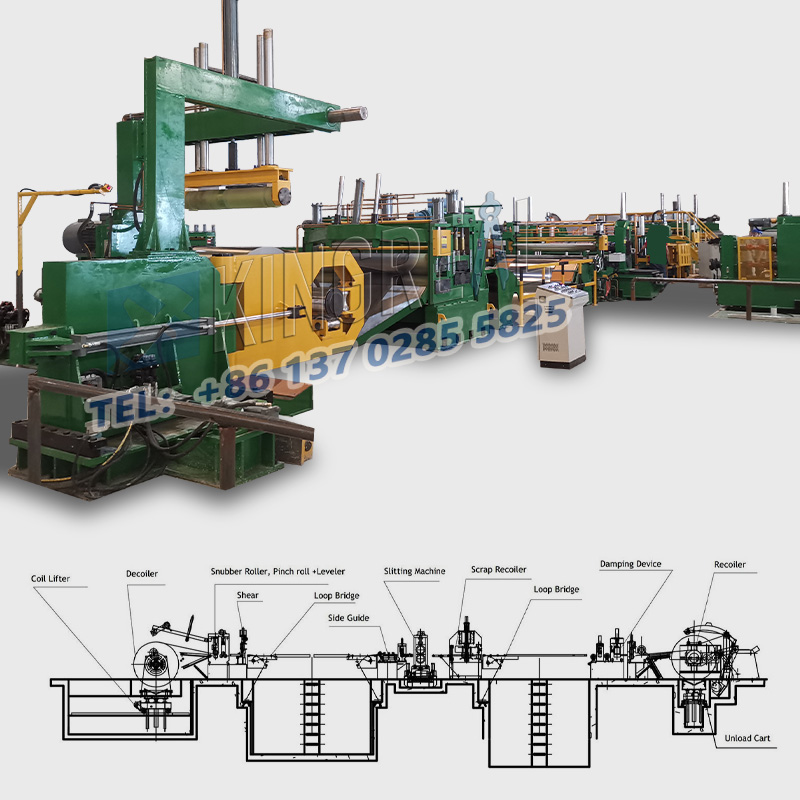
Unwinding, guiding, slitting, and rewinding are four main stages in the operation of a precision coil slitting line. These phases cooperate to provide accurate and effective slitting.
1. Unwinding Section: Unwinding serves as the foundation for ensuring slitting precision. Operators smoothly mount the metal coil to be slit onto the precision coil slitting machine's decoiler. Driven by a dedicated motor, the decoiler releases the material steadily at a preset speed, ensuring that the feed rate remains synchronized with the slitting speed to prevent errors caused by velocity discrepancies. All precision coil slitting line’s decoilers are equipped with a tension control system—typically utilizing magnetic powder brakes for precise tension regulation. Operators adjust the tension based on the material type, thickness, and slitting speed to prevent the sheet from becoming slack, drifting off-course, or undergoing deformation due to excessive stretching, thereby laying the groundwork for precise slitting.
2. Guiding Device: The sheet material released from the decoiler must pass through the precision coil slitting machine's guiding device to correct its alignment and ensure it enters the slitting cutters with precision. The guiding device consists of multiple sets of guide rollers capable of making fine adjustments in both horizontal and vertical directions to compensate for any initial positional deviations in the sheet. If the sheet drifts off-course, the guiding device promptly adjusts the angles of the guide rollers to steer the material back onto the correct path, thereby preventing uneven slit widths or skewed cut edges, and ultimately safeguarding the precision coil slitting line's cutting precision.
3. Slitting Cutter Section: The slitting cutters constitute the core components of the precision coil slitting machine; consequently, the precision coil slitting line's overall slitting precision and the quality of the cut edges depend primarily on the performance of the cutters themselves and the precision of their adjustment. The slitters of a precision coil slitting machine consist of two sets of circular blades—upper and lower—arranged in an interlocking pattern. To fit the required slitting width, the spacing between these blades can be accurately calibrated. The cutting concept is same to that of a pair of scissors: As the metal sheet moves consistently through the slitters, the motor on the precision coil slitting line rotates upper and lower blades quickly in opposing directions. This action exactly slices the sheet along the set widths with a consistent shearing force. The quality of the slitting is directly influenced during the cutting process by the sharpness of the blades, their clearance, and their rotational speed. To guarantee the precision coil slitting machine keeps best cutting performance, operators therefore need to often inspect, sharpen, or replace the blades.
4. Rewinding Section: The metal strips are fed into the recoiler of the precision coil slitting line right after being cut to finish the process's final stage. Driven by a motor, the recoiler coils the strips into small, clean rolls, hence simplifying storage and movement. Much as the decoiler, the recoiler of the precision coil slitting machine has a tension control system; nevertheless, to guarantee consistent tightness across the whole coil, tension must be separately adjusted for each individual strip. Thinner strips, for instance, need lesser tension to avoid stretching or breaking; thicker strips need greater tension to prevent the coil from loosening.
Working Process of Precision Coil Slitting Machine
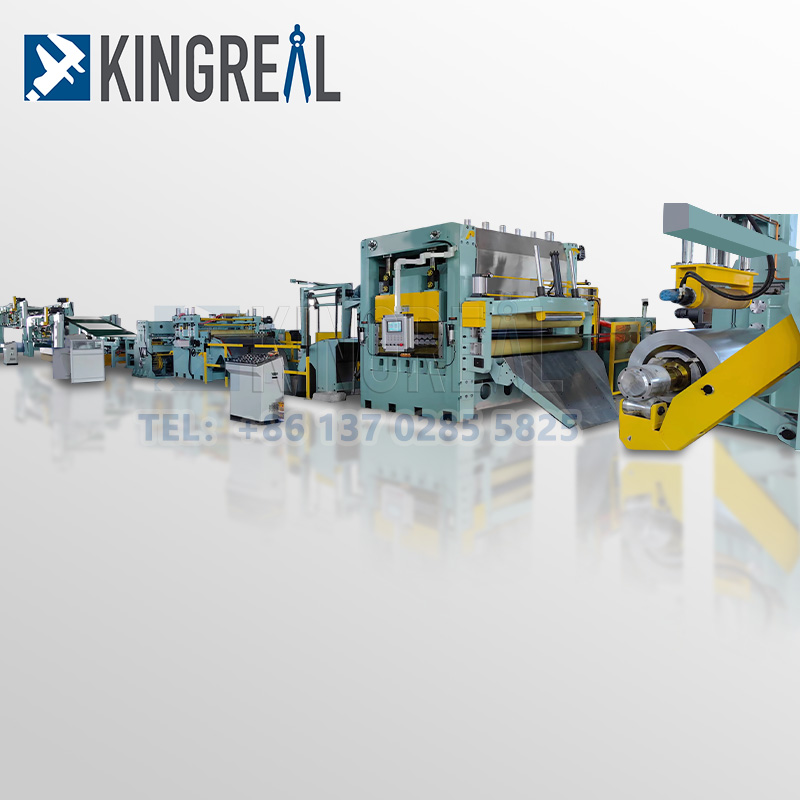
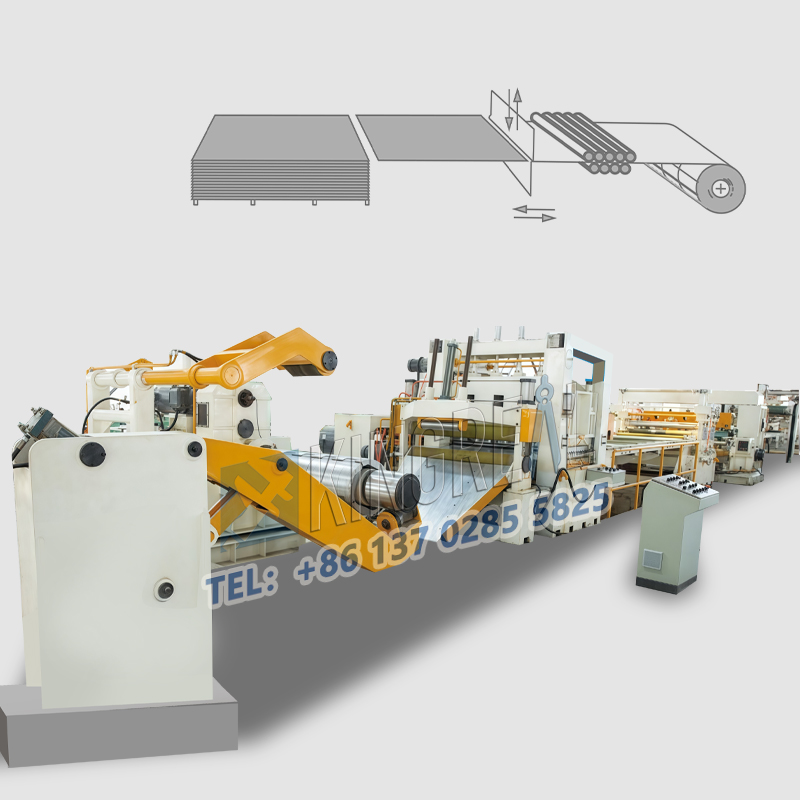
A complete precision coil slitting machine consists of a decoiler, pinch rollers, a head-cropping shear, a leveler, rotary slitting shears, a scrap chopper, a tensioning unit, and a recoiler—all working together to carry out the slitting and recoiling of metal coils. This totally automatic process improves operating effectiveness noticeably.
First, the operator places the metal coil meant for slitting into the feeding system of the precision coil slitting line. Through a conveyor system, the coil is gently transported into the device to make sure it is wrinkle-free and free of misalignment. Subsequently, the head-cropping shear trims away any irregular sections at the leading edge of the coil. Following the material enters the leveler, where straightening rollers correct any curvature or wrinkles to enhance its flatness and make it ready for the real slitting operation. Following this, the pinch rollers continually feed the leveled material into the rotary slitting shears. While the scrap chopper simultaneously gathers the waste edges to maximize material utilization, the high-speed rotating blades here slice the material into strips according to the predefined widths. To avoid material deviation or deformity brought on by stretching, the precision coil slitting machine's tensioning unit continuously changes the tension in real-time throughout the whole slitting procedure, hence ensuring the accuracy and quality of the final product. At last, the slit strips are wound into coils at a set speed and tension by a recoiler. The length-measuring mechanism of the precision coil slitting line monitors the length in real time; the precision coil slitting machine stops automatically when the set point is reached. The operator then loads and boxes the coils, therefore finishing the process. With automated controls, exact tension control, and great efficiency slitting capabilities, the precision coil slitting line dramatically increases the ease and efficiency of the metal slitting operation.
Benefits of Using a Precision Coil Slitting Machine
1) Wide Range of Applicable Materials.
Exceptional compatibility enables precision coil slitting lines to handle a great diversity of materials including silicon steel, stainless steel, tinplate, carbon steel, cold-rolled and hot-rolled, copper, and several surface-coated or plated metal coils. This increases precision coil slitting machine utilization rates since it lets them satisfy the slitting demands of several sectors without having to change gear.
2) High Slitting Precision.
High-quality precision coil slitting machines utilize servo drives, high-precision guide rails, and closed-loop control systems. Slitting width errors can be controlled within ±0.1 mm—with high-end models achieving a tolerance of ±0.05 mm—ensuring uniform strip dimensions and clean, burr-free cut edges. This minimizes scrap rates and material waste, making these precision coil slitting lines ideal for industries with stringent precision requirements, such as the automotive and electronics sectors.
3) High Efficiency and Automation
Modern precision coil slitting machines are equipped with PLC control systems. Once the operator inputs the slitting parameters, the precision coil slitting line can automatically execute the entire workflow—including loading, centering, slitting, recoiling, length measurement, and unloading—without requiring constant manual intervention. This not only boosts operational efficiency but also reduces labor costs and eliminates the potential for human error.
How to Choose the Right Precision Coil Slitting Line
Step 1: Define Your Production Requirements. Identify the specific characteristics of the material to be processed—such as type, thickness, and tensile strength. Clearly define the requirements for the finished slit products, including width, precision, number of strips, and overall quality standards. Finally, based on your production capacity targets, determine the necessary slitting speed and the level of automation functionality required.
Step 2: Focus on Core precision coil slitting line Components. The material (e.g., high-speed steel, carbide), type, and precision of the slitting knives directly impact the quality of the cut. The tension control system (utilizing components such as magnetic powder brakes or servo motors) must be appropriately matched to the specific characteristics of the material being processed. A reliable edge-guiding system (employing photoelectric, ultrasonic, or similar technologies) is essential for ensuring slitting precision. Furthermore, the method and tension stability of the recoiling system play a critical role in determining the overall quality of the finished coils.
Step 3: Conduct a Comprehensive Evaluation of the precision coil slitting machine. Prioritize manufacturers with a strong reputation and established brand recognition, as this offers greater assurance regarding the quality and technical reliability of their precision coil slitting lines. While ensuring that your specific requirements are met, select models that offer excellent value for money; simultaneously, pay close attention to the availability of comprehensive after-sales support to ensure that any precision coil slitting machine malfunctions are resolved promptly.
Step 4: Consider Additional Factors. Take into account the installation environment for the precision coil slitting line, provide professional training for operators, and conduct regular maintenance and upkeep on the precision coil slitting machine—including inspections of components such as cutting blades and guide rollers—to extend the precision coil slitting line's service life and safeguard both production efficiency and product quality.