1. The Role of Metal Cut to Length Machines in Manufacturing
The primary function of a metal cut to length machine is to cut large metal coils into sheets of specific lengths, widths, and shapes, thereby providing raw materials that meet precise dimensional requirements for subsequent processes such as stamping, bending, and welding. This procedure improves material usage efficiency and greatly reduces material waste.
1.1 High-Precision Shearing
High-precision control systems and measuring instruments allow metal cut to length lines to provide remarkable dimensional accuracy—usually maintaining ±0.1 mm tolerances for both length and width. This means producers get sheets noted by exceptional edge quality and great flatness, constantly satisfying the exacting accuracy criteria sought for their parts in high-end manufacturing companies.
1.2 Fully Automated Workflow
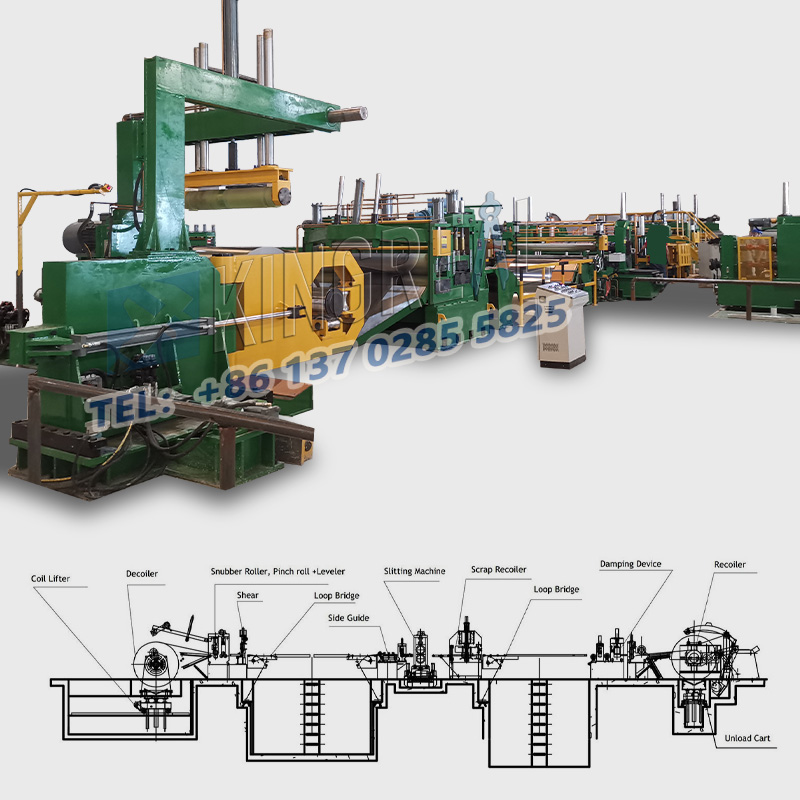
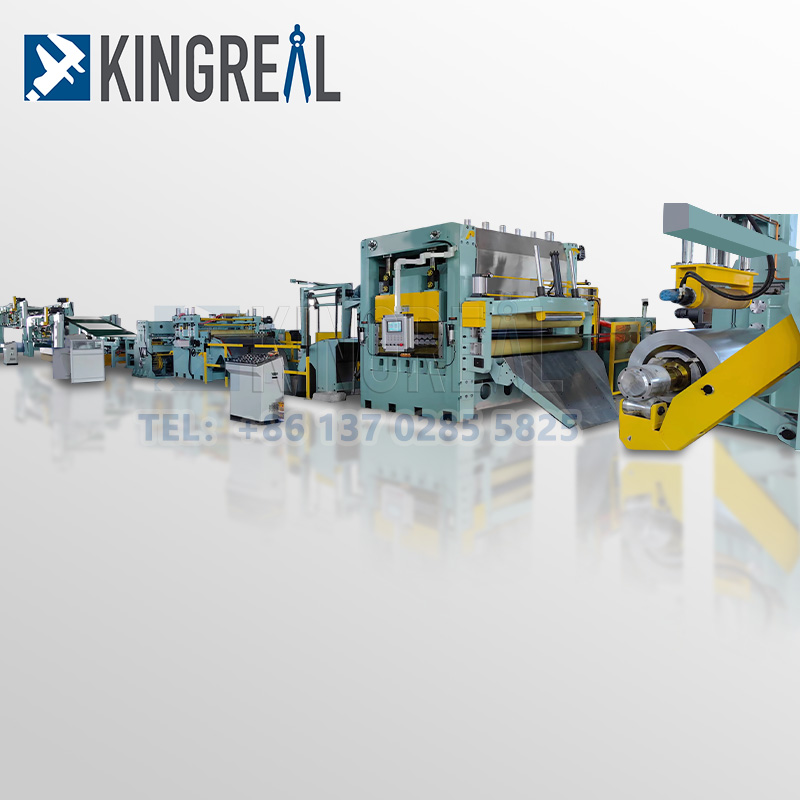
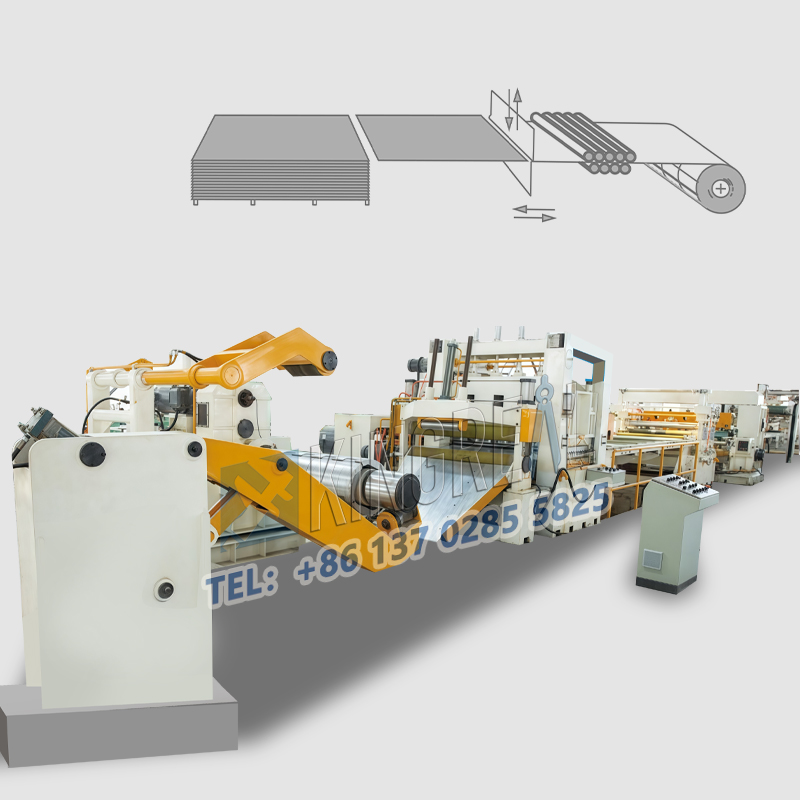
Typically comprising components such as decoilers, leveler, feeding mechanisms, and stacker, a metal cut to length machine enables a fully automated workflow—from the uncoiling and leveling of raw materials to the final shearing and stacking of finished sheets. This improved production flow increases the general efficiency and quality of production in addition to simplifying intermediary phases. Automatic metal cut to length lines help continuous, high-speed cutting processes, thus fulfilling the needs of large-scale manufacturing settings, in contrast to conventional manual cutting methods.
1.3 Versatile Adaptability
To accommodate diverse project requirements, metal cut to length machines offer flexible adaptability; by simply changing cutting tools or adjusting parameters, they can process sheets of various materials (such as steel, aluminum, copper, etc.), thicknesses (ranging from 0.2 mm to 25 mm), and shapes. This high degree of versatility supports the cutting of complex or irregular shapes (such as trapezoids, polygons, etc.), thereby enabling greater product diversification in manufacturing.
2. Why Metal Cut to Length Lines Are Essential in Manufacturing?
2.1 Precision Cutting
Many manufactured products—such as automotive body panels, appliance casings, and mechanical components—demand extremely high precision regarding sheet dimensions. Metal cut to length lines precisely trim metal coils into the precise lengths, widths, and forms needed using sophisticated precision cutting equipment. This major benefit not only guarantees dimensional uniformity of components throughout following processing phases (such as bending, stamping, and welding) but also efficiently lowers the scrap rate resulting from dimensional errors.
2.2 High-Speed Production
Metal cut to length machines typically operate at speeds reaching up to 80m/min. Compared to traditional shearing methods, this highly efficient cutting capability maximizes the reduction of labor costs while simultaneously boosting production efficiency and product quality.
2.3 Strong Adaptability
By adjusting cutting parameters, swapping cutting tools, or utilizing programmable controls, metal cut to length lines can flexibly adapt to the cutting requirements of various materials (such as steel, aluminum, stainless steel, etc.) and complex shapes. This characteristic enables enterprises to flexibly address the demands of high-mix, low-volume production runs as well as large-scale customized manufacturing.
3. Different Types of Metal Cut to Length Machines
By closely monitoring market dynamics and customer needs, KINGREAL STEEL SLITTER has designed a diverse range of metal cut to length lines to meet the specific requirements of clients across various application scenarios. The following are common types of metal cut to length machines:
●Classified by Material Thickness:
Light gauge cut to length line (0.2 to 3 mm),
Medium gauge cut to length line (0.3 to 6 mm),
Heavy gauge cut to length line (6 to 25 mm)
●Classified by Special Requirements:
Metal cut to length machines can also be equipped with various accessories to fulfill specific needs; for example:
Metal cut to length line with dual levelers: Enhances material flatness and ensures that the sheared material remains free of warping.
Metal cut to length machine with laminating device: Ensures a smooth, scratch-free material surface, making them ideal for industries with stringent surface quality requirements.
Metal cut to length line with dual stacker: Optimizes production workflows and boosts efficiency, making them suitable for enterprises with large-scale production operations.
4. How to Obtain Precision Sheet Metal?
Ensuring high-quality metal sheet products hinges primarily on the precision and maintenance of the metal cut to length machine.
4.1 Equipment Precision and Maintenance
-Blade Calibration: Regularly inspect the parallelism, clearance, and perpendicularity of the upper and lower shear blades. Ensure that the blade clearance is appropriately adjusted based on the material's thickness and type to prevent tearing caused by insufficient clearance or burrs resulting from excessive clearance.
-Equipment Stability: Conduct wear inspections on components such as feed rollers and hold-down devices. Regularly lubricate guide rails and gearboxes to ensure smooth metal cut to length line operation, thereby minimizing dimensional deviations and deformation issues caused by metal cut to length machine vibration or loose components.
4.2 Process Parameter Optimization
The cutting speed and pressure have to be properly calibrated during the shearing process in order to get more accurate sheet metal. This guarantees that the sheet metal experiences consistent force throughout the process, hence avoiding deformation or the creation of burrs.
4.3 Material Pre-treatment
-Flatness Inspection: Prior to shearing, the sheet metal must undergo a flatness inspection to ensure that its lateral curvature and waviness fall within the standard tolerance range. If these parameters exceed the standards, the material must first be leveled before shearing to prevent raw material deformation from compromising the quality of the cut.
-Surface Cleaning: Before shearing begins, it is imperative to remove surface contaminants—such as oil stains, mill scale, and other impurities—from the sheet metal. This prevents impurities from accelerating blade wear or negatively impacting the quality of the sheared surface.
4.4 Operational Protocols and Monitoring
Using tools such vernier calipers to assess dimensions and quality, do a first-piece inspection to confirm all process settings are right. Employ internet monitoring devices, such photoelectric sensors, to monitor the production process in real-time and so guarantee high accuracy throughout production.
5. How to Select a Metal Cut to Length Machine?
5.1 Define Processing Requirements
Before choosing a metal cut to length line, it's very important to precisely specify the thickness and material kind of the sheet metal you will most usually process as these two determine the required shearing capacity of the metal cut to length machine. Furthermore, think about the highest width and length of the materials generally handled as well as the demanded cutting accuracy when deciding.
5.2 Focus on Key Performance Parameters
To guarantee outstanding cutting performance, choose blades crafted from high-strength alloy tool steel. Prioritize equipment with an automatic blade gap adjustment feature since this improves cutting quality; specifically search for systems employing hydraulic or motor-driven CNC automatic adjustment techniques.
5.3 Evaluate Equipment Structure and Configuration
A high-quality frame structure and a stable hydraulic system are critical factors to consider when selecting a metal cut to length line. The machine frame should be constructed using an integral welded design to ensure maximum structural rigidity.
5.4 Assess Suppliers and After-Sales Service
Select an experienced supplier and thoroughly evaluate their after-sales service capabilities and spare parts supply chain. This ensures that you have reliable support and resources available for future product maintenance and servicing needs.
The need of metal cut to length machines in the manufacturing sector is quite clear; not only do they offer effective solutions for the precise processing of metal materials but also assist companies to raise output efficiency and product quality. KINGREAL STEEL SLITTER hopes this article has provided you with a deeper understanding of metal cut to length lines. If you require further information, please feel free to contact KINGREAL STEEL SLITTER at any time!