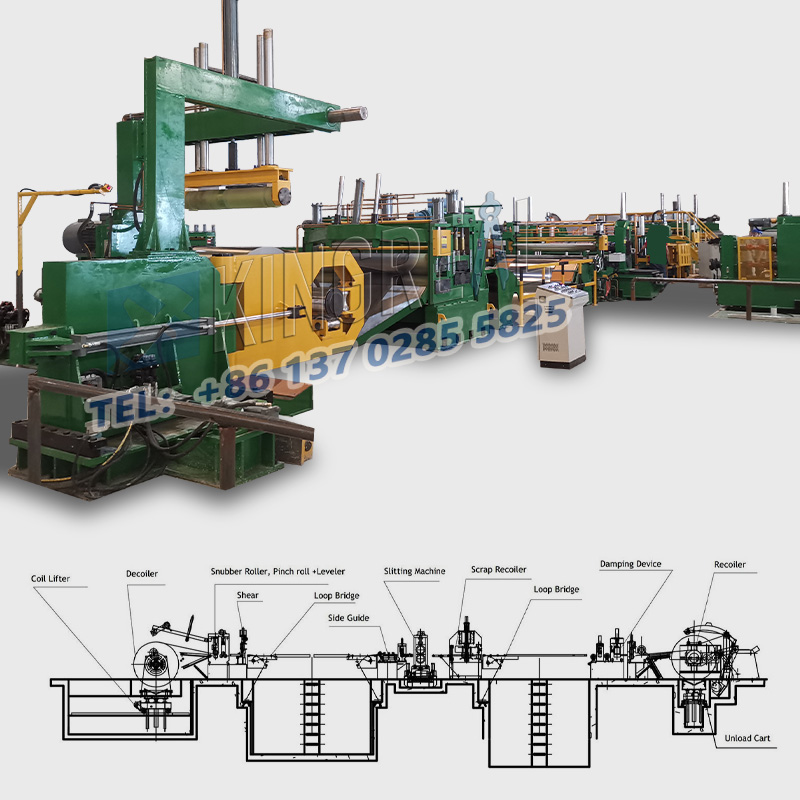
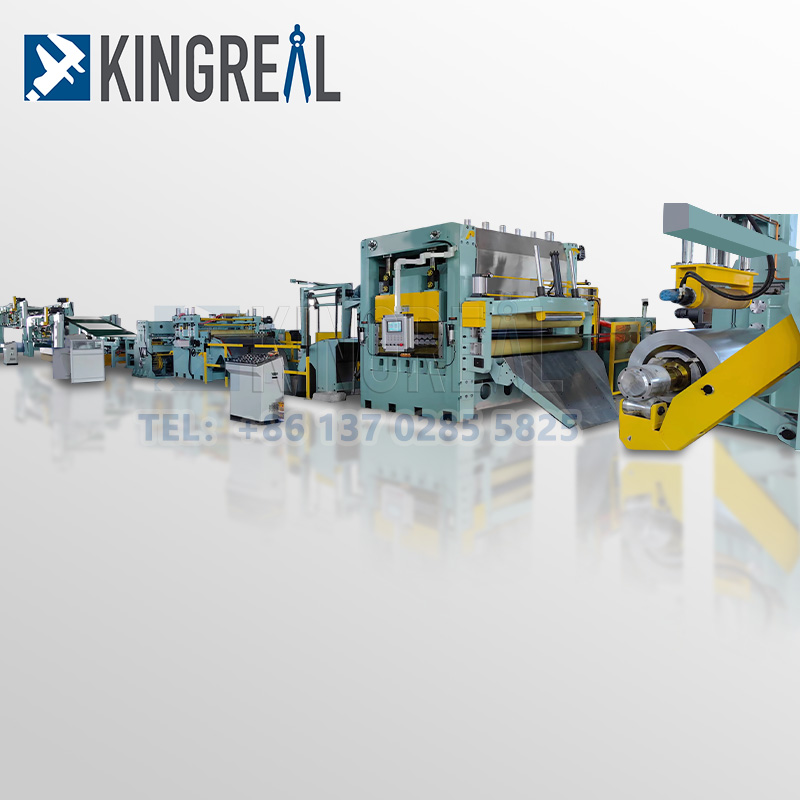
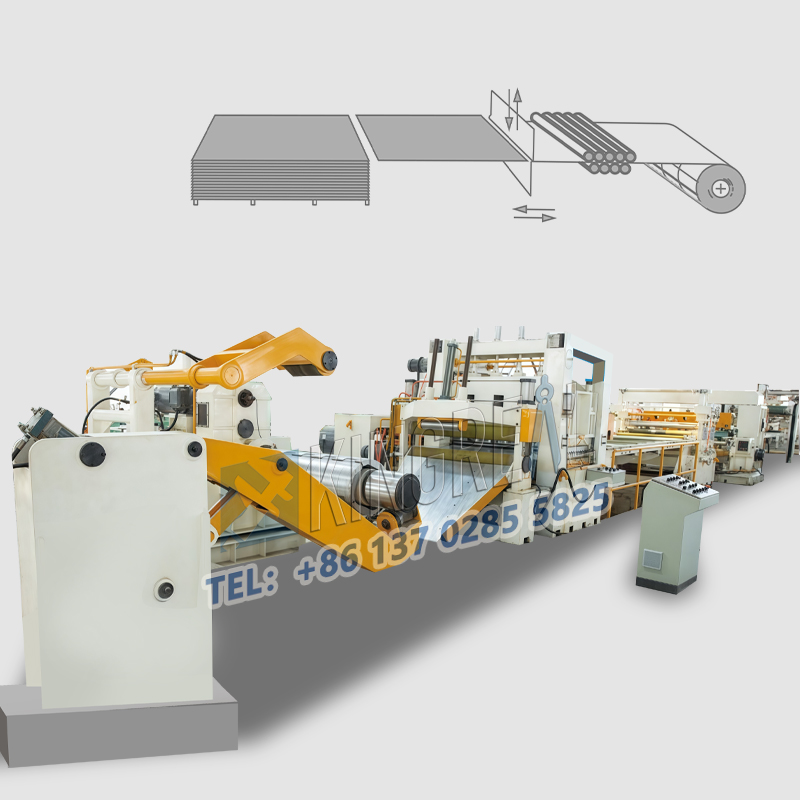
"A cut to length line machine is used to cut wide steel coils or metal sheets into specific lengths. This cut to length machine is widely used in various industries such as construction, automotive, and home appliances. Through efficient shearing and feeding, these cut to length line machines can significantly improve production efficiency. With technological advancements, manufacturers are increasingly focusing on achieving precise tolerances using cut to length machines. This article will explore how to obtain high-precision cutting results through the design, control, and maintenance of cut to length line machine."
How to Achieve Precision Tolerances Through Cut to Length Machine Design?
1.Driver selection for cut to length line machine
Various types of drivers on the market have different frequency response characteristics. Generally, AC drivers are preferred for large production lines with power below 75 horsepower and requiring long-term continuous braking. In contrast, DC drivers are more suitable for applications with power requirements exceeding 75 horsepower.
For cut to length machines, AC vector drivers are usually the ideal choice. These drivers provide consistent performance under different load conditions and offer extremely high precision when adjusting speed and torque. This precise control allows the cut to length line machine to cut metal sheets within fine tolerance ranges.
2.Motion curve design for cut to length machine
Once a suitable driver is selected, the next step is to design the corresponding motion curve. The motion curve defines the material's speed and acceleration over a specific time period. This part is crucial for achieving high-precision shearing.
Engineers need to calculate the torque for all possible cutting lengths and weights based on actual application requirements. This means that each cutting length has an ideal acceleration to ensure cutting accuracy and quality. Furthermore, recording and analyzing the speed curve helps identify potential errors in real-world operation, allowing for timely adjustments.
3. Feeder speed optimization for cut to length line machine
After developing the motion control scheme, selecting a suitable motor and gear combination is the next step. The feeder's maximum speed depends on the required cutting length and material characteristics. Knowing the motor's base speed, the required load speed of the feeder can be determined by calculating the gear ratio of the reducer.
The core of this process lies in calculating the load's inertia and ensuring that the selected motor can generate sufficient acceleration torque. This torque ensures that the ideal shearing speed is reached within a short time, thereby improving the production efficiency of the cut to length machine.
4. Consideration of constraints
Consideration of constraints is crucial when designing and selecting cut to length line machine. For example, the type of cut to length machine (e.g., fly shearing, rotary shearing, swing shearing, fixed shearing). In addition, the motor's acceleration capability must meet requirements to ensure maximum speed is reached within a specified time.
Furthermore, external conditions such as the construction environment, material characteristics, and standards can also affect the operation of the cut to length line machine. A reasonable design must not only consider the limitations of the cut to length machine but also anticipate potential external factors.
5.Motion controller for cut to length machine
The motion controller in the cut to length line machine is responsible for calculating and generating the feeder's motion curve. It is typically microprocessor-based and can interact with drivers, encoders, and other external devices. The performance of this controller directly affects the accuracy of the cut to length machine.
A high-performance motion controller can quickly process motion parameters, including distance, speed, acceleration, and torque. This control capability ensures immediate response of the cut to length line machine during operation, reducing errors caused by lag.
How to Maintain Precise Tolerances When Using Cut to Length Machine?
After designing a suitable cut to length line machine and control scheme, maintenance and optimization are key steps to ensure high precision tolerances over the long term.
1.Blade maintenance and replacement for cut to length machine
Regular blade maintenance is fundamental to ensuring the accuracy of the cut to length line machine. Blades gradually dull after prolonged operation, leading to a decline in cutting quality. Therefore, it is crucial to regularly check the blade condition based on material type and usage frequency. When necessary, the blades should be replaced or resharpened promptly to ensure cutting accuracy.
2. Calibration and optimized alignment for cut to length machine
Regular equipment calibration is essential for maintaining the precision of the cut to length line machine. All components must be calibrated according to the manufacturer's guidelines to ensure accurate position and angle. Inaccurate calibration can lead to uneven continuous cutting and even accelerated equipment wear, affecting production quality.
3. Adjusting gap based on material thickness for cut to length machine
The cutting gap is another important factor affecting cutting quality. The ideal gap should be adjusted according to the thickness and type of material. An excessively large gap will result in a rough cutting surface, while an excessively small gap may damage the blades. Setting a suitable gap based on material characteristics not only improves cutting quality but also extends blade life.
Achieving high-precision tolerances with a cut to length line machine is not a simple process. It requires comprehensive consideration from cut to length machine design to daily maintenance. KINGREAL STEEL SLITTER fully considers these factors during the design phase to ensure that customers receive a high-quality cut to length line machine. In addition, KINGREAL STEEL SLITTER will provide customers with services such as spare parts supply, cut to length machine repair, operation guidance and maintenance training to help customers obtain