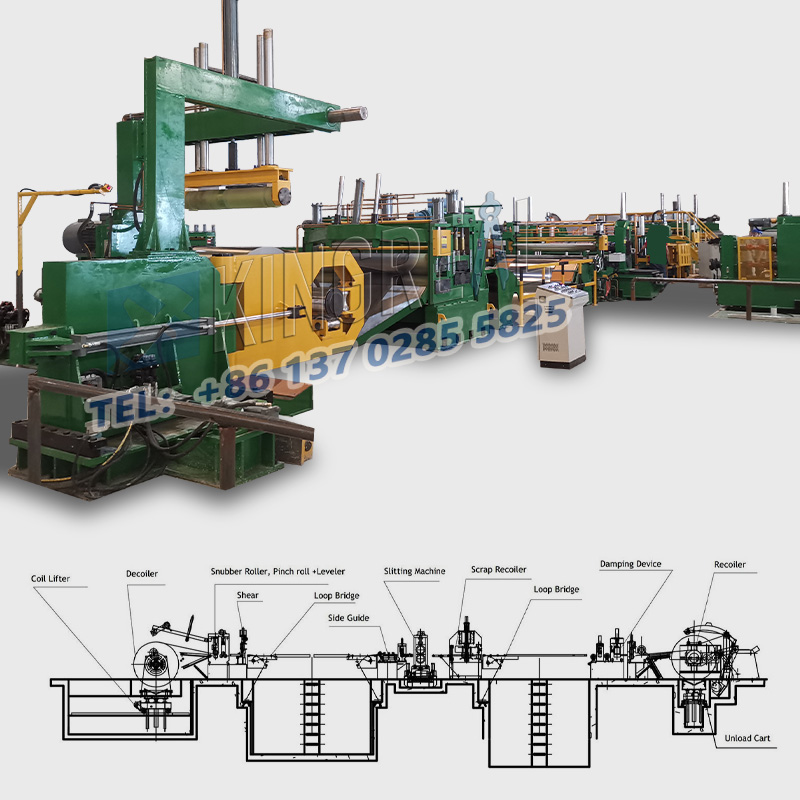
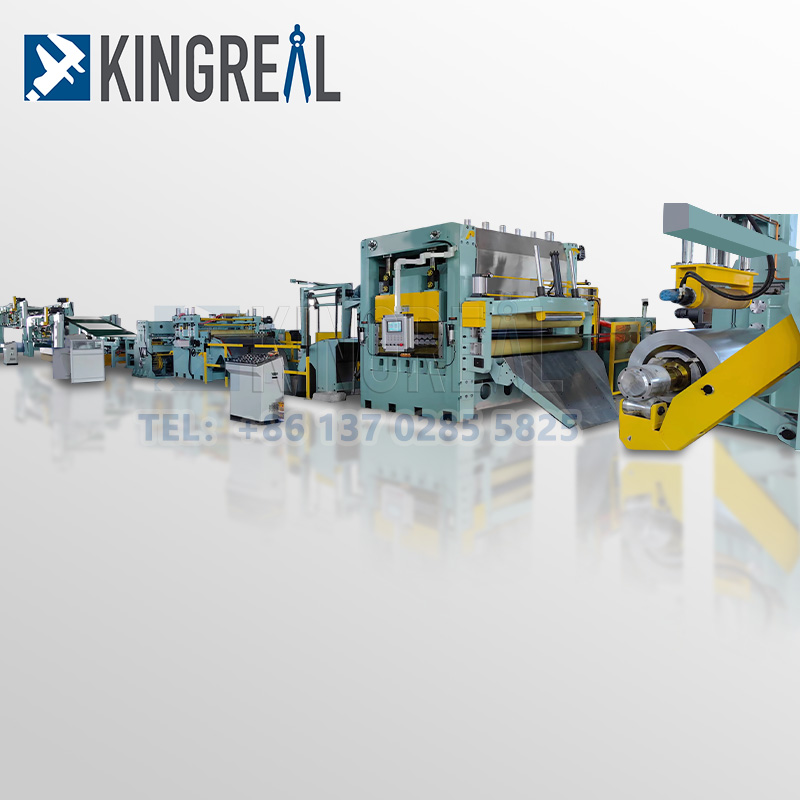
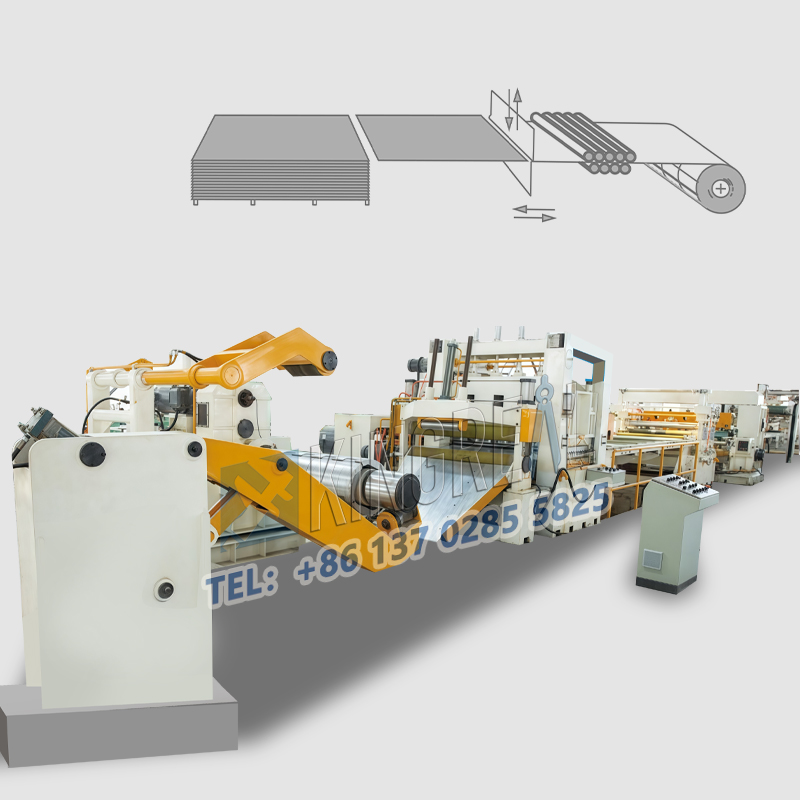
A sheet metal slitting machine is a specialized metal coil processing equipment that takes metal strip as input, processes it through uncoiling, slitting, and rewinding, and ultimately cuts it into narrow strips of the required width, which are then rewound into coils for use in the next process. Sheet metal slitting lines are widely used in processing coils of tinplate, galvanized, silicon steel, cold-rolled steel, stainless steel, aluminum, and steel. For industries such as transformers, motors, electronic components, and home appliances, sheet metal slitting machines are a crucial link in achieving efficient, precise, and low-cost production. A systematic understanding of the working principle of sheet metal slitting lines allows for more scientific equipment selection, process optimization, and improved production line stability and material utilization.
-Uncoiling and Feeding Stage: Raw materials enter the sheet metal slitting line in coil form. First, the decoiler stretches and controls the tension, ensuring the coil is evenly unwound and preventing ripples, skipped coils, or eccentricity caused by poor winding. The feeding and positioning system then feeds the unwound strip into the next process. The feeding mechanism of a sheet metal slitting machine typically features tension control capabilities, ensuring stable speed and tension of the material as it enters the next process, preventing thickness and width deviations caused by tension fluctuations.
-Slitting Stage: This is the most crucial stage of the sheet metal slitting line and is key to determining the width and consistency of the output. The slitter longitudinally cuts large rolls of strip material into several narrow strips by setting the matching angles of the cutter set, the cutter path structure, and the slitting width parameters. The cutters need to possess high hardness, good wear resistance, and strong cutting force during the shearing process to ensure that the narrow strips have clean, burr-free edges and that the width tolerance meets process requirements. The cutter arrangement of the sheet metal slitting line is usually optimized to achieve efficient operation of cutting multiple narrow strips simultaneously. The key to the cutting process also lies in the balance of radial and axial forces. The sheet metal slitting machine uses a precise servo or servo control system to achieve stepless or subdivided speed adjustment, ensuring that narrow strips of different widths achieve a consistent shearing effect on the same roll of material.
-Conveying and Tension Control Stage: After slitting, the narrow strips are conveyed to the recoiler via a conveyor. During this process, the tension of the narrow strips is further controlled to prevent wrinkling, stretching deformation, or edge defects during rewinding. Precise feed and uniform tension distribution are crucial to preventing slippage, offset, or uneven stress on the narrow strips. The tension control system of the sheet metal slitting line often works in conjunction with sensors, servo drives, and feedback loops to achieve closed-loop control.
-Rewinding Stage: The recoiler is responsible for rewinding the slit narrow strips into rolls. The rewinding process must consider not only the consistency of roll diameter and width but also the stability, tension, and interlayer flatness of the narrow strips. Under high-production conditions, the rewinding system of the sheet metal slitting machine typically features a self-locking/anti-loosening design to ensure that the narrow strips do not loosen or slip during winding, thereby improving the stability of the next process and the yield of subsequent processing.
-Easy to Operate: The sheet metal slitting machine can be automated by setting production parameters such as cutting width, number of narrow strips, and running speed via the control panel, significantly reducing labor costs. If equipped with a feeding trolley, it can automatically feed large rolls of material into the decoiler, further enhancing the automation level of the sheet metal slitting line.
-High Slitting Quality: The comprehensive design of the sheet metal slitting machine in terms of tool material, tool geometry, tension control, and cooling and lubrication ensures neat, burr-free edges on the narrow strips, stable width tolerance, and high repeatability. Excellent slitting quality is a key competitive advantage for sheet metal slitting lines in fields with stringent edge quality requirements, such as transformers and motors.
-High Material Utilization: By optimizing tool arrangement, cutting path, and edge treatment, the sheet metal slitting machine minimizes edge loss, reducing rework and secondary processing costs. For different metal materials, edge burrs and slit quality directly affect subsequent trimming processes; therefore, the sheet metal slitting line's performance in terms of material utilization is particularly important.
-High Adaptability: Modern sheet metal slitting machines can handle a variety of materials (such as tinplate, galvanized, silicon steel, aluminum, etc.) and can adapt to coils of different thicknesses and widths through parameter adjustments. This flexibility allows sheet metal slitting lines to perform small-batch or large-batch production of various materials.
-Material Characteristics and Thickness Range: The primary consideration is the material, thickness, and width range of the coil to be processed. The hardness, toughness, heat resistance, and surface finish of different materials directly affect the selection of sheet metal slitting line blade material, cooling system, and tension control strategy. Confirm that the sheet metal slitting machine can cover the required thickness and width range to avoid frequent adjustments or upgrades due to equipment incompatibility.
-Slitting Width Accuracy and Stability: The repeatability and tolerance control capabilities of the sheet metal slitting line at the set width need to be evaluated. High-precision slitting width has a significant impact on subsequent processes such as stretching, stamping, and welding.
-Automation Level: Modern sheet metal slitting machines typically have intelligent control, self-diagnosis of faults, and remote maintenance capabilities. Assess the impact of the manufacturer's technical support, spare parts supply, and training services on long-term operating costs.
-Structural Durability and Safety: Sheet metal slitting lines involve high-intensity slitting and high-speed operation, requiring attention to the wear resistance of rollers, cutters, and transmission systems, vibration control, noise levels, and operational safety design.