Slitting is an indispensable core process in metalworking. Its primary function is to precisely cut large metal coils into narrow strips of standardized specifications and uniform widths—tailored to the specific production needs of various industries—thereby laying the foundation for subsequent component manufacturing.
This process is carried out using a precision coil slitting line and serves a wide range of sectors, including automotive manufacturing, construction, electrical and electronics, major appliances, and metal packaging.
Through standardized and precise slitting, enterprises can streamline downstream production, improve raw material utilization, and minimize processing waste. This article provides a detailed overview of the precision coil slitting machine.
What is a Precision Coil Slitting Line?
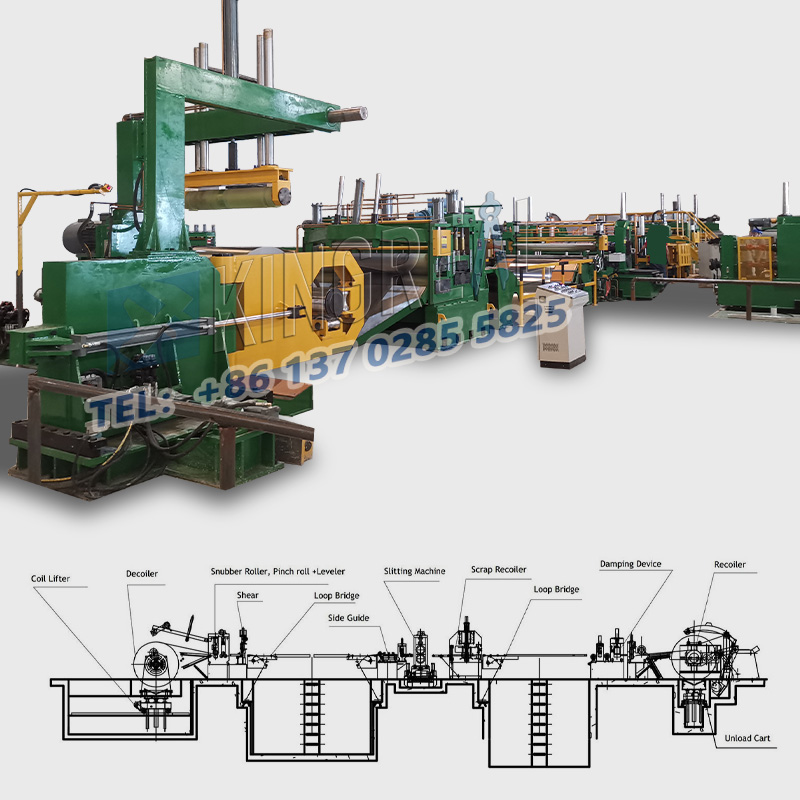
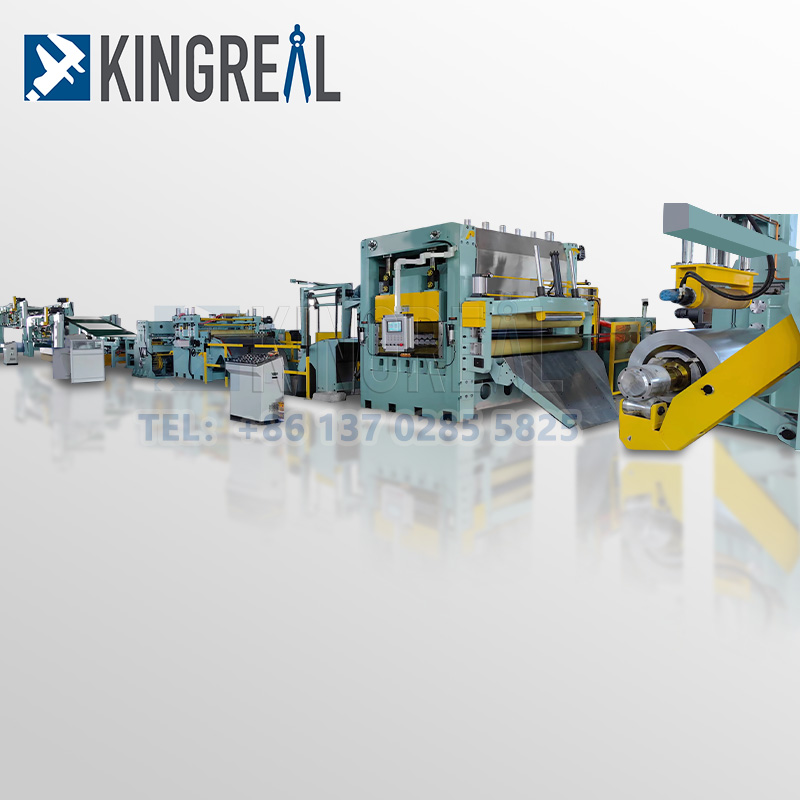
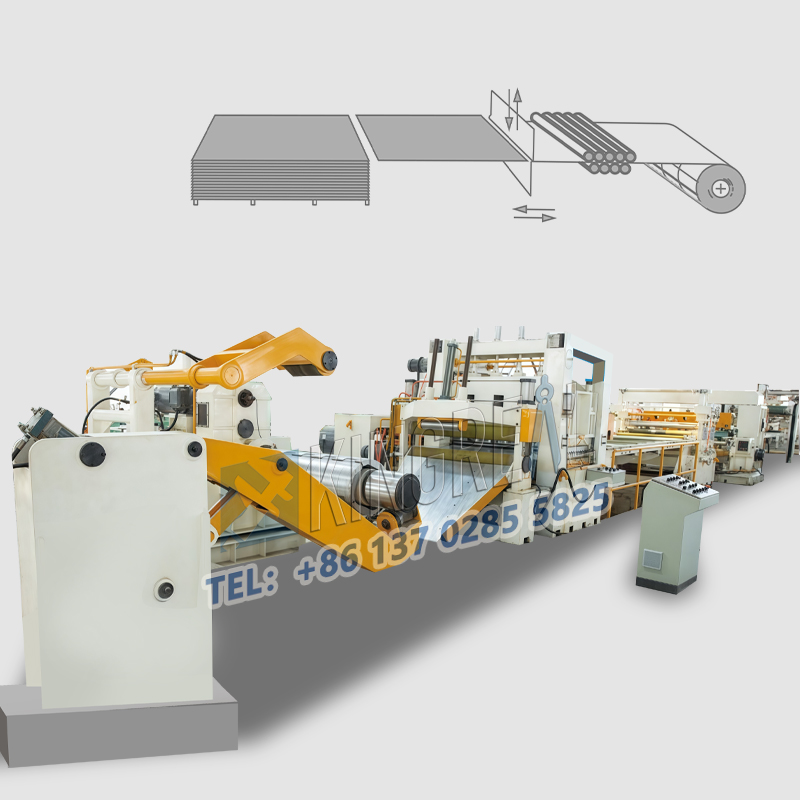
A precision coil slitting machine consists of three core modules—the decoiler, the main slitter, and the recoiler—supported by intelligent control, tension regulation, and blade alignment systems. Its primary function is to precisely slit wide metal coils lengthwise into multiple strips of specified widths while simultaneously winding them into neat coils. The resulting strips feature standardized dimensions and smooth edges, making them easy to store and suitable for long-distance transport as well as secondary processing steps such as stamping, bending, and welding.
The greatest advantage of a precision coil slitting line is its exceptional processing accuracy. When professionally calibrated, the machine maintains a strip width tolerance of ≤±0.05mm and a post-cut burr height of ≤0.03mm, effectively preventing downstream processing failures caused by excessive burrs. Regarding straightness, the error is ≤0.8mm/m for strips ≤30mm wide and ≤0.5mm/m for strips >30mm wide.
In terms of versatility, precision coil slitting machines are highly adaptable. They can process a wide range of common metals—including stainless steel, carbon steel, cold-rolled and hot-rolled steel, aluminum alloys, and copper—across thin, medium, and thick gauge specifications.
How Does a Precision Coil Slitting Line Work?
The complete operational workflow begins with material loading: a feeding trolley transports the large metal coil precisely to the decoiler, where it is secured and positioned. Subsequently, the decoiler operates at a constant speed, smoothly unwinding the coil; regulated by an intelligent constant-tension control system, it maintains steady strip tension and uniform feed speed.
As the strip is smoothly conveyed to the main slitter, pairs of high-precision circular blades within the machine operate synchronously to perform continuous longitudinal cutting across the strip's width, simultaneously dividing the wide coil into narrow steel strips according to the customer's preset specifications. Following the cut, the precision coil slitting machine can automatically perform finishing operations—such as edge trimming and deburring—based on material processing requirements, or feed the strips directly to the recoiler, where they are neatly wound into coils.
In terms of processing parameters, the precision coil slitting line delivers outstanding performance, capable of handling heavy-duty steel coils up to 0.63 inches thick and producing strips as narrow as 0.2 inches. Width specifications can be fully customized to meet specific project needs without a fixed upper limit, accommodating diverse production requirements.
Modern high-end precision coil slitting machines feature intelligent sensor systems that dynamically monitor key parameters—such as blade position, cutting accuracy, and material feed speed—in real-time, correcting operational deviations instantly. Additionally, the equipment utilizes a dedicated bridge structure to precisely regulate steel strip transport speeds between the uncoiling, slitting, and recoiling stations. This ensures speed synchronization and flexible buffering across processes, effectively eliminating tension fluctuations and strip misalignment during high-speed operation while guaranteeing consistent dimensional accuracy throughout.
Currently, precision coil slitting lines can reach operating speeds of up to 230 m/min, combining high-speed production with ultra-high precision.
Diverse Types of Precision Coil Slitting Line
Depending on material thickness and specific industry applications, precision coil slitting machines fall into three main categories, each tailored to the precision processing needs of different sectors. All models can be customized and optimized to meet specific customer capacity and process requirements.
Advantages of Precision Coil Slitting Machines
Choosing the Right Precision Coil Slitting Machine Supplier
The quality of the precision coil slitting line and the associated after-sales service directly impact long-term production stability. A high-quality supplier helps mitigate production risks—such as equipment breakdowns, quality defects, and schedule delays—ensuring reliable, long-term production for the enterprise.
KINGREAL STEEL SLITTER has been deeply engaged in the precision coil slitting machine industry for over two decades, possessing mature systems for equipment R&D, manufacturing, and service.
KINGREAL STEEL SLITTER specializes in custom precision coil slitting lines, tailoring production line solutions to meet specific client needs and local industry regulations. We also offer auxiliary equipment—such as dual-cutter heads, belt tensioning stations, and automatic coil packaging machines—to optimize overall production efficiency.
For detailed specifications, custom solutions, and price quotes regarding our precision coil slitting machines, please contact KINGREAL STEEL SLITTER to receive a professional, one-stop solution for metal slitting and processing.