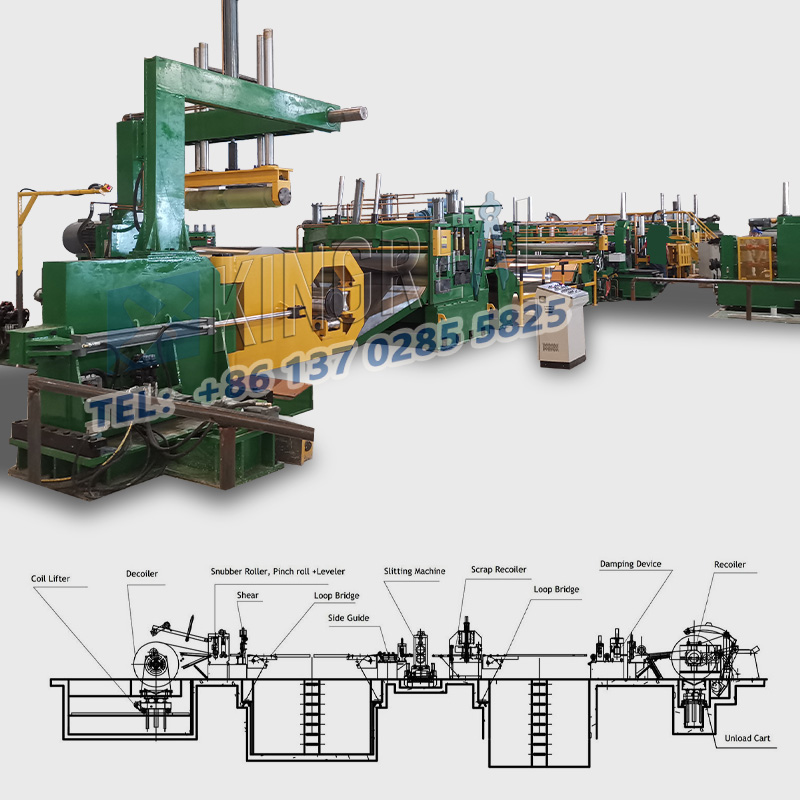
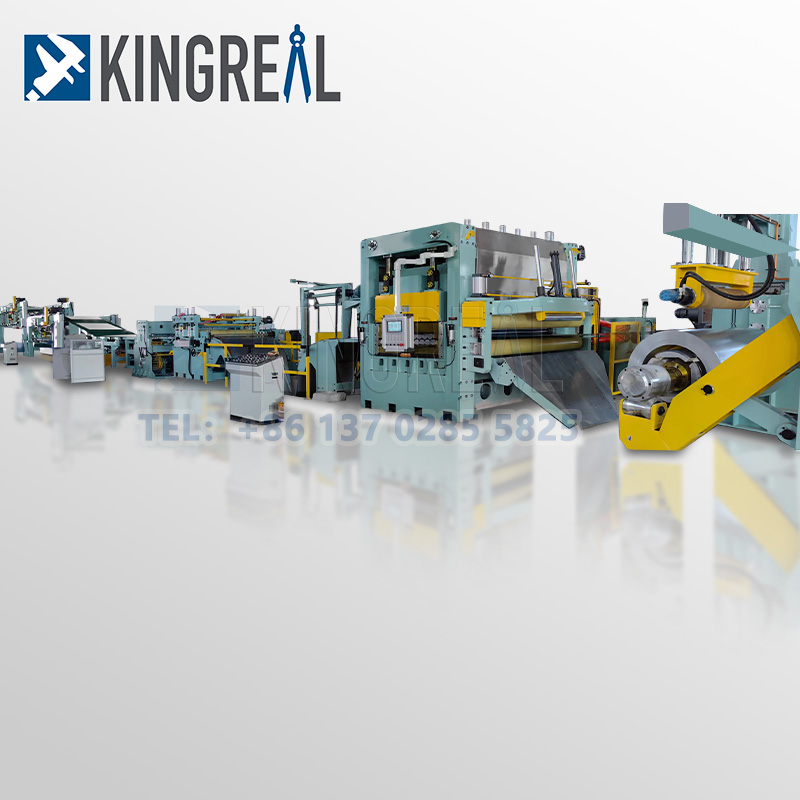
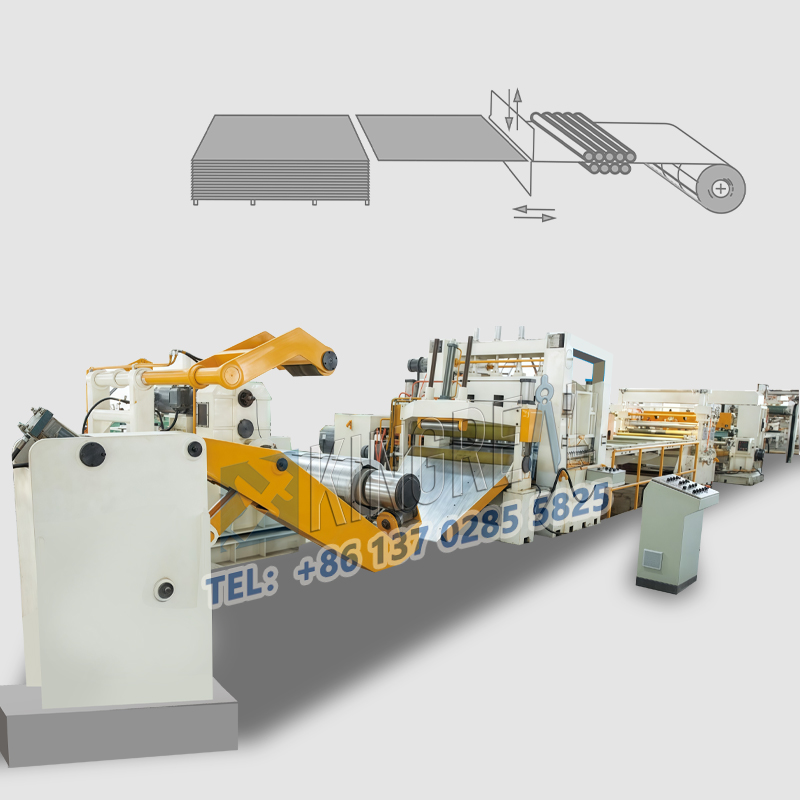
In a metal cut to length machine, the quality of the leveling process directly determines the flatness, residual stress state, and surface quality of the final sheets. Consequently, when configuring a metal cut to length line, one of the primary technical decisions a customer must make concerns the configuration of the leveler—specifically, whether to choose a 4-Hi or 6-Hi design.
The role of a leveler within a metal cut to length machine is to eliminate internal stresses introduced into metal coils during their manufacturing and coiling processes. Untreated coils often exhibit longitudinal curvature, transverse curvature, and edge waviness. By subjecting the material to alternating bending through multiple sets of rollers, the leveler creates a flat, stable foundation for the precise cutting operations that follow.
4-Hi and 6-Hi levelers are the two most common configurations found in metal cut to length lines today. The choice between them typically depends on the characteristics of the raw material—such as cold-rolled steel, galvanized steel, or stainless steel—as well as the surface quality requirements for the finished product.
1. Structural Differences
4-Hi Structure: Consists of two layers of work rolls and two layers of backup rolls. The primary function of the backup rolls is to prevent the work rolls from deflecting under high-pressure loads.
6-Hi Structure: Incorporates an additional layer of intermediate rolls between the work rolls and the backup rolls. This three-tier stacked configuration provides greater rigidity and allows for more nuanced adjustment of the pressure distribution.
2. Surface Stability and Protection
When a metal cut to length machine processes materials with a high-quality finish—such as mirror-finish stainless steel or aluminum sheets—the arrangement of the rollers directly influences the degree of surface wear.
In a 4-Hi configuration, the backup rolls act directly upon the work rolls, resulting in a more direct transmission of pressure. The six-high structure utilizes intermediate rolls to distribute pressure more effectively, reducing localized deformation of the work rolls. This significantly enhances the surface finish of the sheets produced by the metal cut to length line.
3. Adjustment Range and Operating Conditions
If a metal cut to length machine is primarily used to process coils with significant thickness variations or high material hardness, a six-high leveler offers a broader adjustment range. Generally, a higher number of roll tiers allows for more precise leveling, enabling the machine to handle more complex internal stress distributions within the material.
Four-High Leveler:
KINGREAL STEEL SLITTER four-high leveling configuration is typically used for standard cut-to-length operations requiring medium-level precision, offering exceptional durability.
-Technical Specifications:
This metal cut to length line employs a four-high roll structure, designed to achieve the final desired flatness of the coil material through precision leveling.
Frame Construction: The main base is constructed from welded channel steel, while the side housings are precision-machined from high-strength steel plates, ensuring equipment stability during high-speed operation.
Roll Configuration: The leveling unit features a 17-roll arrangement (8 on top, 9 on the bottom), supplemented by a pair of pinch rolls at both the entry and exit points to ensure smooth material feeding into the processing zone of the metal cut to length machine.
Material and Heat Treatment: The work rolls are made from φ76x1350mm round steel (42CrMo alloy steel). The manufacturing process includes: quenching and tempering (250–280 HB) → rough turning → high-frequency induction hardening of the roll surfaces (55–58 HRC) → precision grinding → hard chrome plating. This multi-stage treatment significantly increases the surface hardness and wear resistance of the rolls.
Drive System: The system is powered by an 18.5 kW servo motor (rated speed: 2000 rpm), integrated with a high-precision servo control system to ensure synchronization with the entire operation of the metal cut-to-length line. Transmission Mechanism: Employs a high-precision synchronous gear reduction gearbox (with oil-bath lubrication) and universal joint couplings to transmit power, ensuring uniform power delivery and minimal mechanical backlash.
6-High Leveler:
For metal cut to length lines where superior surface quality and exceptional flatness precision are required, a 6-high leveling configuration is the preferred choice. By incorporating an additional layer of intermediate rolls, this design effectively mitigates the deformation of work rolls caused by applied forces.
-Technical Specifications:
Leveling Configuration: 6-High (6-Hi)
Base and Frame: Integrated welded steel plate structure, tempered
Number/Diameter of Leveling Rolls: 21 rolls × Φ70mm
Number/Diameter of Intermediate Rolls: 23 rolls × Φ65mm
Material Standard: 9Cr2Mo (High-grade alloy tool steel)
Surface Treatment: Precision turning, quenching and tempering, chrome plating, cryogenic treatment, and grinding
Drive Motor: 110kW DC motor
Power Transmission: Independent drive via constant-velocity (CV) universal joint couplings
Adjustment Mechanism: Synchronous lifting/lowering via two 2.2kW AC motors
-Performance Advantages:
In a metal cut to length machine equipped with a 6-high leveler, each leveling roll is driven independently. Through the use of a distribution gearbox and constant-velocity universal joint couplings, the system eliminates surface scratching caused by uneven roll speeds. The work rolls, crafted from 9Cr2Mo, offer an optimal balance of toughness and hardness, ensuring the long-term maintenance of their geometric precision.
Material Type:
For hot-rolled sheets or standard structural steel plates, a 4-high leveling machine is generally sufficient to meet most industrial requirements.
For cold-rolled sheets, galvanized sheets, aluminum sheets, or high-strength stainless steel, a 6-high leveling machine is recommended to ensure surface protection.
Flatness Requirements:
For metal sheets intended for subsequent laser cutting or precision stamping, extremely low residual stress is required; in such cases, the multi-point fine-tuning capabilities of a 6-high leveling machine are essential.
For general structural components used in construction or parts where surface appearance is not critical, the flatness provided by a 4-high leveling machine is more than sufficient to meet the requirements.
Budget and ROI:
A 4-high leveling machine features a simpler structure and lower maintenance costs.
While a 6-high leveling machine requires a higher initial investment, it delivers a superior return on investment over the long term by increasing the value-add of the products and reducing scrap rates.
With extensive industry experience, KINGREAL STEEL SLITTER offers customized design and configuration recommendations for every component of a metal cut to length machine—tailored to the specific needs of each client’s project. We provide more than just equipment; we deliver comprehensive solutions to address challenges related to material stress and surface quality.