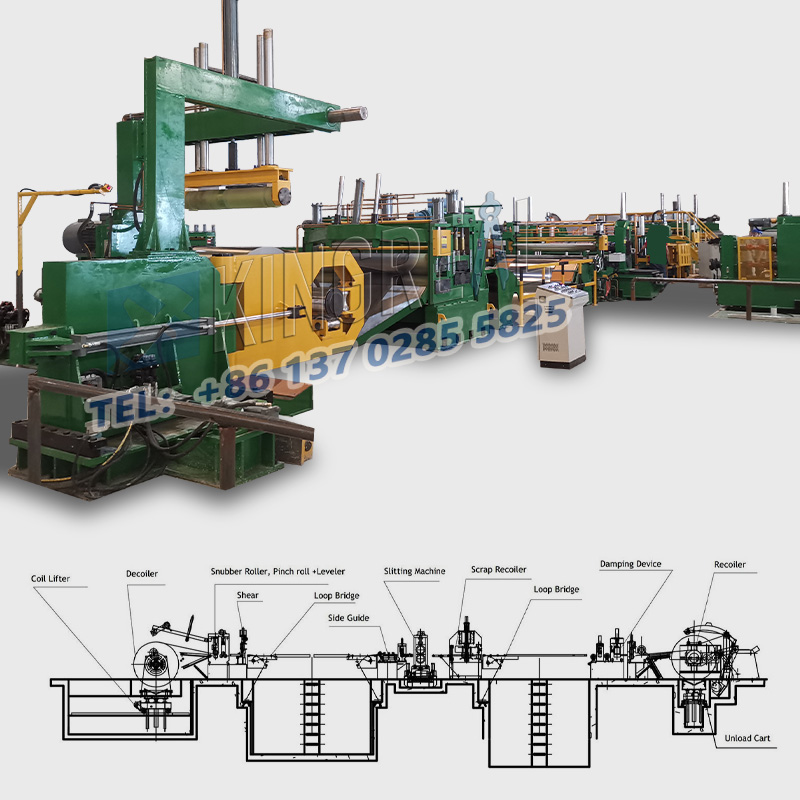
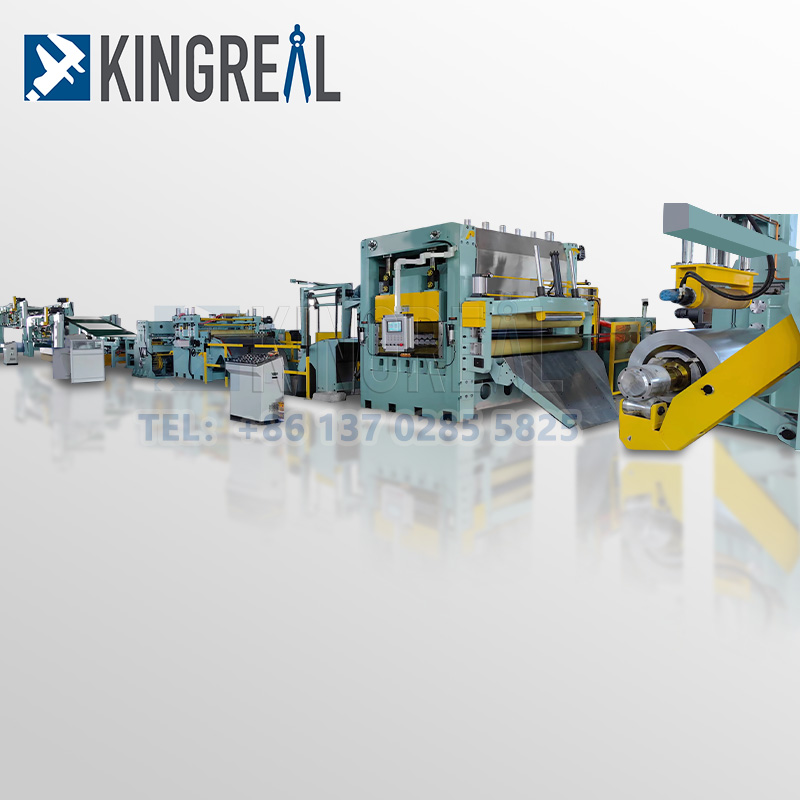
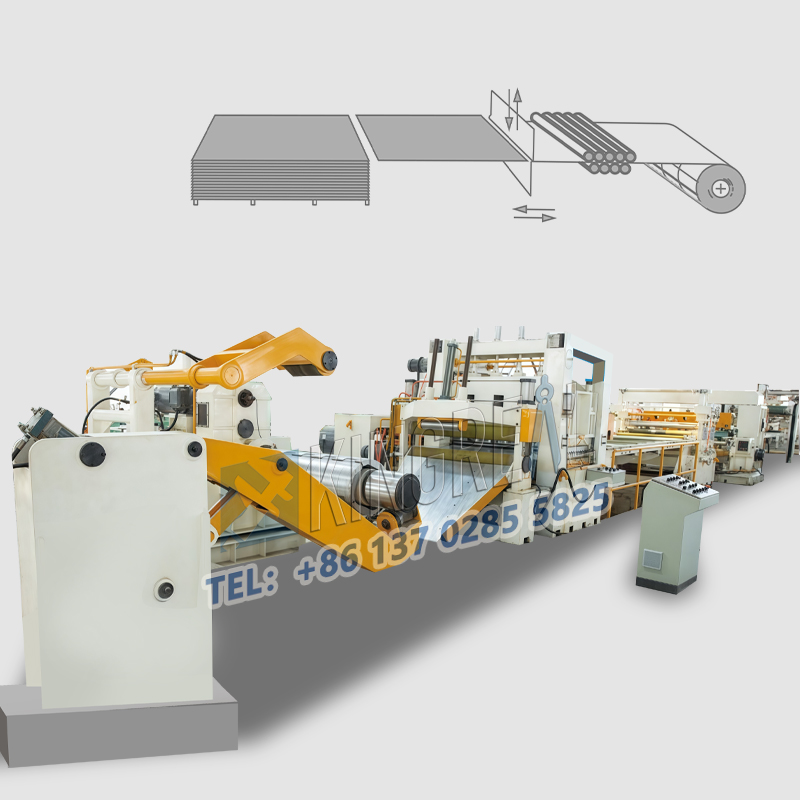
Stainless steel slitting machines are mostly employed in the stainless steel precision processing sector for the exact longitudinal cutting of several narrow strips of constant width and specifications from wide coils.
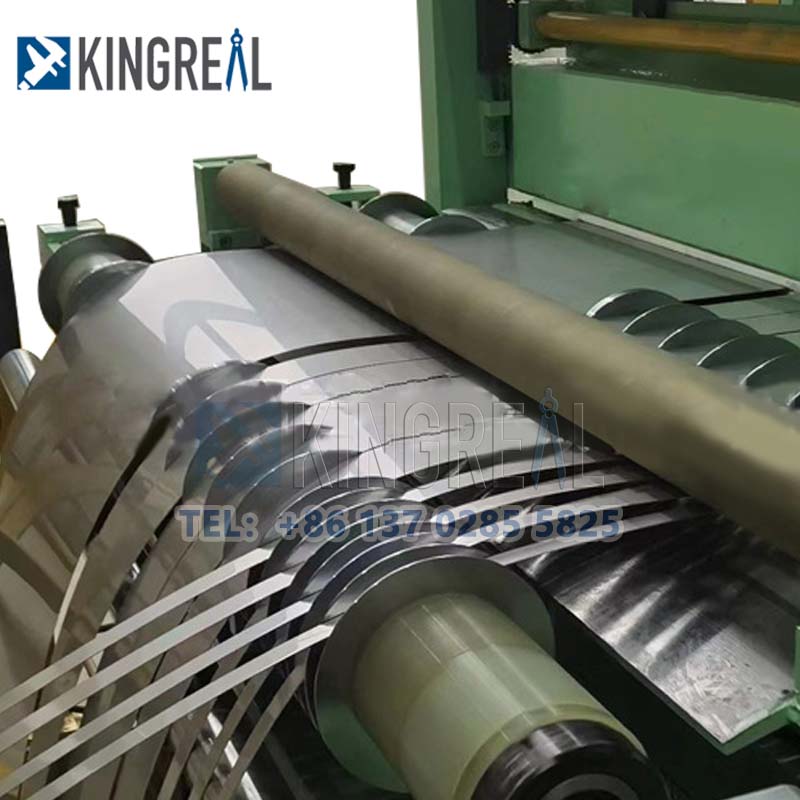
These stainless steel coil slitting machines are meant especially to meet the special qualities of stainless steel, including great hardness, sensitivity to deformation, and a surface sensitive to scratching. They make sure strict management of dimensional accuracy, edge flatness, and surface integrity throughout the slitting process to ensure the final narrow strips satisfy industry standards totally. These stainless steel slitting machines generate strips devoid of defects like warping, burrs, or dimensional abnormalities; they don't affect subsequent secondary operations—like stamping, laminating, forming, or assembly—and can be fed right into manufacturing, therefore guaranteeing constant quality and visual integrity in the finished stainless steel products.
This paper acts as a professional guide for equipment choice and production procedures by offering a thorough review of stainless steel coil slitting machines, their core value, application uses, and selecting criteria.
Why Use Stainless Steel Slitting Machines?
|
As modern manufacturing evolves, industries increasingly demand higher standards for quality, appearance, and dimensional uniformity in stainless steel products. The stainless steel coil slitting machines successfully solve the sector's problems with the accuracy of small strips, therefore becoming indispensable machinery in the stainless steel deep-processing supply chain. By nature, stainless steel is oxidisation-resistant, robust, sturdy, and corrosion-resistant. Precision-slit narrow strips are appropriate for many traditional and high-tech manufacturing industries because of their exact dimensions, smooth edges, and scratch-free surfaces. In precision manufacturing, these narrow strips are used to produce components such as electronic stamped parts, fiber optic cable reinforcement cores, diamond saw blade substrates, photolithography materials, and precision watch parts. In traditional industries, the materials processed by these machines meet production needs across sectors such as textile accessories, packaging hardware, metal profile processing, and general hardware manufacturing.
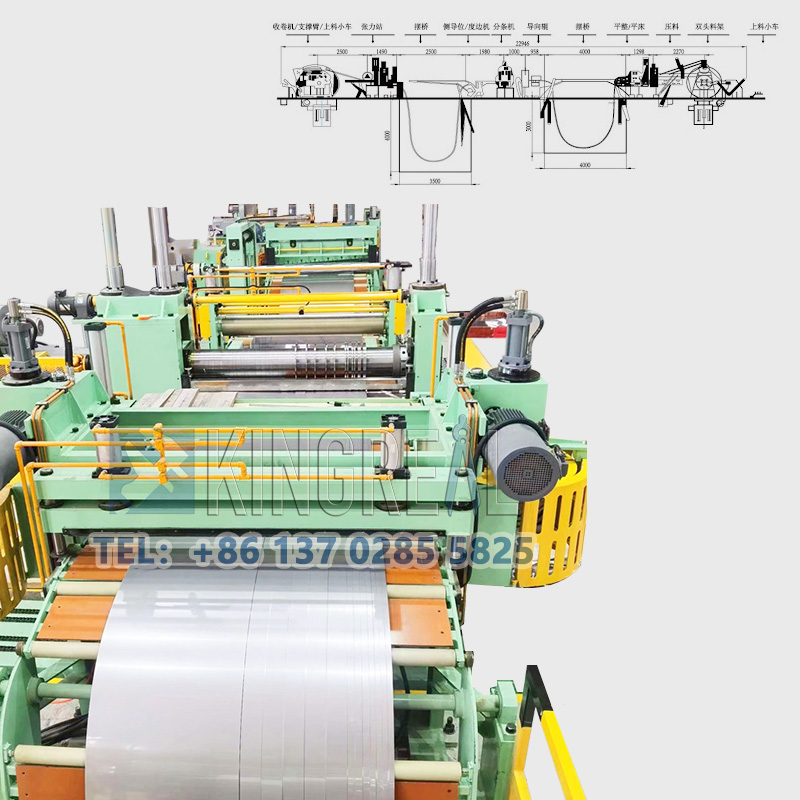
Compared to standard cutting equipment, stainless steel slitting machines offer key advantages: precise slitting capabilities, a high degree of automation, and stable processing efficiency. Professional stainless steel slitting machines allow exact millimeter-level slitting, therefore greatly improving the visual quality and performance of narrow stainless steel strips by avoiding problems including dimensional variances, edge burrs, and surface damage. These stainless steel coil slitting machines help to guarantee product consistency across batches and steadily increase output efficiency, so lowering human error and labor expenses by means of automated control systems. |
 |
Tips for Selecting a Stainless Steel Slitting Machine
Stainless steel comes in a wide variety of grades, with vastly different physical properties and processing characteristics across series, necessitating distinct slitting processes and equipment configurations.
Common stainless steel materials fall into five main categories: austenitic (300 & 200 series), ferritic (400 series), martensitic (400 series), duplex (e.g., 2205), and precipitation-hardening (PH) stainless steels.
These categories differ significantly in terms of hardness, applicable thickness ranges, surface finish, alloy composition, toughness, and deformation resistance. Consequently, core specifications—such as cutter assembly structure, power configuration, and control systems—must be precisely matched to the specific material being processed to prevent defects caused by equipment incompatibility.
1) Matching cutter and arbor configurations.
For high-hardness martensitic and duplex stainless steels, high-hardness, wear-resistant alloy cutters are required, alongside precise adjustment of cutter clearance to prevent chipping, burrs, or material stretching and deformation during slitting. For the tougher 300 and 200 series austenitic stainless steels, the machine requires high-precision, high-rigidity arbors to ensure stability and prevent vibration during high-speed slitting, thereby guaranteeing dimensional accuracy.
2) Matching power and drive parameters.
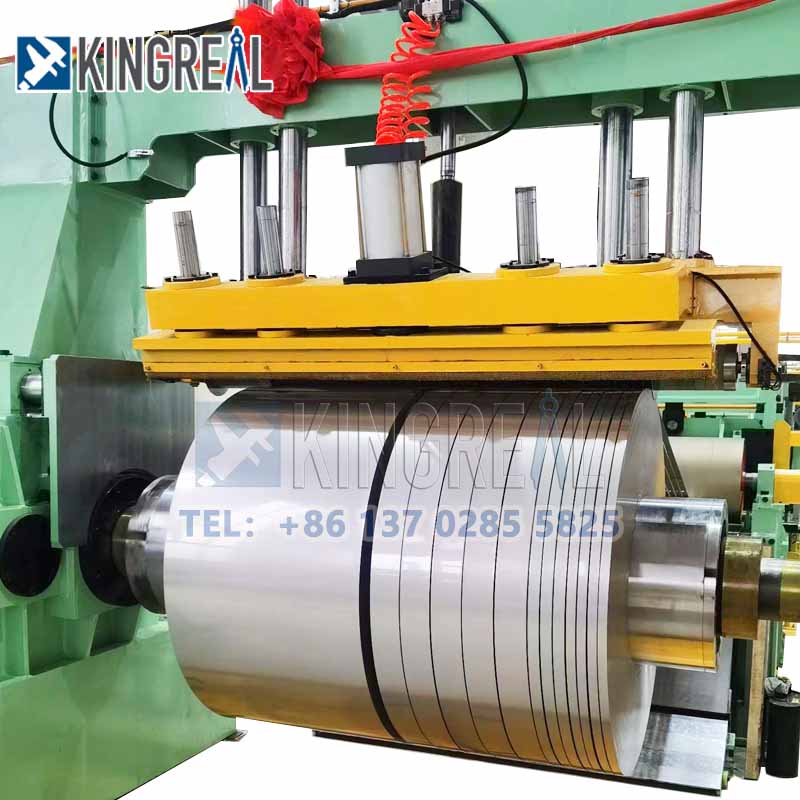
The key drive arrangement of a stainless steel coil slitting machine must correspond to the hardness and thickness of the stainless steel coils. This guarantees good performance and enough shearing force, therefore avoiding problems like stalling, incomplete slitting, or material stretching and distortion.
 |
 |
3)Optimizing the tension control system.
Tension control in stainless steel slitting machines directly determines the flatness of the coil and the tightness of the material. When processing thin or highly ductile narrow stainless steel strips, a precise tension control system is essential to prevent stretching, wrinkling, or tracking errors. Conversely, when processing thick or high-hardness stainless steel, stable tension output is required to ensure the slitting and winding processes remain synchronized.
4) Consider equipment rigidity and locking mechanisms.
Long-term work on high-hardness stainless steel might cause alignment problems and vibrations. Thus, give highly robust frame rigidity and safe blade holder locking mechanisms first when choosing stainless steel slitting machine; this helps to reduce operating vibration and guarantee consistent accuracy over long-term, high-volume manufacturing.
5)Equip with comprehensive auxiliary systems.
Stainless steel coil slitting machines should have unique winding mechanisms and auxiliary tools for paper interleaving and protective film application as stainless steel is prone to scratching and oxidation. These elements shield the stainless steel surface during production, therefore avoiding scratches and stains and guaranteeing the final product's visual quality. Furthermore, great-quality stainless steel slitting machine have expert burr suppression and waste retrieval mechanisms that automatically gather trim waste and assist to properly control edge burrs.
As a professional manufacturer and supplier with years of experience in the industry, KINGREAL STEEL SLITTER offers customized, high-precision stainless steel slitting machines tailored to specific material grades, precision requirements, and production capacities. We provide a comprehensive service package that includes equipment selection, production commissioning, and after-sales support.
Please contact KINGREAL STEEL SLITTER directly for more information on specifications, selection options, and customization services.