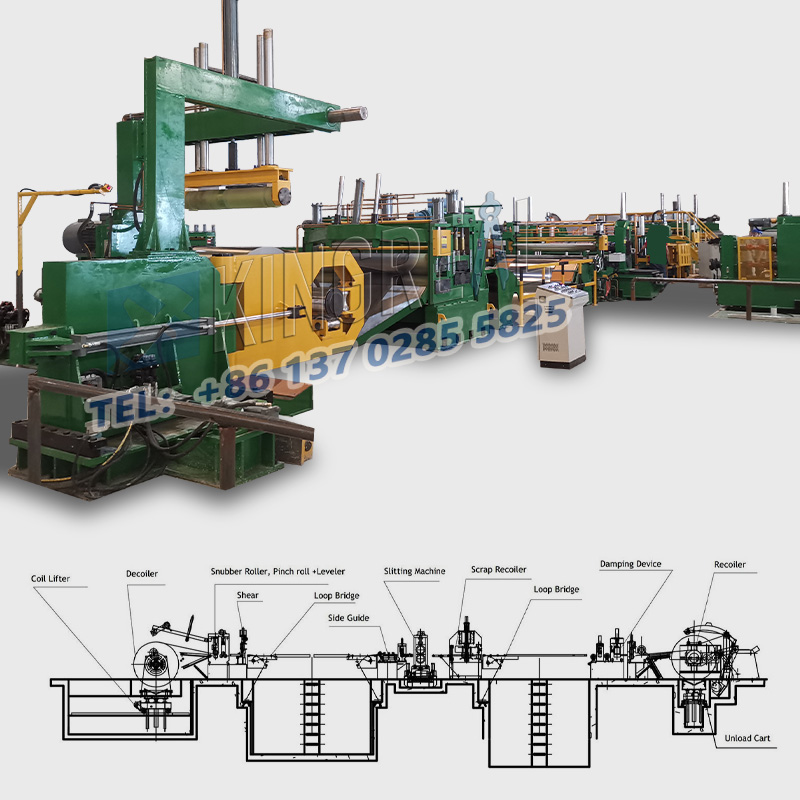
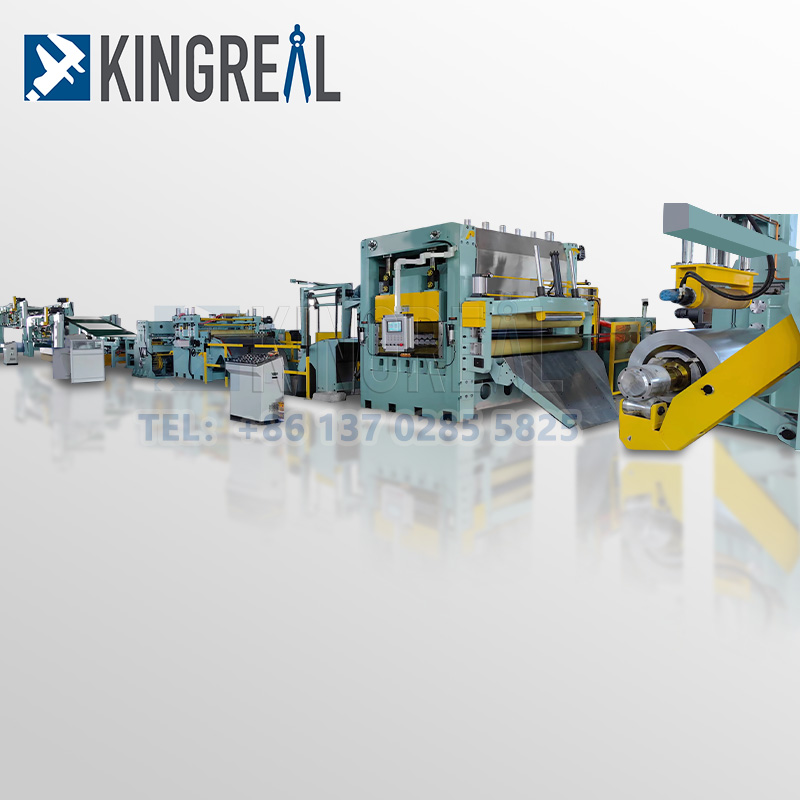
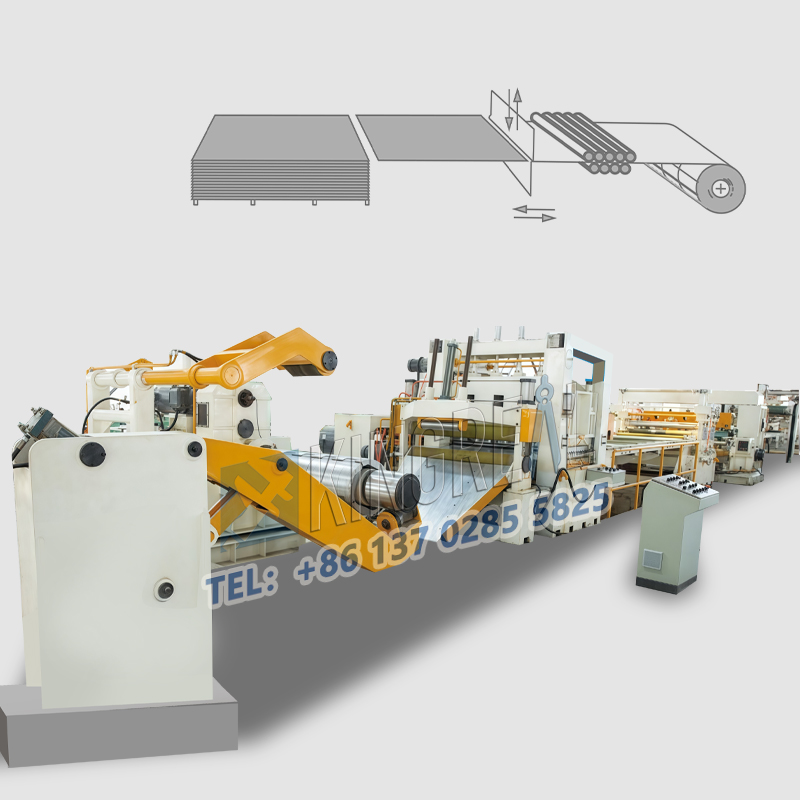
In the metal coil processing industry, fly shearing cut to length lines and stop to shearing cut to length lines are the two most widely used types of coil to sheet cut to length machines.
Both systems perform processes such as uncoiling, leveling, length measurement, shearing, and stacking to transform metal coils into flat sheets of fixed dimensions; they are extensively used for the pre-processing of materials such as steel, stainless steel, aluminum, and silicon steel.
However, there are fundamental differences between fly shearing cut to length lines and start-stop shear cut to length lines regarding core shearing principles, operating modes, production efficiency, and application scenarios.
When selecting equipment, many processing enterprises often struggle to distinguish the appropriate use cases for these two types of lines, frequently leading to issues such as mismatches between equipment capacity and production needs, excessive energy consumption, and wasted production costs.
To assist processing plants and manufacturing enterprises in making precise equipment selections, this article provides an in-depth comparison of fly shearing cut to length lines and stop to shearing cut to length lines across key dimensions—including sheet movement status, production speed, continuous operation capability, and production suitability.
It clearly analyzes the advantages and disadvantages of both systems, offering a professional reference for equipment procurement and production line upgrades.
Core Shearing Method
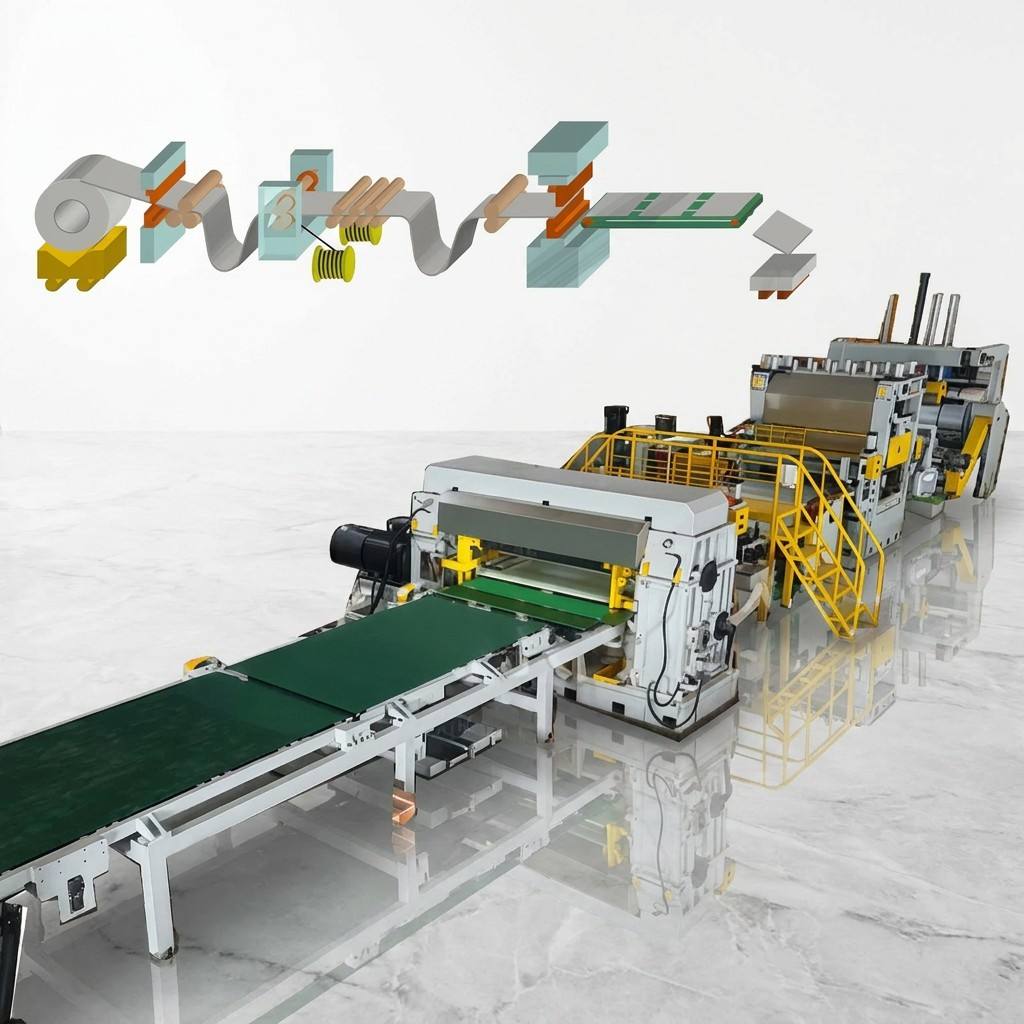
Start-stop shear cut to length lines utilize a static shearing mode that requires the material to stop; the entire system follows an intermittent work cycle of feeding, stopping, shearing, resetting, and feeding again.
The specific operating process is as follows: the equipment's conveyor rollers advance the metal sheet, and a servo-driven length measurement system precisely tracks its length.
Once the sheet reaches the preset cutting length, the feeding system pauses immediately, bringing the metal sheet to a complete, stationary halt.
Subsequently, the shear head descends to perform the transverse cut while the sheet is stationary.
After the cut is complete, the shear head retracts, and the equipment resumes feeding to begin the next processing cycle. The process requires a full stop for every cut, ensuring the sheet is always stationary during the shearing action.
The fly shearing cut to length line employs a dynamic synchronous cutting mode, equipped with a high-precision servo synchronization control system and an electronic cam mechanism.
As the metal sheet is conveyed continuously at a constant speed, the shear carriage moves in sync with the material, executing the cut precisely while in motion.
The entire cutting process requires neither pausing the feed nor stopping the machine; the sheet remains in constant motion.
Once the cut is complete, the carriage quickly resets to seamlessly prepare for the next cut, enabling uninterrupted dynamic production throughout.
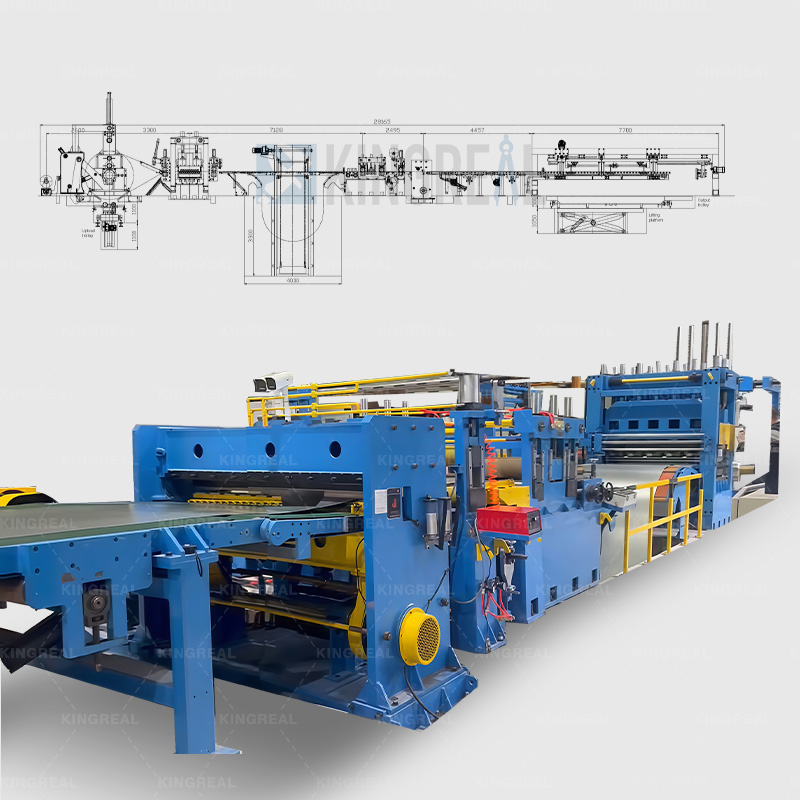 |
 |
|
stop to shearing cut to length line |
fly shearing cut to length line |
Comparison of Production Speeds
With a stop to shearing cut to length line, every cut requires a complete cycle: stopping the feed, positioning the sheet, performing the cut, resetting the equipment, and restarting the feed. Frequent start-stop actions result in significant time loss, drastically reducing effective production time.
Additionally, frequent starting and stopping create mechanical buffering intervals that further slow down the processing cycle.
Consequently, the overall processing speed of start-stop shear cut to length lines is relatively low—typically 15 m/min—with longer cycle times per cut and limited output per unit of time.
In contrast, the fly shearing cut to length line leverages the core advantage of dynamic, non-stop cutting. There are no pauses, waiting periods, or start-stop losses; all mechanical actions are seamlessly linked.
Fly shearing cut to length lines can operate at standard line speeds of up to 80 m/min—far exceeding that of start-stop shear cut to length lines—resulting in significantly higher hourly capacity and the ability to efficiently handle large-volume cutting tasks.
Continuous Operation Capability
Stop to shearing cut to length lines are constrained by their intermittent operating mode, making long-term, uninterrupted continuous operation impossible. Repeated starting and stopping not only lowers production efficiency but also accelerates wear on core components such as motors, shear carriages, and drive rollers; frequent, high-frequency cycling over the long term increases the risk of equipment failure and precision deviations.
Therefore, start-stop shear cut to length lines are better suited for intermittent production and small-batch, multi-lot processing scenarios, failing to meet the demands of round-the-clock, large-scale continuous production.
However, the equipment features a simple structure, ease of operation, low failure rates, and minimal daily maintenance costs.
With an affordable purchase price, it offers excellent cost-effectiveness for enterprises with lower capacity requirements.
Fly shearing cut to length lines are designed specifically for continuous, large-scale production. The system operates with a seamless logic that eliminates frequent start-stop cycles; core mechanical components run smoothly with reduced wear, resulting in significantly enhanced stability and durability.
These fly shearing cut to length lines support round-the-clock, uninterrupted operation with consistent cycle times and cutting precision, making them perfectly suited for the high-volume, heavy-duty processing demands of large-scale factories.
Although the initial investment for a fly shearing cut to length line is slightly higher than that of a start-stop shear cut to length line, its advantages—high capacity, stable operation, and low failure rates—significantly reduce unit production costs over the long term, yielding superior overall economic benefits.
Equipment Selection Recommendations
By weighing the performance differences between fly shearing cut to length lines and stop to shearing cut to length lines, enterprises can select the precise equipment that aligns with their production scale, capacity requirements, and budget.
For small-to-medium-sized enterprises, operations handling sporadic orders, or small-batch customized production—where speed and daily output demands are moderate—the start-stop shear cut to length line is the preferred choice. It meets basic production needs with lower equipment and maintenance costs, offering the best cost-performance ratio.
For large manufacturing enterprises, mass production lines, and high-capacity processing environments—where efficiency, stable output, and low-waste processing are priorities—the fly shearing cut to length line is the optimal choice. It significantly boosts production efficiency and helps enterprises scale up their production capabilities.
Flying shearing cut to length lines excel in high-speed, continuous, and efficient large-scale mass production, while stop to shearing cut to length lines offer advantages in cost-effectiveness, stability, ease of operation, and suitability for small-batch production. Neither is inherently superior to the other; the choice depends entirely on the specific application scenario.
As a professional manufacturer and supplier of coil to sheet cut to length machines, KINGREAL STEEL SLITTER offers high-quality fly shearing cut to length lines, start-stop shear cut to length lines, and a wide range of customized equipment.
If you would like to learn more about technical specifications, pricing, or tailored solutions for stop to shearing cut to length line and fly shearing cut to length lines—or if you wish to customize a coil to sheet cut to length machine—please contact KINGREAL STEEL SLITTER at any time for professional equipment selection and production solutions.