In the modern metal processing industry, the quality of raw materials directly determines the precision and consistency of the finished products.
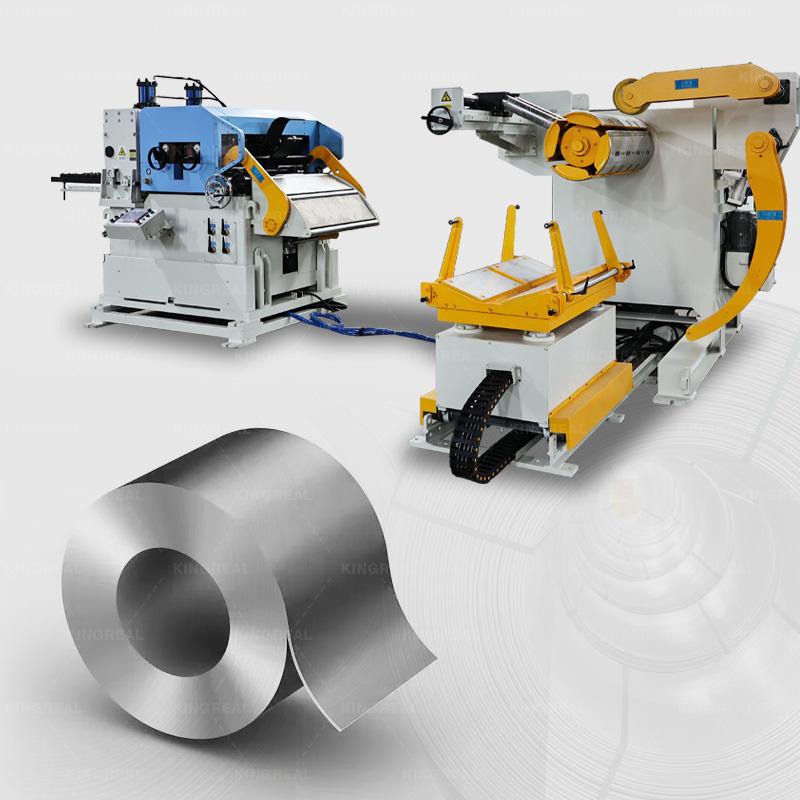
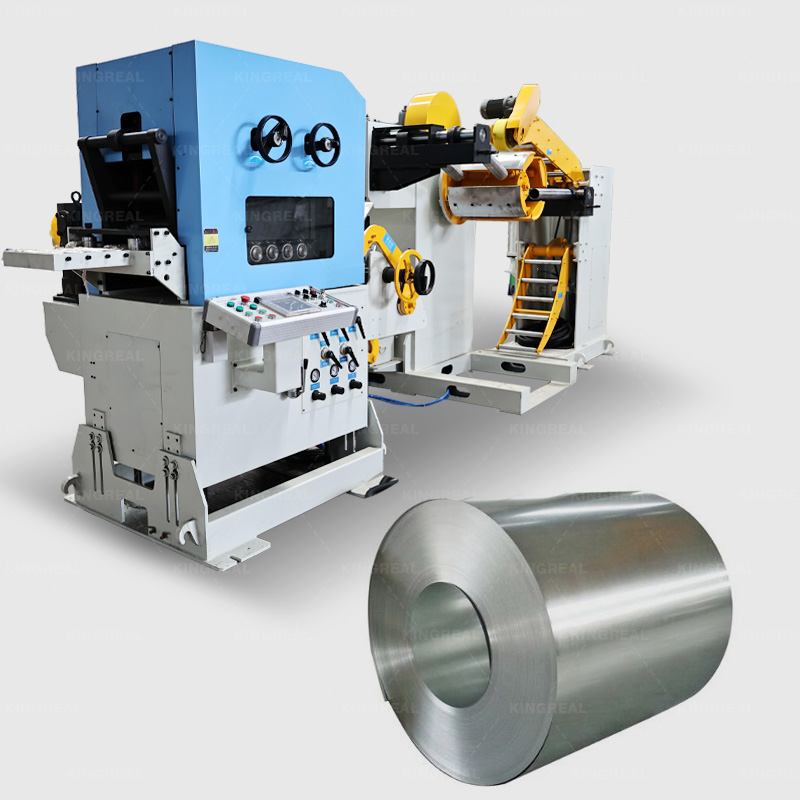
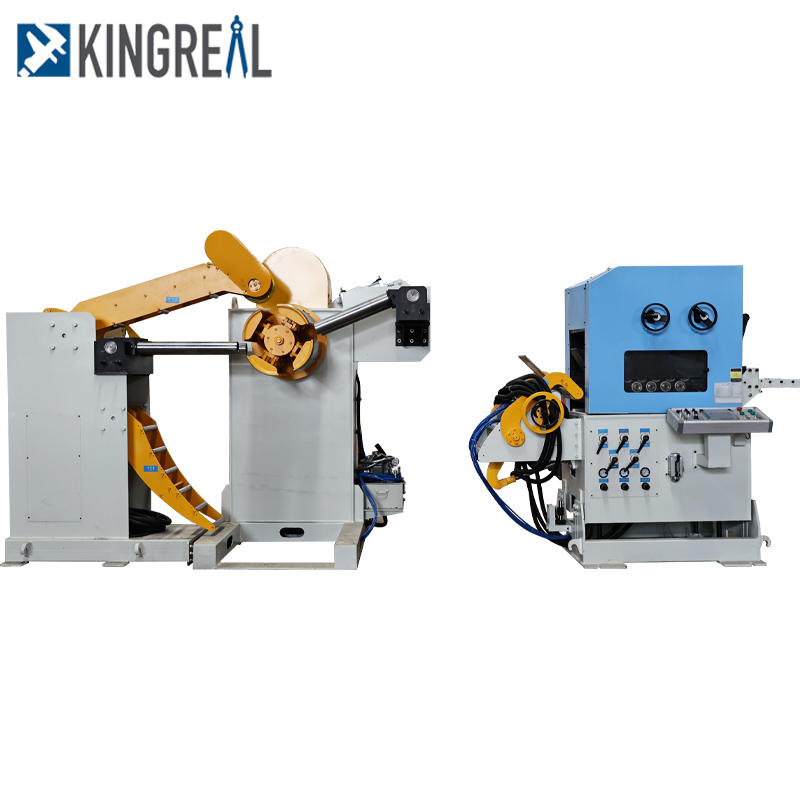
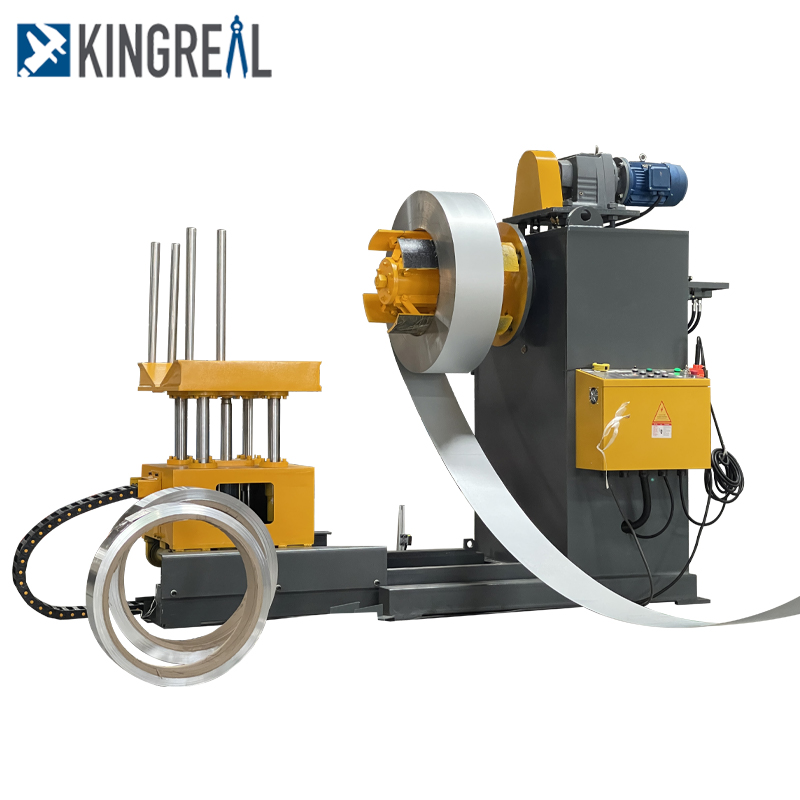
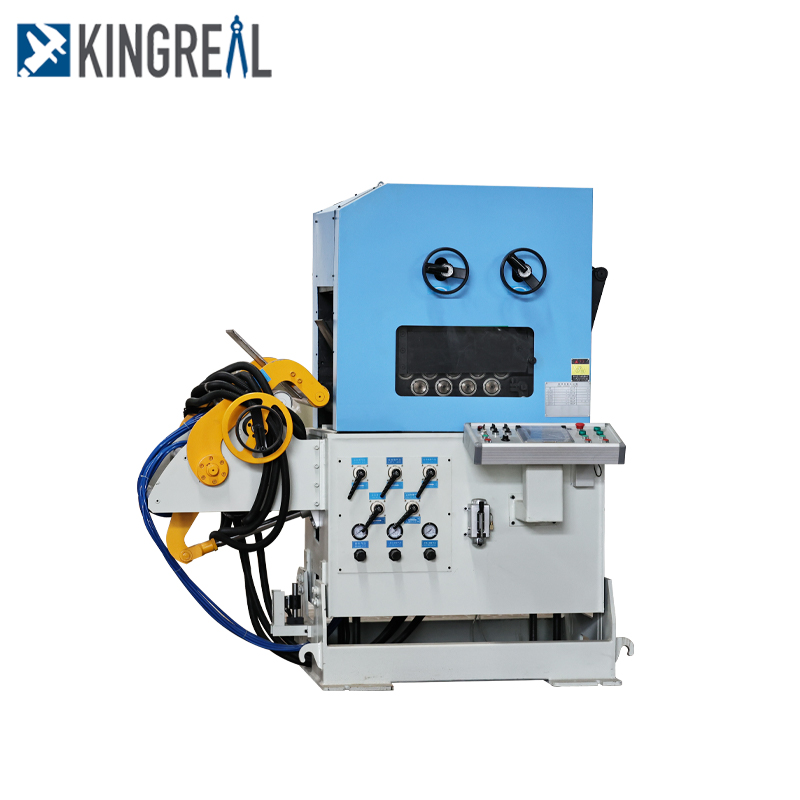
A coil feeder system machine typically integrates a decoiler&straightener and a servo feeder.
The core function of this coil feeding system is to transform coiled raw material into high-precision, flattened strip material and feed it—in precise, metered quantities—to downstream processes.
Specifically engineered for the decoiling, straightening, and feeding of metal coils, this coil feeder system machine meets the rigorous process requirements of high-tech sectors such as aerospace, automotive components, and electronics.
This article details the importance of coil feeding system.
The Role of Coil Feeder System Machine
|
Ensuring Coil Flatness
The coil feeding system’s precision straightening module utilizes multiple high-hardness straightening rollers to repeatedly bend the strip back and forth. This process gradually neutralizes uneven internal stresses, resulting in a flat strip that meets processing standards.
Materials pre-treated by the coil feeder system machine exhibit more uniform stress distribution; consequently, finished workpieces do not suffer from spring-back or distortion after stamping, bending, or forming, thereby reducing the scrap rate at the source. |
 |
 |
Improving Feeding Step Precision and Production Consistency
Equipped with a closed-loop servo drive system, the coil feeding system uses encoders to provide real-time feedback on feeding displacement and automatically compensates for operational errors, ensuring precise, fixed-length feeding. Operators simply input the target feed length, speed, and stroke count via a touchscreen—eliminating the need for manual mechanical stop adjustments—and the coil feeder system machine automatically executes precise feeding.
When production specifications change, the setup can be adjusted simply by modifying the parameters on the screen. The coil feeding system establishes a signal interlock mechanism with downstream processing equipment; upon completion of the feeding action, it sends a trigger signal to the punch press or shearing machine to execute punching, cutting, or forming operations. The entire process operates in a fully automated, closed-loop manner, ensuring consistent feed lengths for each strip segment during mass production and effectively enhancing product dimensional uniformity. |
The Importance of Coil Feeding System
Reducing Secondary Processing Costs
By utilizing a coil feeder system machine, the coil undergoes stress relief and precision leveling before entering the processing station.
The resulting formed parts are flat and dimensionally stable, eliminating the need for manual post-processing corrections and bypassing secondary processing steps entirely.
For manufacturers engaged in long-term, high-volume production of hardware components or construction profiles, eliminating a post-processing step yields continuous labor cost savings and shortens product delivery cycles.
Raw material utilization is also improved; flat, stable strip material allows for optimized die layout and reduced scrap, resulting in significant long-term cost savings for the factory.
Enabling Flexible & Multi-Variety Production
The coil feeder system machine features a digital control panel where all production parameters are saved as independent recipes. When switching products, operators can simply recall preset parameters to resume production quickly, drastically reducing changeover and setup times and perfectly meeting flexible production requirements.
A single coil feeding system is compatible with coils of varying thicknesses and widths, including carbon steel, galvanized sheet, stainless steel, and aluminum alloy.
Whether handling short-cycle prototyping orders or mass-production orders involving tens of thousands of units, the machine flexibly adapts to production rhythms, enabling factories to respond rapidly to customized customer demands.
Minimizing Factory Floor Space Usage
KINGREAL STEEL SLITTER coil feeder system machine utilizes a compact, integrated design that combines uncoiling, leveling, and feeding units into a single system.
This significantly reduces the footprint of the automated feeding line, allowing for more production stations within a limited factory layout and maximizing workshop space utilization.
Although the coil feeder system machine may appear to be merely an auxiliary component of a stamping machine or roll forming machine, it directly determines the line's yield rate, production efficiency, and overall manufacturing costs.
It utilizes precision leveling to eliminate material stress, ensures feeding accuracy through servo control, enables flexible production switching via digital setup, and saves factory floor space with its compact design—comprehensively helping metal processing enterprises reduce costs and boost efficiency.
 |
 |
 |
FAQs about Coil Feeder System Machine
Q1: How do I choose the right coil feeding system based on my material specifications?
A1: Selecting a coil feeder system machine depends primarily on three core parameters: material width, material thickness, and line speed.
For thin sheets, a high-precision coil feeding system is typically recommended to prevent deformation of the lightweight material.
Processing medium-to-thick plates requires a coil feeder system machine with powerful leveling capabilities to overcome the coiling stress inherent in high-hardness materials.
Q2: What level of accuracy can a coil feeding system achieve?
A2: By utilizing a high-performance PLC and a closed-loop control system, the coil feeder system machine maintains a stable repetitive positioning accuracy of ±0.01mm.
Q3: How can I extend the service life of the coil feeding system?
A3: -Roller Cleaning: Clean metal chips and oil residue from the rollers daily before the end of the shift to prevent scratching the material strip.
-Regular Lubrication: Ensure bearings and drive gears are lubricated monthly.
-Electrical Inspection: Periodically check servo motor connections for looseness to prevent the loss of control signals caused by vibration.
If you are planning an automated coil processing line and wish to obtain a customized coil feeder system machine solution and a detailed quote tailored to your material specifications, please contact the KINGREAL STEEL SLITTER team directly to discuss your requirements.