In the fields of modern metal processing and precision manufacturing, the stainless steel coil slitting machine plays a vital role.
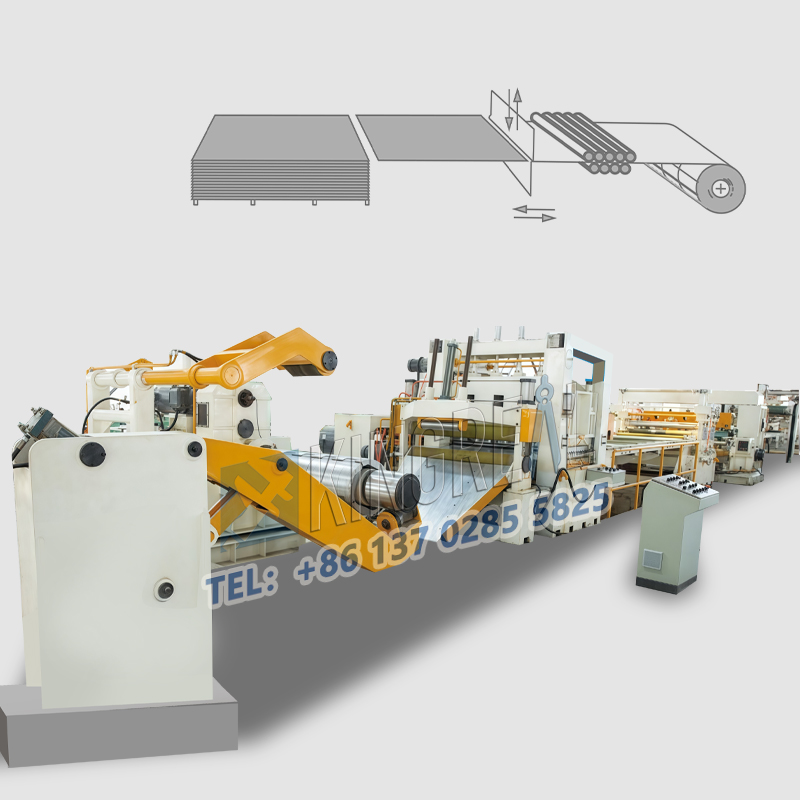
Slitting is the process of converting wide master coils into multiple narrow strips of specific widths using a steel strip slitting machine. This process employs circular blades to perform high-precision longitudinal cuts as the material passes through. Given the high hardness and toughness of stainless steel, the stainless steel coil slitting machine must possess exceptional structural rigidity and dynamic performance.
This efficient processing workflow is indispensable for applications ranging from the precision stamping of automotive parts to the production of metal casings for home appliances.
This article provides an in-depth look at the operating mechanisms and core components of the steel strip slitting machine, as well as its pivotal role in enhancing manufacturing precision.
Working Principle of Stainless Steel Coil Slitting Machine
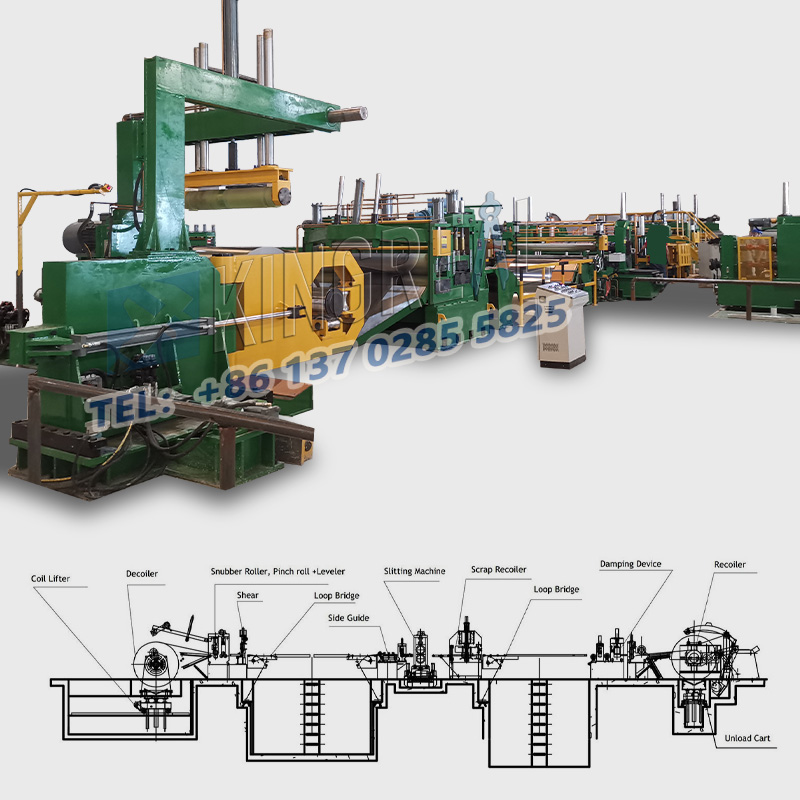
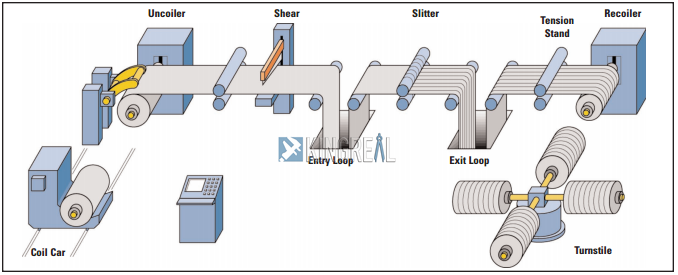
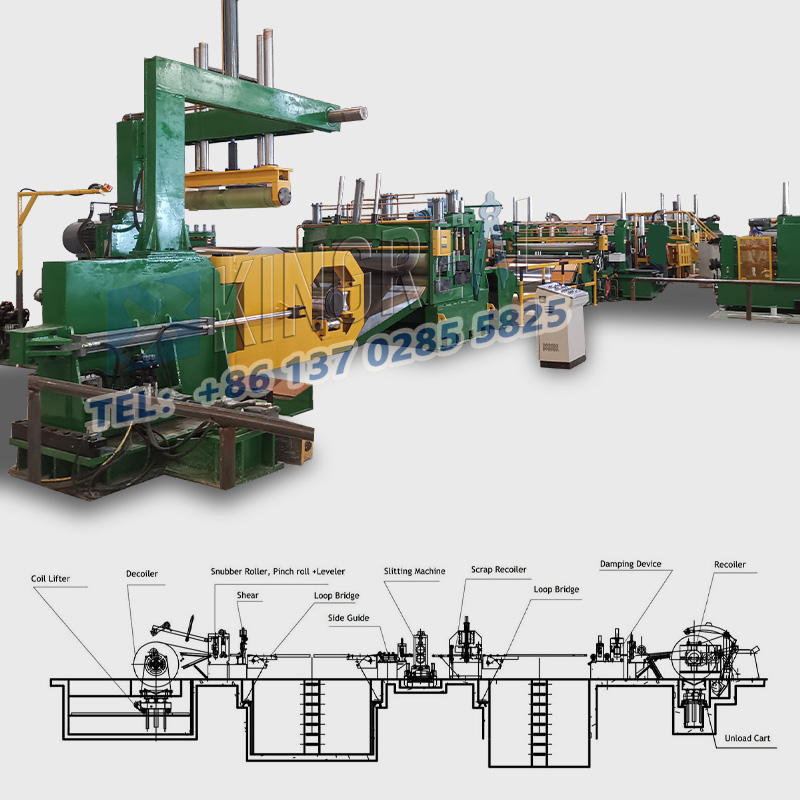
The core operation of the steel strip slitting machine follows a closed-loop logic: uncoiling, slitting, and recoiling.
Uncoiling: The massive master stainless steel coil is mounted onto the mandrel of the decoiler. The mandrel expands to lock the coil core, and, driven by a motor, the wide stainless steel sheet feeds smoothly into the processing line.
Leveling & Tensioning: Before reaching the cutter shafts, the material typically passes through a set of leveling rolls to eliminate internal stresses caused during coiling and ensure the sheet is flat.
Precision Slitting: The material passes through the cutting zone, which consists of upper and lower rotating cutter shafts. By adjusting the horizontal and vertical clearances between the blades, the machine can slice through the stainless steel with the precision of a cutter.
Scrap Handling & Recoiling: Trimmed edges are collected by a waste collection station, while the finished narrow strips pass through a tension stand and into the recoiler, where they are wound back into tight, narrow coils.
Key Stainless Steel Coil Slitting Machine Components
|
A standard steel strip slitting machine consists of the following core components:
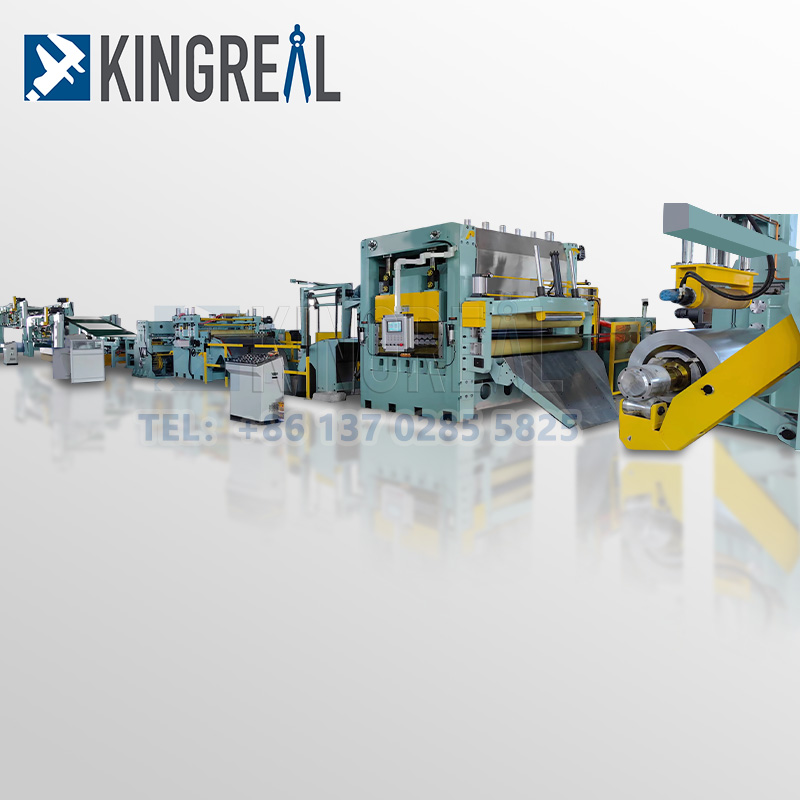
Decoiler: Supports and dispenses the raw material; it must possess high load-bearing capacity and automatic centering capabilities. Slitter Head: The radial runout error of the arbors directly determines the width precision of the finished strips. Rotary Knives: Typically made of hardened tool steel or carbide to withstand the severe wear stainless steel causes to cutting tools. Tension Station: Ensures uniform pressure across each slit stainless steel strip during winding, preventing loose coils. Recoiler: Rewinds the finished strips; its line speed must remain highly synchronized with the decoiler. |
 |
Precision Control in Slitting: How to Avoid Burrs?
 |
In the precision metal manufacturing industry, narrow stainless steel strips are widely used in hardware, home appliances, new energy, and precision sheet metal fabrication.
The performance of the stainless steel coil slitting machine and the quality of the finished product directly determine the results of subsequent processes such as bending, welding, and lamination.
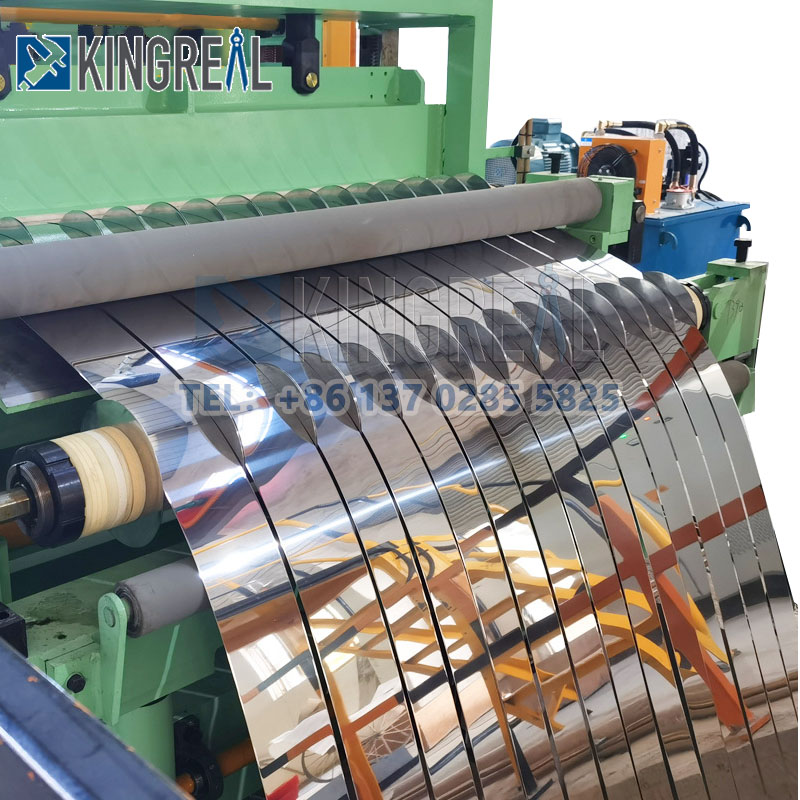
Stainless steel is characterized by high hardness, toughness, and ductility; compared to ordinary carbon steel, it is more prone to defects such as edge burrs, rollover, and cracking during the slitting process.
To completely avoid slitting burrs, the key lies in precisely controlling the tool clearance—a critical control point in the stainless steel slitting process. The magnitude of the tool clearance directly alters the stress state of the stainless steel sheet during cutting, playing a decisive role in edge formation quality.
Modern, high-end steel strip slitting machine features fully automatic CNC tool adjustment systems. Based on key parameters—such as material thickness, hardness, and coil specifications—these systems use built-in algorithms to automatically calculate and precisely set the optimal cutting clearance, eliminating the need for repetitive manual calibration.
Leveraging intelligent control systems, the stainless steel coil slitting machine strictly maintains the finished strip width tolerance within ±0.05 mm. By preventing issues like burrs, rollover, and dimensional deviations at the source, it consistently produces stainless steel strips with smooth edges and high flatness, perfectly meeting the demands of various high-precision manufacturing applications. |
Maintenance and Care: Extending Steel Strip Slitting Machine Lifespan
Standardized and regular equipment maintenance not only extends the overall service life of the stainless steel coil slitting machine but also ensures consistent processing precision and minimizes defects such as burrs and dimensional deviations; it is key to guaranteeing efficient and stable production operations.
Precision Grinding and Inspection of Cutting Tools
The blades are the core processing components of steel strip slitting machine. Prolonged cutting of high-toughness stainless steel sheets causes the cutting edges to gradually wear and dull. Dull blades cannot achieve clean cuts; instead, they significantly increase processing stress on the material, acting as a major cause of burrs, edge cracking, and deformation.
Operators must periodically halt the machine to inspect the sharpness and edge integrity of the rotary blades.
Blades should be precision-ground or re-sharpened promptly based on usage frequency and wear levels, while severely worn blades must be replaced immediately to ensure the cutting edges remain sharp and intact.
Routine Maintenance of the Lubrication System
The cutter shaft bearings and mandrel sliding surfaces are high-frequency operating components that generate significant heat during prolonged high-speed operation.
Inadequate lubrication leads to dry friction between parts, accelerating wear and causing thermal deformation—which results in thermal drift of equipment precision, shifting of the cutting clearance, and loss of processing accuracy.
Daily maintenance requires checking lubricant levels and oil quality, promptly replenishing with the appropriate lubricant, and clearing impurities from oil lines. Ensuring a smooth-flowing lubrication system keeps moving parts well-lubricated and maintains stable operational precision.
Cleaning and Maintenance of Sensors
High-end stainless steel coil slitting machine is equipped with precision optical inspection components, such as laser width gauges, which serve as the core basis for automatic blade adjustment and precision calibration.
Fine metal dust generated during processing easily adheres to optical lenses and sensor surfaces, obstructing the detection light path; this leads to data acquisition errors and blade adjustment failures, subsequently causing dimensional inaccuracies and burr issues.
Therefore, the steel strip slitting machine must be stopped periodically to clean optical components—removing dust and oil residue—to ensure accurate sensor detection and provide reliable data support for high-precision operation.