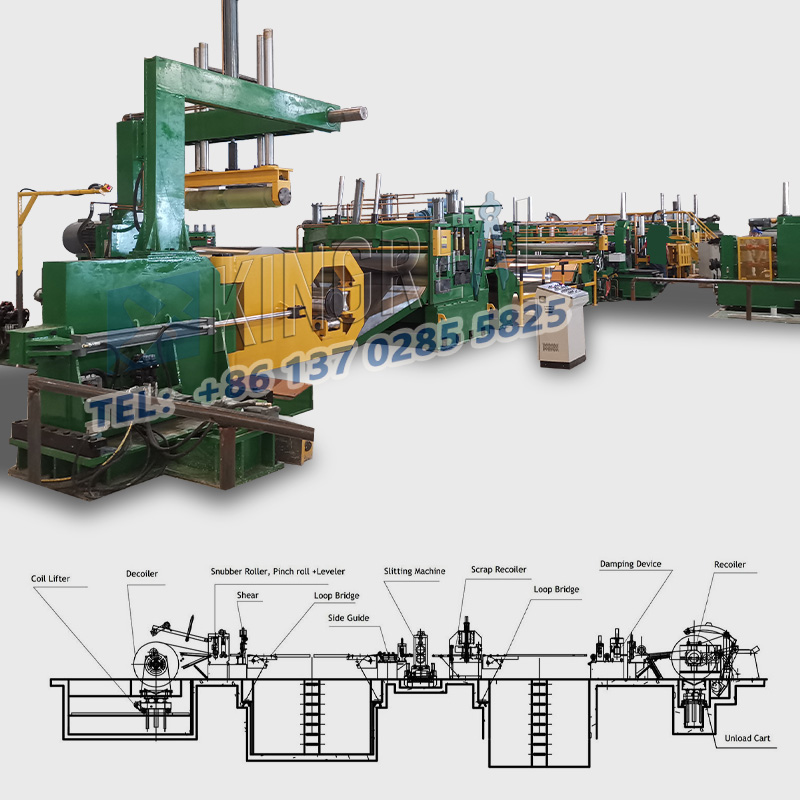
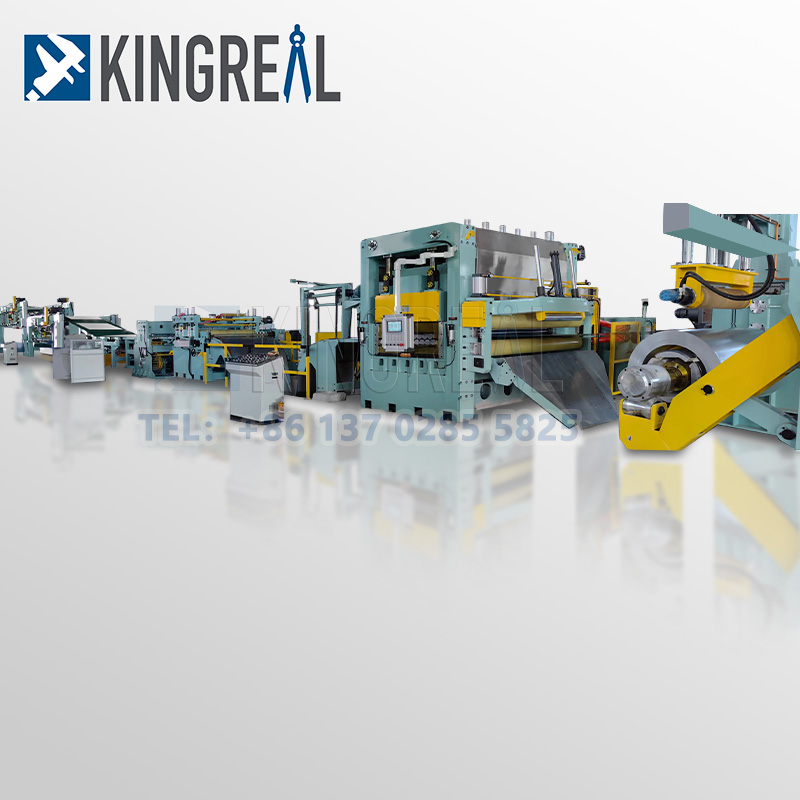
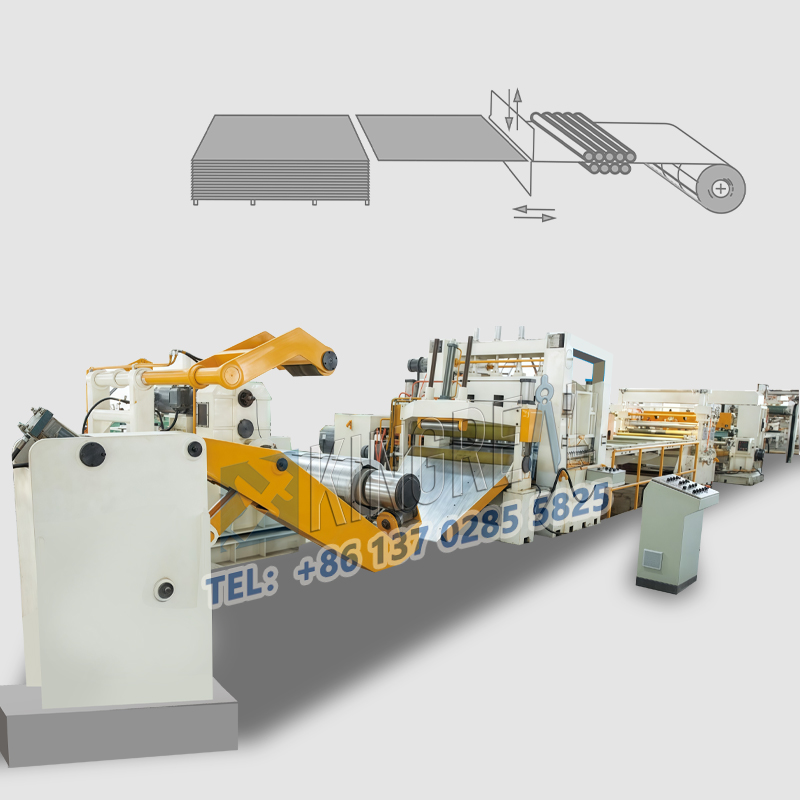
A coil cut to length machine is designed to continuously uncoil, level, and cut large metal coils into sheets of a specific, precise length. It integrates uncoiling, leveling, length-setting, shearing, and stacking into a continuous production process, making it ideal for the batch processing of coils with various specifications.
In industries such as automotive manufacturing, construction, home appliance production, electronics, HVAC, heavy machinery, and aerospace, the length precision, flatness, and surface quality of metal sheets directly impact downstream processes like stamping, bending, welding, and forming.
Consequently, selecting the right coil cut to length line helps improve material utilization, production efficiency, and the consistency of the finished products.
|
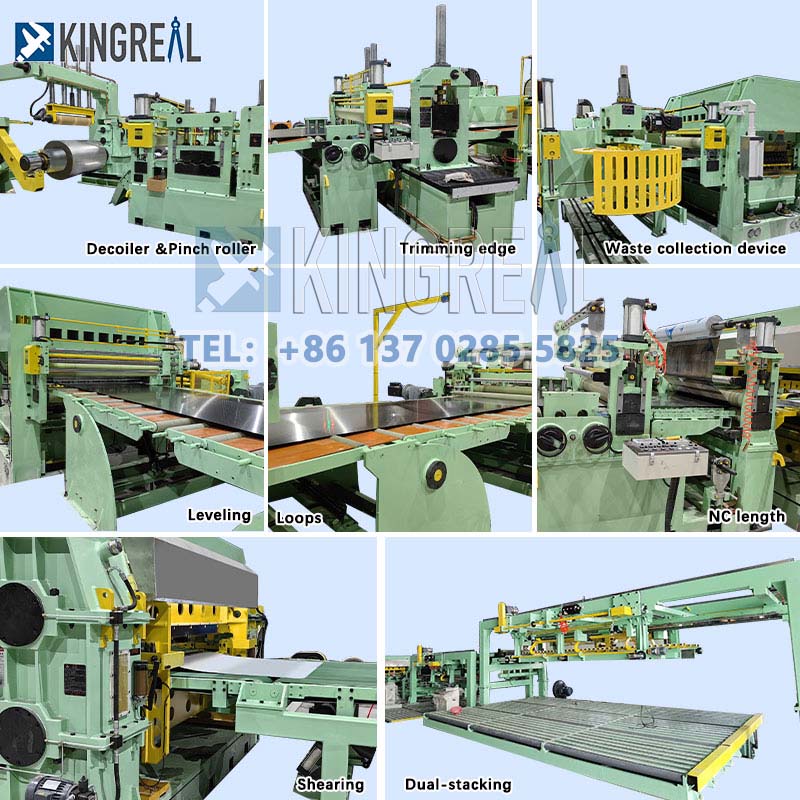
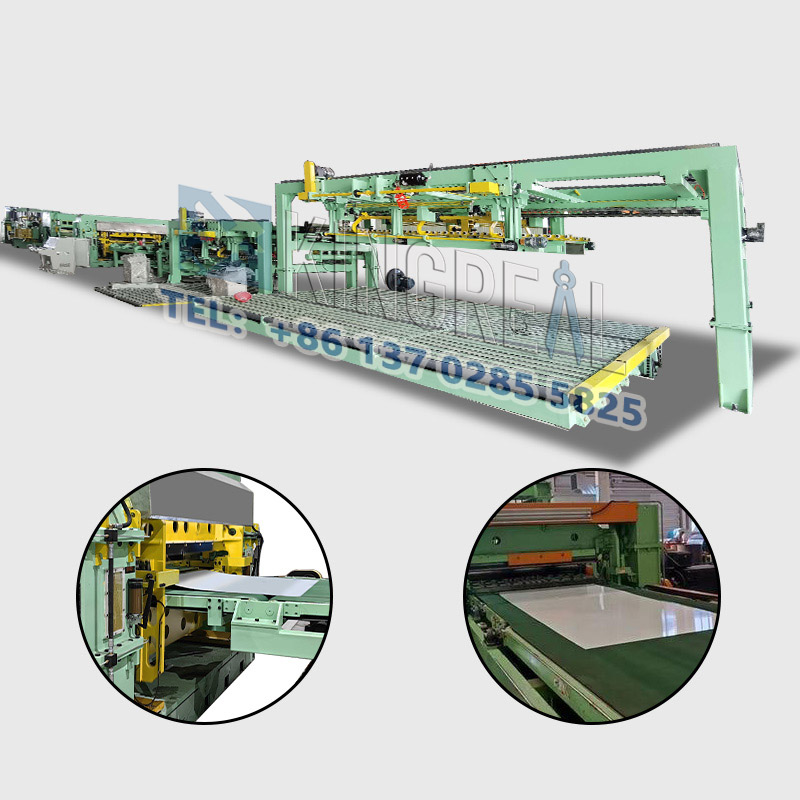
A coil cut to length line typically consists of an uncoiler, a leveler, a servo-driven feeding system, a cut-to-length machine, a conveyor, and a stacker. The configuration is determined by factors such as material type, thickness range, required sheet length, and production capacity.
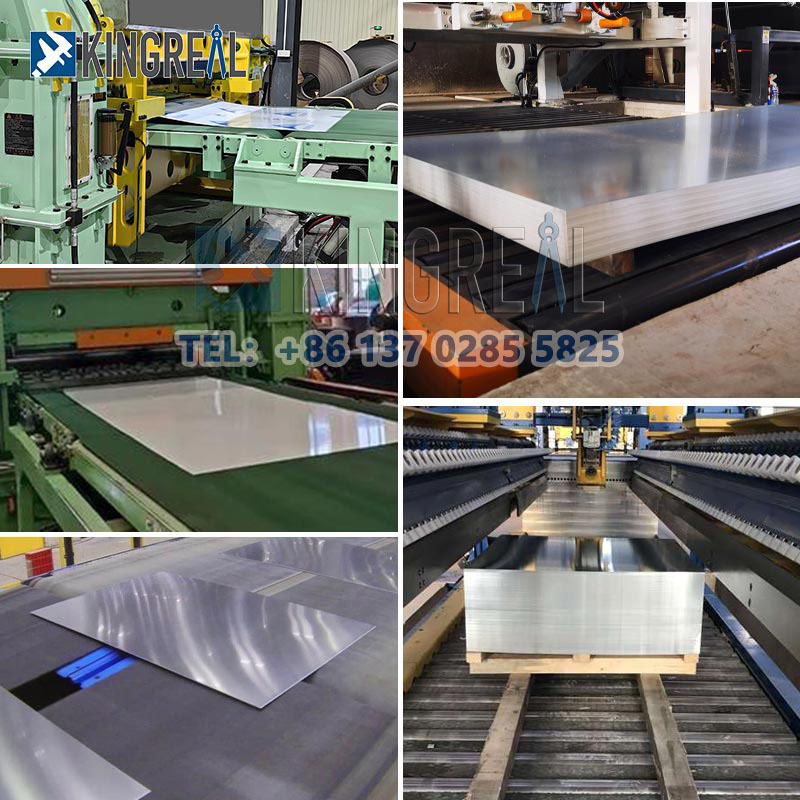
The process begins with the uncoiler, which secures the metal coil via an expanding mandrel and feeds the material steadily into the production line. For heavier coils, loading trolleys and hydraulic auxiliary systems are used to reduce the need for manual labor. Once the material enters the leveler, it passes through multiple sets of work rolls. The leveler eliminates curvatures, waves, and residual stresses—often introduced during coiling, transport, or storage—to ensure the material achieves a high degree of flatness. Depending on the specific requirements for surface quality and dimensional stability, levelers with varying numbers of rolls and structural designs can be selected. After leveling, a servo-driven feeding system advances the material to the length specified by the PLC control system. Side guides ensure the material remains correctly positioned laterally, minimizing any deviation that could affect the accuracy of the cut dimensions. Feeding length, production speed, and shearing cycles can be adjusted according to specific order requirements, allowing for the efficient production of sheets in various lengths. The cut-to-length machine is responsible for cutting the continuous coil into the desired lengths. Common shearing methods include stop shearing, flying shearing, and swing shearing. Stop shearing is suitable for production tasks with lower speed requirements, as the coil cut to length line must be stopped during the cutting process. Flying shearing, by contrast, allows for cutting while the material is in continuous motion, with operating speeds reaching up to 80 m/min. Swing shearing enables the adjustment of the blade angle, allowing for the production of irregular shapes such as parallelograms and trapezoids—a capability particularly well-suited to the needs of the automotive manufacturing industry. Once cutting is complete, a conveying system transports the sheets to a stacker. Through lateral alignment, front-end positioning, and vertical lift control, the stacking unit ensures that the finished sheets are neatly piled, facilitating forklift handling, inspection, and subsequent processing. |
 |
|
Increased Production Efficiency A coil cut to length line integrates multiple independent processes, eliminating the need for repetitive handling of coils, manual measurement, and the manual loading of individual sheets. High-speed fly shearing systems support continuous production, achieving speeds of up to 80 m/min. Furthermore, automated feeding and stacking functions reduce the required number of operators, allowing enterprises to maintain stable production capacity while lowering labor costs.
Enhanced Production Precision Coil cut to length machines utilize encoders, servo motors, and PLC control systems to precisely regulate feed lengths and cutting positions. Compared to manual marking or standard single-sheet shearing, this automated, fixed-length cutting process minimizes length errors, skewed cuts, and sheet misalignment. Additionally, the integrated leveling process improves sheet flatness, which helps prevent positioning issues during subsequent operations—such as stamping, bending, or welding—and reduces the need for rework caused by dimensional non-conformance. |
 |
 |
Versatility for Various Materials and Specifications Depending on the equipment structure and configuration, a coil cut to length line can process a wide range of metal coils, including carbon steel, stainless steel, aluminum, galvanized steel, and pre-painted steel. Various models are available to accommodate different requirements, from thin sheets to medium-to-thick plates and extra-wide coils. When selecting a system, users should carefully evaluate parameters such as material yield strength, coil thickness, maximum width, desired sheet length, coil weight, and target production speed. These factors determine the necessary load capacity for the uncoiler, the number of rollers required for the leveler, and the optimal shearing method.
Facilitating Automated Management Coil cut to length machines are typically equipped with a HMI, allowing operators to input sheet lengths, quantities, and production parameters. The system records production data while monitoring processes such as feeding, cutting, stacking, and fault status. By integrating with warehousing, packaging, or other metal-processing equipment, these coil cut to length lines can form part of a continuous production unit. |
Automotive Industry
Automotive OEMs, as well as Tier 1 and Tier 2 suppliers, utilize coil cut to length lines to process body panels, chassis stampings, reinforcements, and structural components. Consistent sheet length and flatness help ensure the stability of downstream stamping die operations.
Home Appliances
Manufacturers of appliances—such as refrigerators, washing machines, air conditioners, and microwave ovens—require processed sheets for outer casings, inner liners, door panels, and internal structural components. These coil cut to length machines allow for rapid adjustments to cutting lengths, accommodating diverse product specifications, small-batch runs, and high-volume production.
Construction & Building Infrastructure
The production of roof panels, sandwich panels, steel structural components, and other metal building products requires sheets of varying lengths and thicknesses. Coil cut to length lines provide dimensionally stable raw materials for subsequent bending, punching, profiling, and welding processes.
Cabinets & Enclosures Manufacturing
Manufacturers of electrical distribution cabinets, switchgear, server racks, fire-rated doors, and metal filing cabinets often process sheets in a wide range of specifications. Precise cutting minimizes dimensional deviations during assembly and improves efficiency in bending and welding positioning.
Heavy Machinery & Shipbuilding
The heavy machinery and shipbuilding sectors require the processing of medium-to-thick plates for structural components in excavators, cranes, and ship hulls. Such applications demand high load-bearing capacity for decoiling, robust leveling capabilities, significant cutting force, and high equipment rigidity; consequently, coil cut to length machines for these sectors are typically customized based on material thickness and strength.
KINGREAL STEEL SLITTER offers tailored coil cut to length line solutions designed to meet the specific production requirements of various metal-processing industries. For detailed information regarding equipment structure, technical specifications, cutting methods, or complete coil cut to length machine layouts, please contact KINGREAL STEEL SLITTER directly.