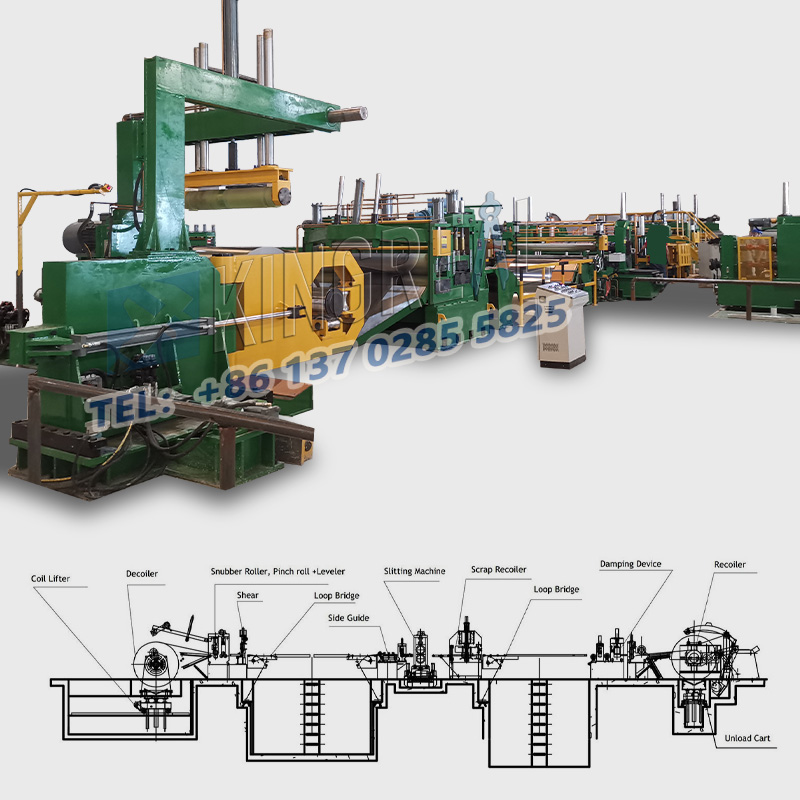
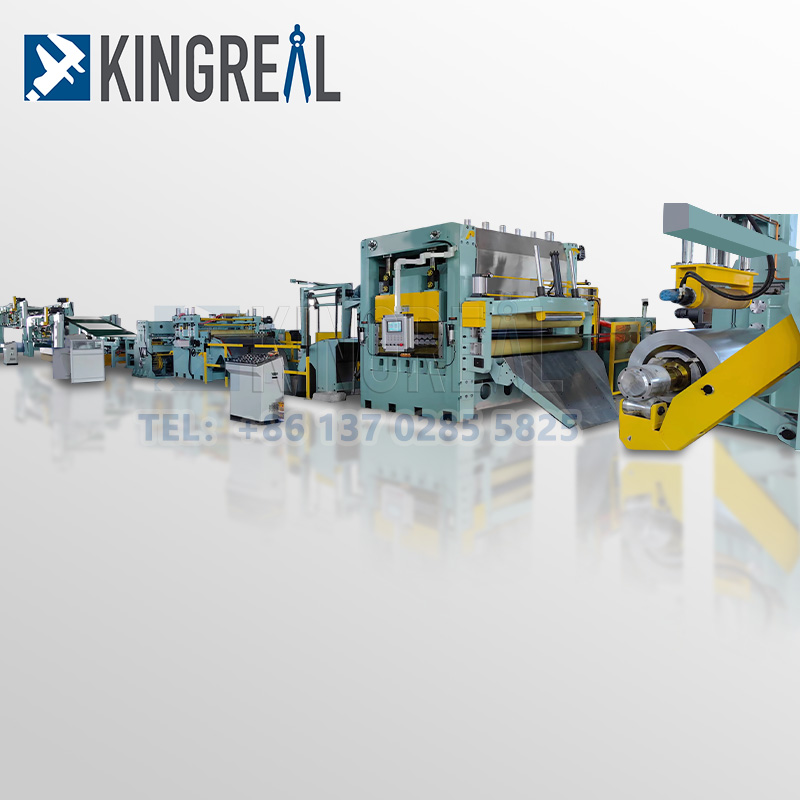
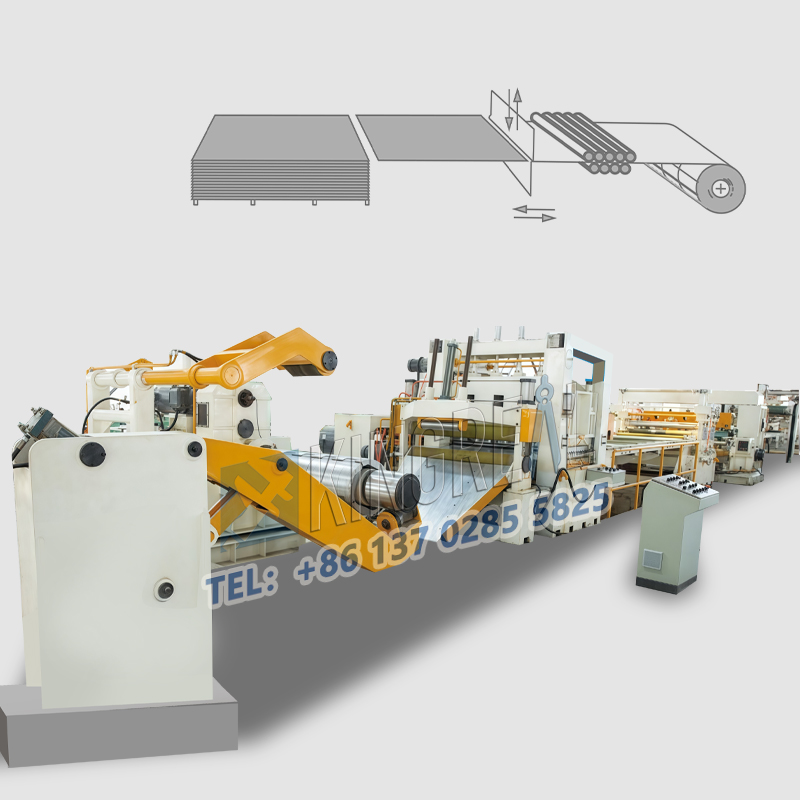
Metal slitting machines are primarily used for longitudinally cutting metal materials to produce metal strips of different widths. With increasing demands for precision and efficiency, metal slitting lines have gradually become indispensable tools in various fields, including automotive manufacturing, home appliance production, and architectural decoration.
Function of Metal Slitting Line
The core function of a metal slitting machine is to precisely cut metal coils longitudinally. Using a metal slitting line, companies can quickly and efficiently produce metal strips that meet standard requirements. This not only improves production efficiency but also reduces material waste. In the modern metal processing industry, the ability to use a metal slitting machine is of great significance in improving product quality and optimizing production processes.
Metal slitting lines offer multiple advantages. First, they have high slitting accuracy, ensuring that the width and tolerance of the cut strips meet customer requirements. Second, the finished products have minimal burrs, and the cutting blades are made of high-alloy steel, ensuring the stability of the cutting quality. Furthermore, the metal slitting line uses stepless speed regulation and PLC intelligent control, making it easy to operate with one-button parameter preset, reducing the workload of operators.
Metal slitting machines are suitable for a wide range of materials, including stainless steel and aluminum coils. This greatly expands their application scenarios in various industries. Whether in automotive manufacturing, home appliance production, or architectural decoration, they can meet different production requirements. Therefore, the introduction of metal slitting metal slitting lines undoubtedly provides companies with an effective metal slitting machine solution to improve production efficiency and product quality.
Usage Methods of Metal Slitting Machine
1)Pre-operation inspection and preparation
An exhaustive inspection and preparation are imperative before using the metal slitting line. First, to prevent needless deviations during the cutting operation, make sure the metal slitting line is level, correctly aligned, and grounded. To guarantee optimal machine functioning, inspect the cutting blades, blade shafts, and other parts for any wear or damage. Operators should also wear suitable personal protective gear (PPE), which includes safety glasses, gloves, and earplugs, to safeguard themselves.
2)Coil loading and positioning
The metal slitting machine's coil holder has the metal coil loaded onto it using either a crane or hoister, and the process should be done with caution. To keep proper alignment with the slitting blades, make sure the coil is firmly between the mandrel and the unwinder. Correct alignment guarantees slitting accuracy and avoids cutting issues brought on by misalignment.
3)Slitting blade setup
The slitting blades are the core components of the metal slitting line. Using digital micrometers or precision tools, exactly modify the blade spacing to meet specifications so guaranteeing the intended strip width and tolerance are met and hence assuring best slitting performance. The cutting impact is directly influenced by the blade setting; therefore this process should not be treated lightly.
4)Slitting process
Once the blades are properly positioned, the slitting process can start. The rotating slitting blades will unwind the metal coil and divide it into thin strips. During this process, the operation should be thoroughly watched, and the feeding speed and tension should be changed as necessary based on material features and production needs to ensure consistent slitting quality.
5)Strip collection and inspection
The strips produced from the metal coil's cut are gathered on a recoiler. Operators must make sure the strips are wound evenly and tightly at this stage to avoid damage or tangling. Check the strips' quality regularly, especially for burrs, irregular borders, or width variations, to guarantee flawless future finishing.
Precautions for Using Metal Slitting Line
Although the operation of the metal slitting machine is relatively simple, the following aspects still need attention:
1)Startup sequence
Always start the metal slitting line in the sequence specified in the equipment manual. Generally, auxiliary equipment (such as the feeding device) should be started first, followed by the main motor. This will prevent excessive load caused by directly starting the main motor, affecting the normal operation of the equipment.
2)Speed control
Based on the hardness and thickness of several materials, properly vary the operating speed of the metal slitting line. If the speed is too high, it might break materials or wear out the blade too much; hence, it should be set slightly depending on the actual conditions.
3)Observation and monitoring
Operators should carefully track the cutting quality and operational condition of the metal slitting line while in operation. Immediately stop the metal slitting machine for examination if any unusual noises, vibrations, or bad cutting quality are found to guarantee the safety and stability of the metal slitting line.
4)Emergency response
Knowing where the emergency stop button is on the metal slitting machine and how it is used is really crucial. In case of an emergency, be able to act fast and press the button to stop the metal slitting machine to prevent more losses and physical harm.
Possible Faults During Metal Slitting Machine Operation
During the operation of a metal slitting machine, several malfunctions may occur. Understanding the symptoms of these faults and their corresponding solutions can significantly improve metal slitting line efficiency.
1) Accuracy deviation
If the strip width deviation exceeds the tolerance, the tooling, tension, and rigidity should be checked first. In many cases, incorrect accuracy is caused by poor alignment throughout tooling installation or loose screws rather than by failure in the tool itself. Most problems can be solved by calibrating the parallelism of the upper and lower cutter shafts with a dial indicator and guaranteeing the tightening torque matches the equipment handbook (typically 30–50 N.m). If the deviation still exists after calibration, check whether the tension control is unbalanced.
2)Tooling damage
The tooling is a consumable part of the metal slitting machine, and common problems include chipping or dulling. When cutting high-hardness metals, using ordinary tools can easily accelerate wear. Therefore, it is essential to select the appropriate tools according to the material hardness and adjust the cutting speed accordingly. In addition, ensuring good lubrication of the tools and regularly checking that the lubrication lines are unobstructed can effectively extend the service life of the tools.
3) Abnormal noise and vibration
If the metal slitting line suddenly produces abnormal noise accompanied by severe vibration during operation, the base and screws should be checked first to ensure they are level and tightened. If the abnormal noise persists, the bearings of the cutter shaft and transmission shaft should be checked, and worn or damaged bearings should be replaced promptly. Gear lubrication should also be changed seasonally to reduce the probability of failure.
4)Excessive edge burrs
Excessive burrs on the edges of the strips after slitting directly affect the quality of subsequent processing. Many operators will first consider replacing the tools, but improper tool clearance is often a more frequent cause. Adjusting the tool clearance appropriately and finding the optimal value based on the material thickness can solve this problem.
5)Failure to start/operation interruption
If the metal slitting line fails to start, it is usually related to power supply problems. Check whether the circuit contacts are good and whether the voltage is stable. If there is a problem with the control system, check the drawings to confirm whether all components are functioning correctly and replace faulty components promptly.
6)Material runout
If material runout occurs during the slitting process, the guide rollers and correction device should be checked, and the tension control system should be adjusted promptly. Ensuring the quality of the coil material is also a crucial aspect of preventing deviations. Using high-quality raw materials can significantly improve slitting accuracy.
Maintenance Methods of Metal Slitting Line
Routine maintenance of the metal slitting machine is essential for extending the equipment's lifespan and ensuring slitting quality.
1)Tool maintenance
After each shutdown, the cutting tools should be thoroughly cleaned and maintained. Use a special cleaning agent to remove residual materials and oil stains from the tool surface, and then apply a rust inhibitor to prevent rusting. For tools that will not be used for a long time, store them properly to avoid damage.
2)Equipment cleaning
Regularly clean the region around the metal slitting machine as well as the inside of it; get rid of dust, trash, and other debris. Keep the metal slitting line and workspace clean using broom or vacuum. Also, check the lubrication points to ensure the equipment is properly lubricated for normal operation.
With the comprehensive understanding and mastery described above, we believe you now have a deeper understanding of the use and maintenance of metal slitting machines. For more information, please feel free to contact KINGREAL STEEL SLITTER.