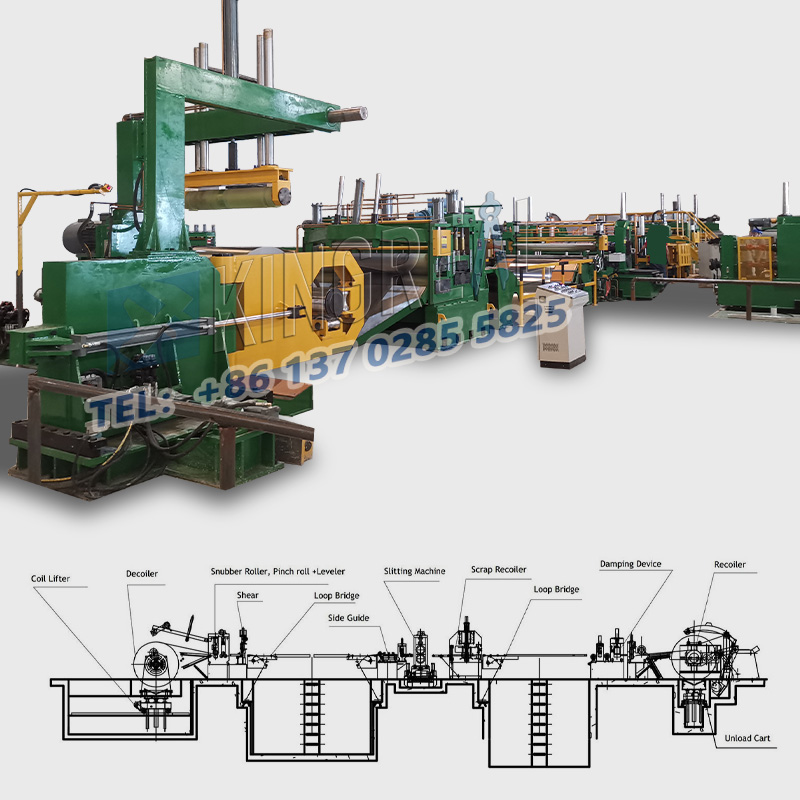
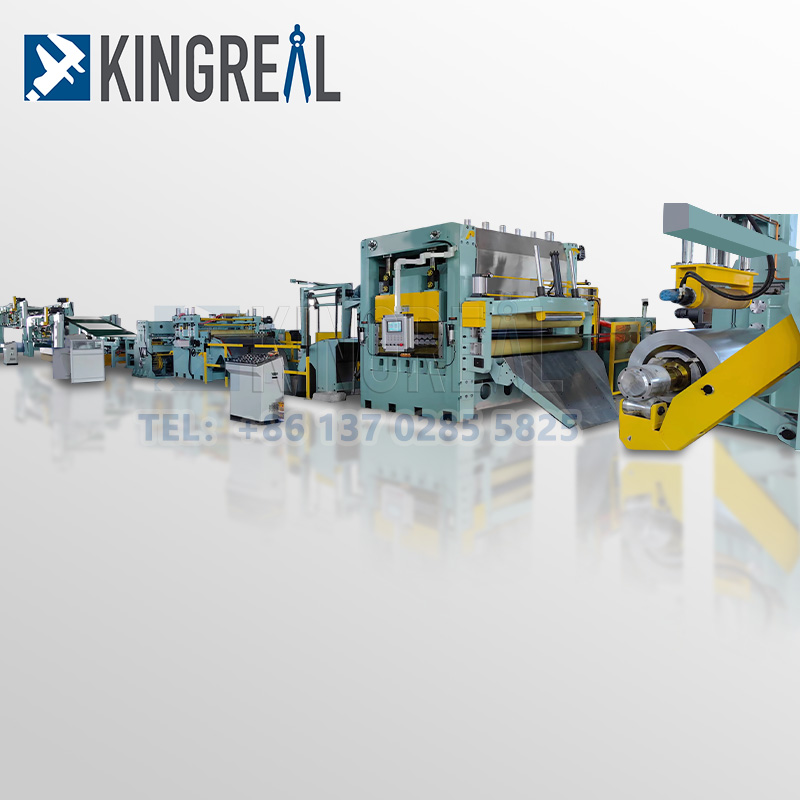
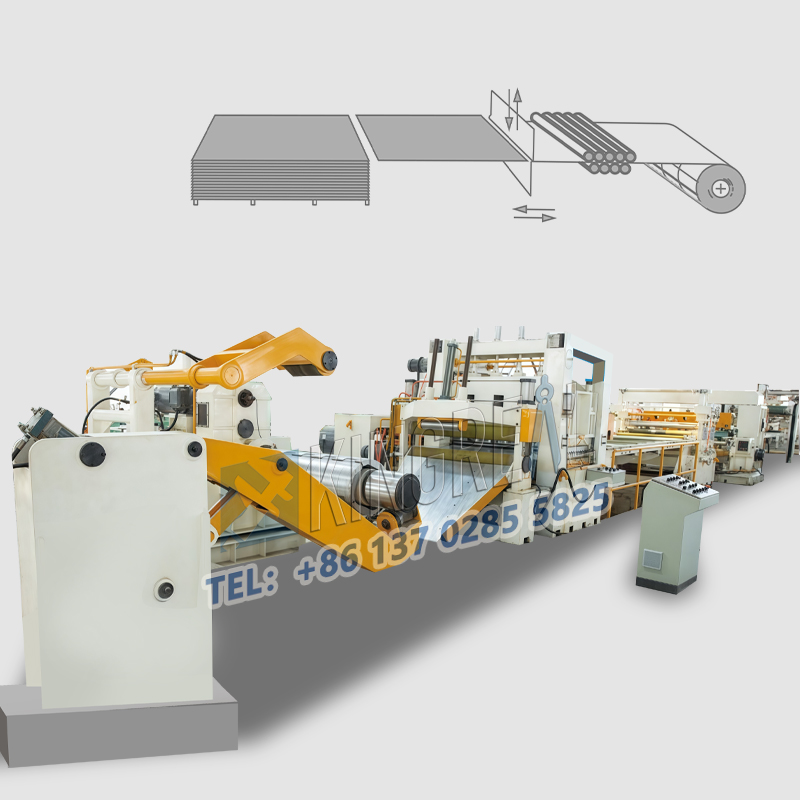
The high speed slitting line, with a maximum operating speed of 230m/min, efficiently completes key processes such as uncoiling, slitting, and recoiling of metal coils, significantly enhancing production efficiency and processing accuracy. However, during long-term high-load and high-speed operation, the high speed slitting machine is prone to various faults due to factors such as improper operation, component wear, and inadequate maintenance. These faults not only affect production progress but also may reduce processing quality and even shorten the high speed slitting line's service life. To assist relevant operators in better addressing the operational issues of high speed slitting machines and ensure smooth production, this article will detail common faults, their causes, and corresponding solutions during the operation of high speed slitting lines, as well as share practical tips for extending their service life.
1.Inaccurate Slitting Dimensions
Inaccurate slitting dimensions is one of the most common problems with high speed slitting machines, especially during high-speed operation. Once this problem occurs, it can lead to a batch of substandard products, causing material waste and production delays.
Causes:
(1) Unstable tension control. During the slitting process of a high speed slitting line, improper tension coordination among the unwinding, slitting, and rewinding stages can cause material stretching or contraction, thereby affecting the slitting dimensions.
(2) Severe tool wear. The blades of a high speed slitting machine are constantly in a high-speed cutting state, which can lead to edge wear, blunting, or even notches. This makes it impossible to precisely cut the material, resulting in dimensional deviations.
(3) Abnormal deviation correction system. The deviation correction device is crucial for ensuring the precise transportation of materials. If the deviation sensor malfunctions or is not properly calibrated, it can cause material transportation deviation, leading to dimensional deviations in slitting.
Solution:
(1) Inspect the tension controller of the high speed slitting machine to confirm that the tension parameters are set in accordance with the material properties. Adjust the tension during unwinding and rewinding to ensure a smooth transition of tension among the three stages, avoiding material stretching or loosening.
(2) Regularly check the condition of the blades. If any wear, blunting or notches are found, replace them with blades that meet the specifications. After replacement, precisely adjust the blades to ensure accurate centering.
(3) Calibrate the deviation correction device, check the sensitivity of the deviation sensor, clean the dust and stains on the sensor surface, and recalibrate the deviation correction parameters to ensure that the material does not deviate during the conveying process and to guarantee the accuracy of the slitting dimensions.
2. Material Deviation and Wrinkling
During the operation of high speed slitting lines, material deviation and wrinkling are also common problems, especially for thin metal coils, where the issue is more prominent. This not only affects the slitting accuracy but also may cause material damage, impacting subsequent processing.
Causes:
(1) Unbalanced guide rollers. The guide rollers in high speed slitting machines are crucial for supporting and conveying materials. If the guide rollers are not installed level, have surface wear, or have foreign objects attached, it will lead to uneven force on the material during conveyance, resulting in deviation and wrinkling.
(2) Insufficient air pressure. Some actuating components of high speed slitting machines are driven by air pressure. If there is a leak in the air pressure system or the pressure is insufficient, it will cause the related components to operate poorly and fail to stably control the material conveyance.
(3) Uneven material tension. Similar to the tension issue causing inaccurate slitting dimensions, excessive fluctuations in the tension during unwinding and rewinding can lead to uneven stretching of the material during conveyance, resulting in wrinkling and deviation.
Solution:
(1) Adjust the level of the guide rollers. After the high speed slitting line stops, inspect all the guide rollers of the high speed slitting machine, clean the foreign objects and stains on the surface of the guide rollers. If there is wear on the surface of the guide rollers, repair or replace them in time. Adjust the installation angle of the guide rollers to ensure that all guide rollers are at the same level and the material is evenly stressed during transportation.
(2) Check the pneumatic system. Inspect whether there is any leakage in the pneumatic pipeline, replenish the air pressure to the standard specified by the high speed slitting machine, and regularly clean and maintain the pneumatic valves, cylinders and other components to ensure the stable operation of the pneumatic system.
(3) Optimize the tension of the unwind and rewind. According to the thickness, hardness and other characteristics of the material, readjust the tension parameters of the high speed slitting machine, adopt a stable tension control mode, and avoid excessive tension fluctuations to reduce the material deviation and wrinkling from the root.
3. Abnormal Vibration or Noise of High Speed Slitting Line
When a high speed slitting machine is operating at high speed and experiences abnormal vibration or shrill noise, it indicates that there are wear and tear or installation issues with the high speed slitting line components. If not addressed promptly, it will accelerate component wear and may even lead to high speed slitting machine failure and shutdown.
Causes:
(1) Bearing wear. The transmission parts and guide rollers of a high speed slitting machine are all equipped with bearings. Long-term high-speed operation can lead to insufficient lubrication and severe wear of the bearings, causing vibration and noise during rotation.
(2) Loose drive belt. The drive belt is a key component for power transmission in a high speed slitting machine. With prolonged use, it may age and stretch, resulting in a loose drive belt. During operation, it will rub against the pulley, generating noise and affecting power transmission, which in turn causes high speed slitting line vibration.
(3) Loose mechanical components. During long-term high-load operation of a high speed slitting machine, screws, bolts, and other connecting parts may become loose, leading to poor connection between components and causing vibration and abnormal noise during operation.
Solution:
(1) Inspect all the bearings of the high speed slitting machine. If any bearing is found to be worn, stuck or making abnormal noises, add special grease for lubrication in time. If the wear is severe, replace the bearing immediately to prevent bearing damage from affecting the overall operation of the high speed slitting line. (2) Adjust the tightness of the drive belt. After the high speed slitting machine stops, check the tension of the drive belt. If the drive belt is loose, adjust the tensioning device. If the drive belt is aged or severely worn, replace it in time to ensure that the drive belt fits tightly with the pulley and the power transmission is smooth.
(3) Conduct a comprehensive inspection of the screws, bolts and other connecting parts of the high speed slitting line. Tighten any loose parts, especially focusing on the connecting parts of the transmission and guide roller fixing positions, to ensure that all parts are tightly connected and reduce vibration and noise during operation.
(1) Blade maintenance
-Daily inspection: Before starting the high speed slitting machine, check if the blades have any nicks, rust or material residue. Clean the dirt in time, remove the stains with a special cleaner, and apply a lubricating anti-rust agent after drying.
-Timely replacement: Keep a log of the blade status. Replace the blades that are severely worn or have chipped or cracked edges in time to avoid affecting the overall performance of the high speed slitting line due to blade damage.
(2) Lubrication management
-Lubrication of key parts: Lubricate the moving parts such as bearings, gears, hydraulic cylinders, chains and belts at regular intervals. Bearings/gears should be lubricated with low-viscosity synthetic grease daily, hydraulic cylinders with high-temperature resistant hydraulic oil every 1000 hours, and chains/belts with lithium-based grease monthly.
-Clean before lubrication: Clean the old oil stains before lubrication to avoid excessive lubrication that adsorbs dust and affects the lubrication effect.
(3) Tension and Calibration
-Tension control: Adjust tension parameters according to material properties. For instance, the tension for films should be relatively low, while for metal foils, it can be slightly higher. During rewinding, use tapered tension to prevent inner layer compression.
-Regular calibration: Calibrate the blade centering and sensors every 3 to 6 months. For high speed slitting line with high usage frequency, shorten the calibration cycle to ensure cutting accuracy and stable operation of the high speed slitting machine.
(4) Maintenance of the Transmission System
-Check the belts/chains: Inspect the tension of the belts/chains weekly to prevent slippage or excessive wear due to being too tight. Make timely corrections or replacements for severely worn belts/chains.
-Check the bearings: Examine the wear condition of the bearings in the transmission parts every three days. Listen for any abnormal noises and feel for overheating. Replace damaged bearings promptly.
(5) Electrical System Maintenance
-Clean the heat dissipation: Clean the heat dissipation holes and fans of the electrical box every month to prevent dust accumulation and ensure good ventilation for the frequency converter and servo driver.
-Check the wiring: Tighten the wiring terminals and check for cable aging to avoid electrical faults affecting high speed slitting line operation.
Through standardized maintenance, the failure rate of high speed slitting machine can be reduced by more than 40%, significantly extending its service life!