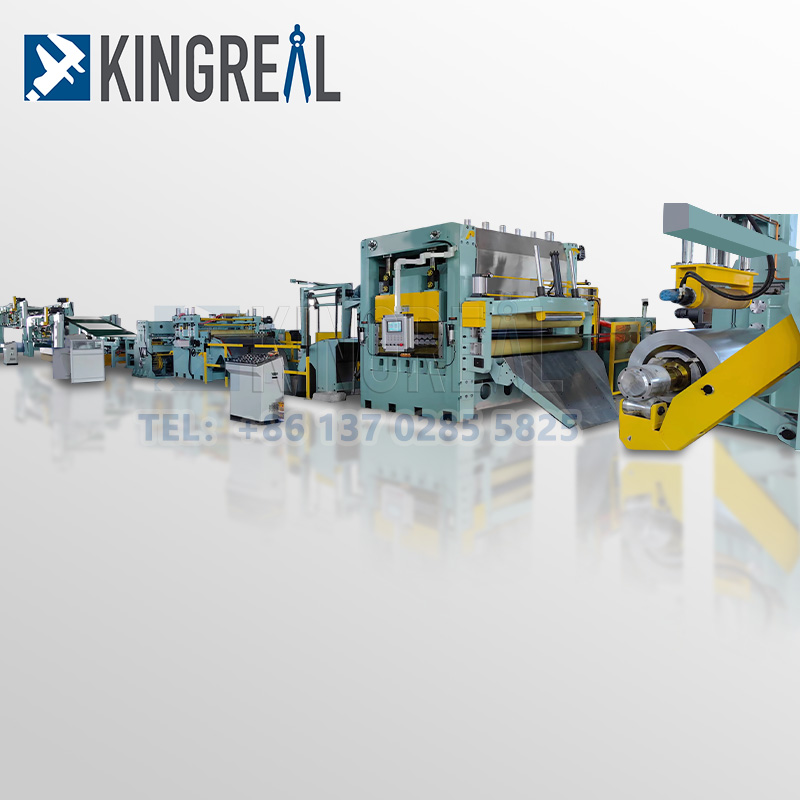
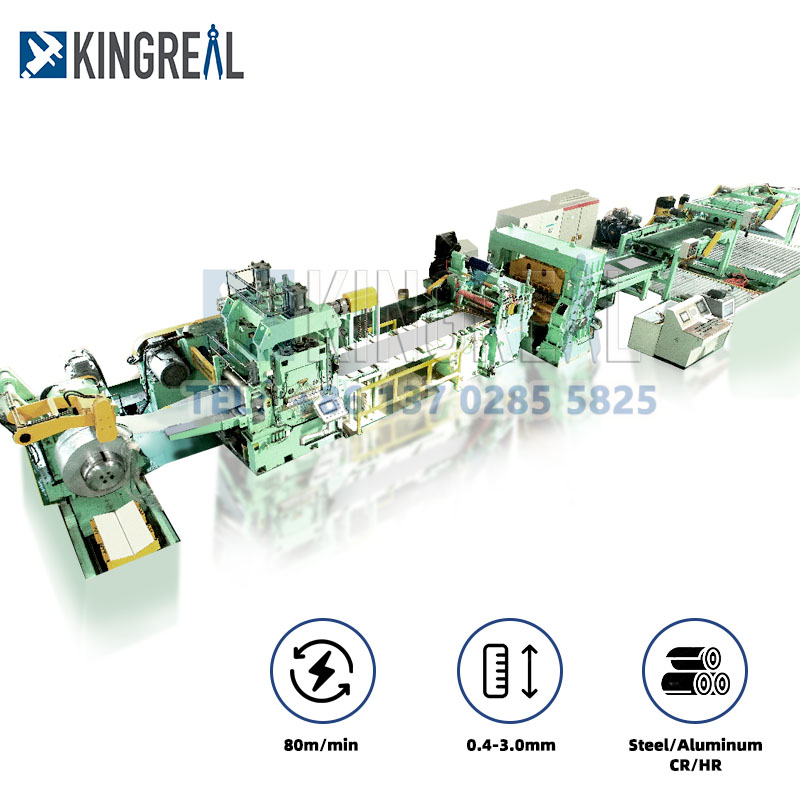
Rotary shear cut to length lines can precisely cut various metal coils into sheets of preset sizes, and are widely used in automobile manufacturing, home appliance production, building materials, hardware processing, and many other fields. It is suitable for processing various metal materials, such as ordinary carbon steel, stainless steel, galvanized steel, brass, aluminum sheets, and color-coated sheets. Modern rotary shear cut to length machines are generally equipped with advanced automatic control systems. These systems achieve excellent cutting precision, with advanced sensors and PLCs precisely controlling the cutting length and diagonal tolerances, while ensuring stable stacking of the cut sheets, effectively avoiding scratches and deformation. This article will provide you with more detailed information about rotary shear cut to length lines, helping you to fully understand this important coil processing equipment.
|
Lies in its continuous operation, eliminating the need to stop during cutting. This feature fundamentally avoids the micro-indentation problem that can occur when cutting is paused, effectively ensuring the integrity and smoothness of the sheet material surface. In metal processing, especially for high-precision aluminum plates, mirror stainless steel plates, and color-coated plates—materials with extremely high surface quality requirements—even the slightest indentation can affect the product's aesthetics and performance. The rotary shear cut to length machine, with its continuous cutting capability, perfectly solves this industry pain point, making it particularly suitable for transverse cutting of such high-precision metal materials. In addition, the rotary shear cut to length line also boasts advantages such as stable precision, strong adaptability, and low wear. Its cutting accuracy is unaffected by the number of cuts or material thickness, maintaining consistent cutting results over a long period, meeting the stringent requirements of companies for product dimensional uniformity. Furthermore, it can flexibly adjust cutting parameters according to the characteristics of different materials and cutting needs, adapting to the processing of various specifications and materials of metal coils, making it extremely versatile. |
 |
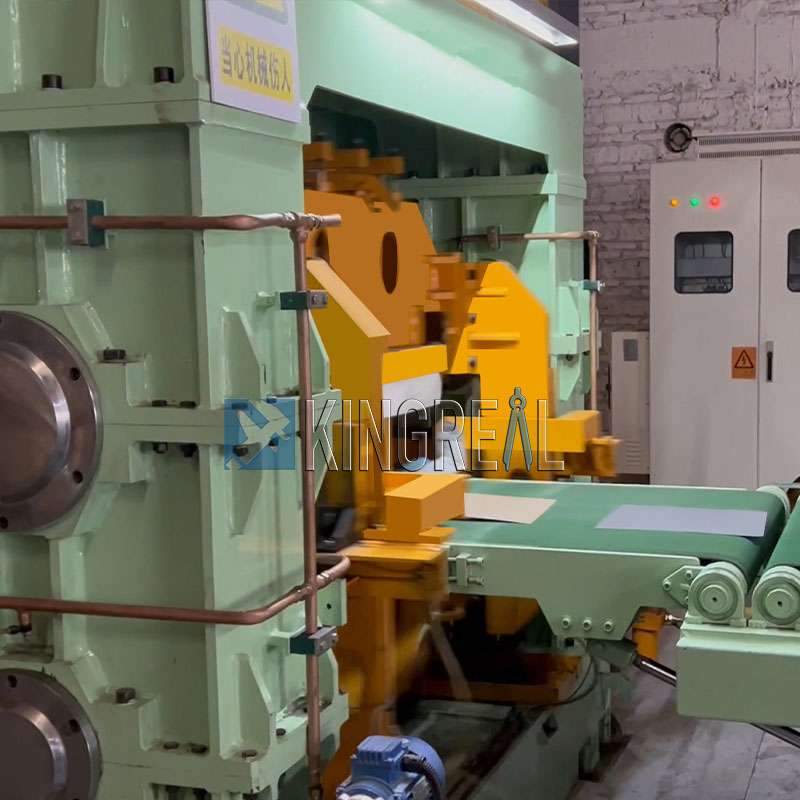
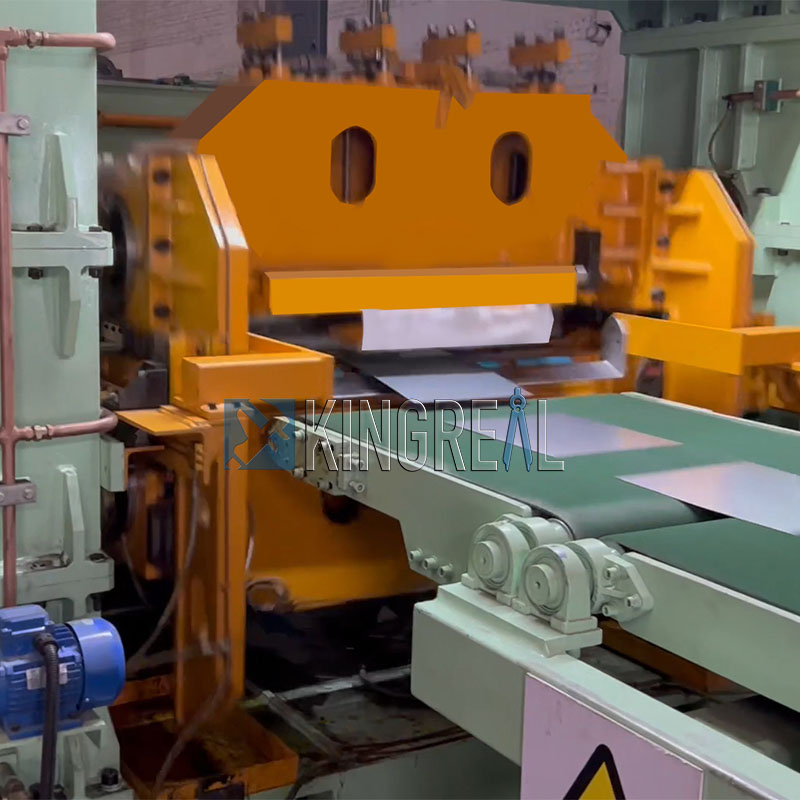
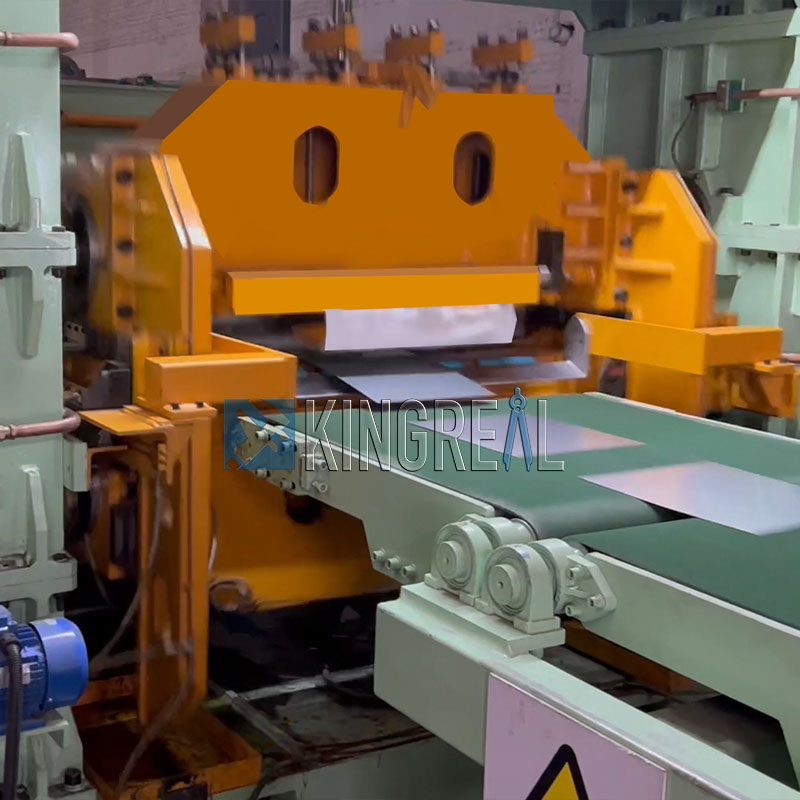
The entire rotary shear cut to length machine operates around the shearing action of the rotary shear, achieving fully automated processing from metal coils to finished sheets. The rotary shear, the core component of the line, employs a unique rotating blade design. The blades rotate at high speed in sync with the conveying speed of the metal strip, resulting in a clean, burr-free cut. The cut sheets have smooth surfaces and edges, eliminating the need for subsequent grinding.
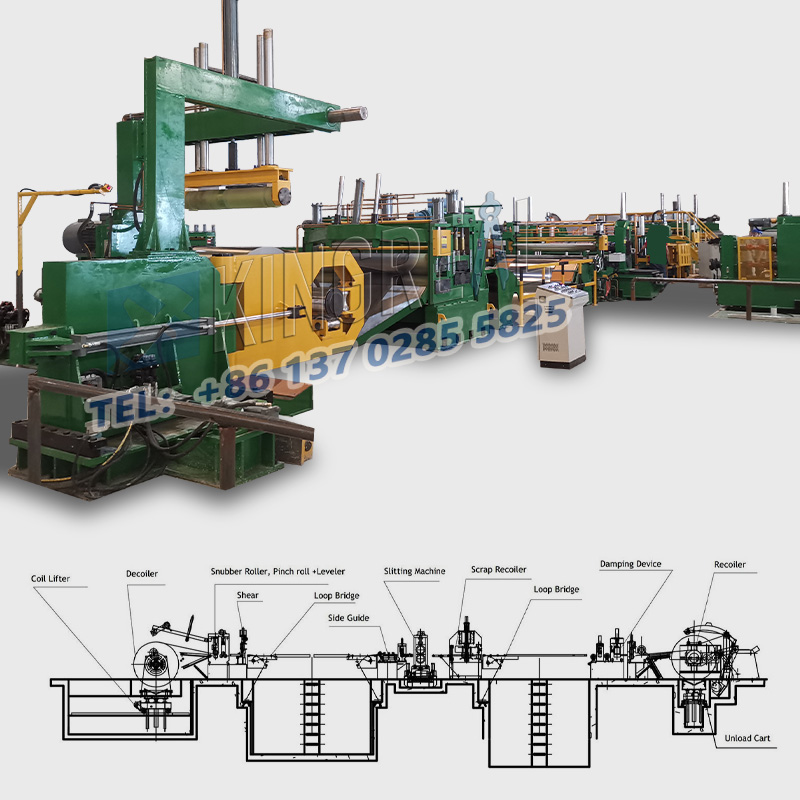
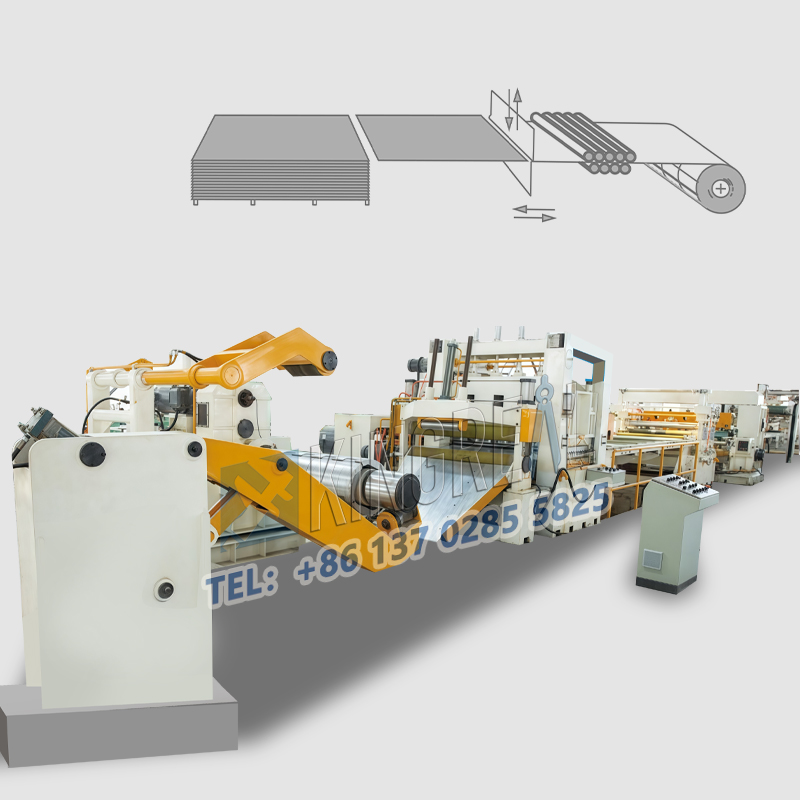
The overall workflow of the rotary shear cut to length line is clear and orderly. The metal coil is first uncoiled by a decoiler, then straightened by a straightener to remove curl and internal stress. It is then conveyed at a stable speed by a feeder to the rotary shear. During the continuous conveying of the metal strip, the upper and lower blades of the rotary shear complete the shearing action through relative motion. The cut sheets are then conveyed to a stacker for neat stacking. The entire process requires no manual intervention, achieving fully automated continuous operation.
●Principle of four-bar rotary shear mechanism:
This mechanism consists of upper and lower shearing parts. The shearing blades are fixed to the connecting rods of the four-bar linkage. The installation angle and position of the blades are precisely calibrated to ensure perfect contact with the metal strip during the shearing process. In the actual operation of the rotary shear mechanism in the rotary shear cut to length machine, the driving force is input from the lower crankshaft, which drives the upper crankshaft synchronously through a pair of helical gears with the same number of teeth. This ensures that the upper and lower blades move in a consistent rhythm, preventing issues like shearing misalignment and burrs.
Each rotation of the crankshaft completes one workpiece shearing operation of the four-bar linkage, realizing the cyclical cutting action and ensuring that the rotary shear cut to length line can continuously and stably perform continuous cutting operations.
 |
 |
 |
1. Decoiler: The metal coil is loaded and uncoiled here. The decoiler ensures that the metal strip is fed smoothly and continuously into the rotary shear cut to length line.
2. Straightener: After uncoiling, the metal strip passes through the straightener to remove any curls or bends. This step is crucial to ensuring the flatness and quality of the final product.
3. Feeder: The feeder pulls the metal strip across the production line at a controllable speed, ensuring consistent processing.
4. Rotary Shear: The rotary shear is the core component of the production line, consisting of rotating blades for precise cutting. The blade rotation speed is synchronized with the metal strip rotation speed to ensure cutting accuracy.
5. Stacker: After the metal strip is cut into sheets, the stacker collects and neatly stacks them. Depending on the production line configuration, stacking can be manual or automatic.
6. Control System: Modern rotary shear cut to length machines are equipped with advanced control systems, allowing operators to set parameters such as cutting length, speed, and quantity. These systems typically include a touchscreen interface and a PLC for ease of operation.
(1) The blades' horizontal running speed should match or be somewhat greater than the workpiece conveying speed. This is vital for guaranteeing cutting accuracy. Low blade speed relative to workpiece conveyor speed will result in incomplete cutting, burrs, or plate deformation. If the speed is too high, it will raise blade wear and perhaps leave scratches on the plate surface. Strictly monitoring the matching degree between the blade speed and the conveyor speed is therefore required to guarantee a smooth and accurate shearing operation.
(2) The upper and lower blades must maintain the optimal and reasonable blade clearance. The size of the blade clearance directly affects the cutting quality and blade life. If the clearance is too large, it will cause burrs and tears on the cut plate edge. If the clearance is too small, it will increase friction between the blades, accelerate blade wear, and may cause indentations on the plate surface. Therefore, the blade clearance must be precisely adjusted according to the thickness and hardness of different materials to ensure the best shearing effect.
(3)The blade needs to travel as horizontally as feasible throughout the shearing process, maintaining its perpendicularity to the workpiece surface. This requirement guarantees a clean cut surface, stops tilting and burrs, lowers localized blade wear, and lengthens blade life. Unstable blade movement or movement not perpendicular to the workpiece surface will result in cutting dimension variances and compromise product quality.
(4) The rotary shear must operate according to a predetermined working pattern to ensure accurate length cutting. One of the core advantages of the rotary shear cut to length machine is its high precision. Therefore, the rotary shear's operating rhythm must strictly follow the preset program to avoid problems such as motion disorder and speed fluctuations, ensuring that the dimensions of each cut meet the preset requirements and guaranteeing the uniformity of product dimensions. At the same time, excessive fluctuations in linear speed must be avoided, otherwise the cutting accuracy will exceed the tolerance range.
(5) Minimize the acceleration and weight of the rotary shear's moving parts to reduce inertial forces and dynamic loads. Excessive acceleration and weight of the rotary shear's moving parts will generate significant inertial forces and dynamic loads, which will not only affect cutting accuracy but also increase equipment wear, reduce equipment lifespan, and may lead to unstable rotary shear cut to length line operation. Therefore, during equipment design and manufacturing, the structure of moving parts must be optimized, lightweight, high-strength materials should be selected, acceleration and weight should be reduced, and stable rotary shear cut to length machine operation should be ensured.
If you have any questions about the rotary shear cut to length machine, whether it's equipment selection, parameter settings, or maintenance, please feel free to contact us. With extensive industry experience and a professional technical team, KINGREAL STEEL SLITTER can provide you with more images and videos to intuitively demonstrate the rotary shear cut to length line's operating effects and processing quality. We will also offer you professional and comprehensive answers to help you choose the rotary shear cut to length machine that best suits your needs.