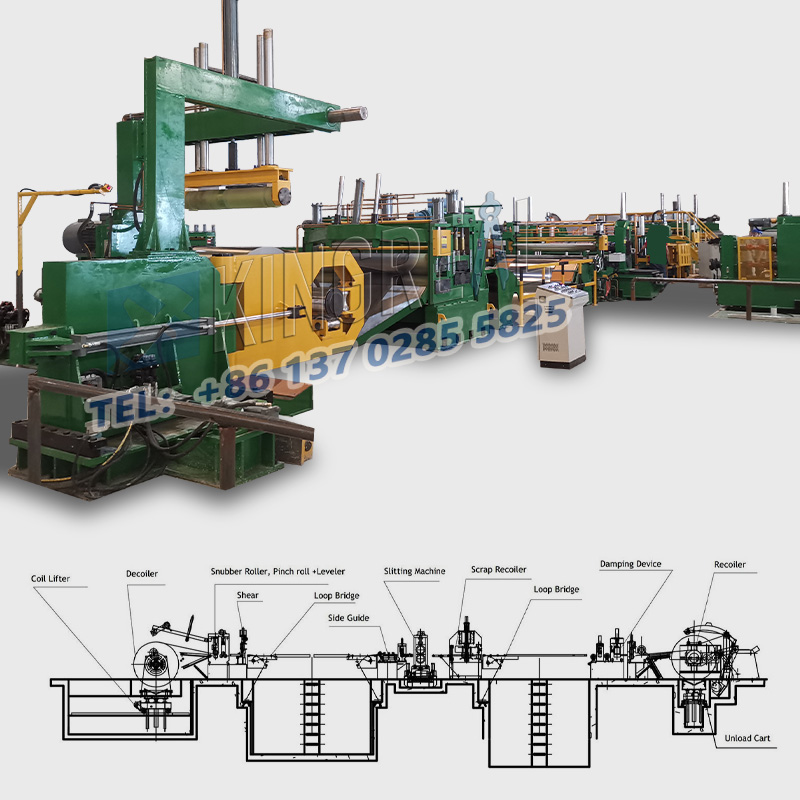
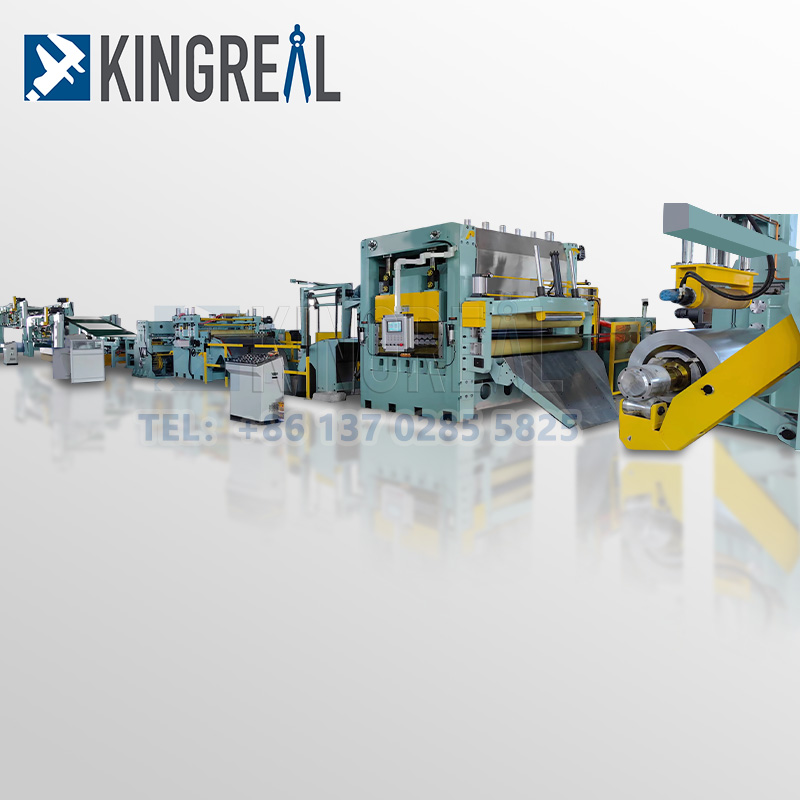
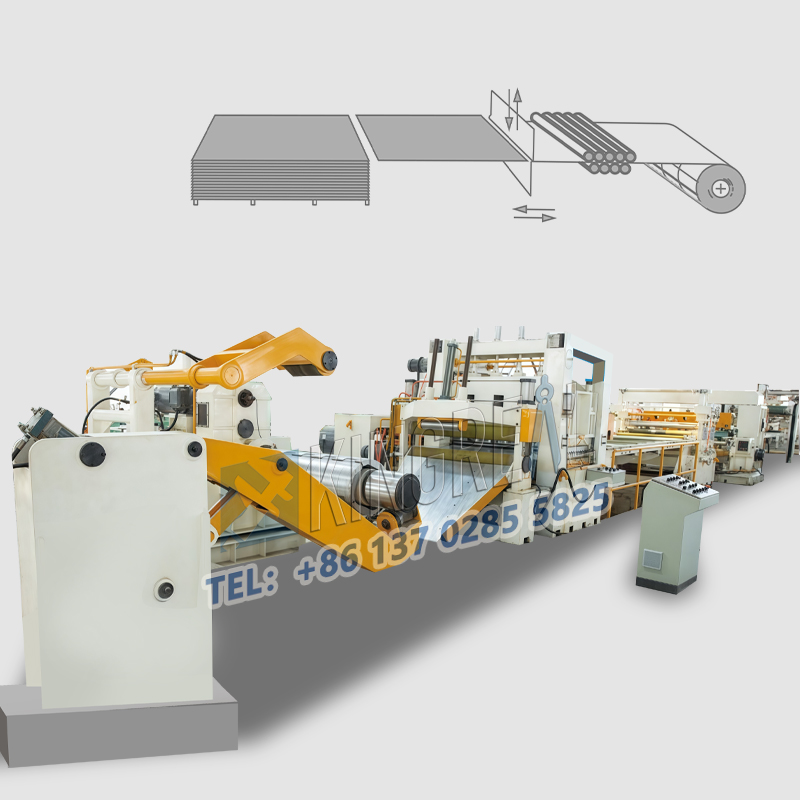
The primary function of a cut-to-length line is to process large metal coils—through uncoiling and leveling—into flat sheets of precise, preset lengths. Serving as raw materials for the metal processing industry, these sheets are subsequently routed to secondary processing stages such as stamping, bending, welding, or laser cutting to create finished products.
The processing capabilities of the cut to length machine directly determine the precision and efficiency of downstream production.
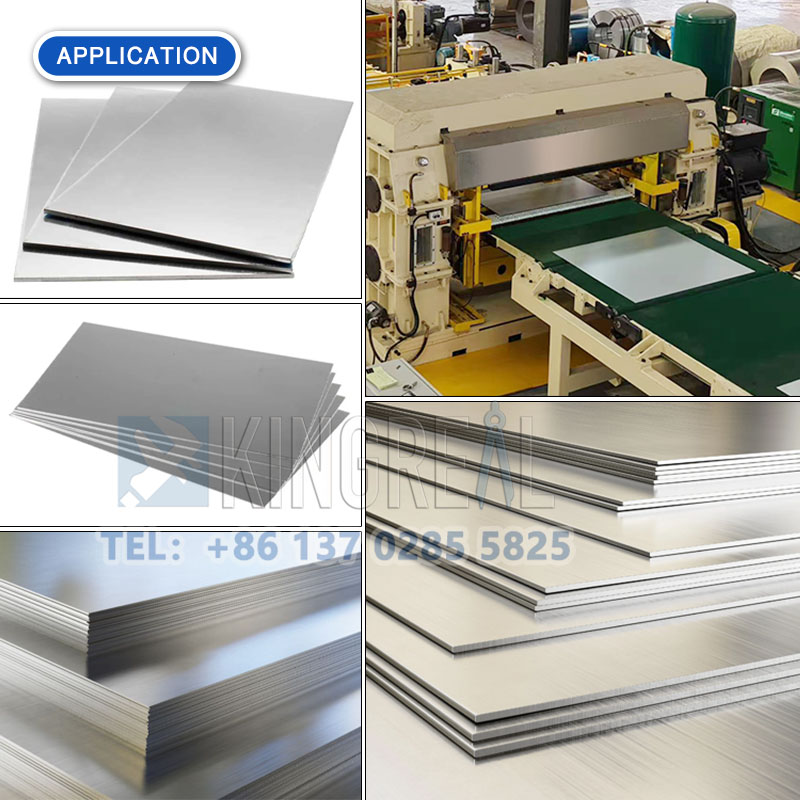
Currently, this cut-to-length line is widely used in key sectors including automotive manufacturing, home appliances, construction infrastructure, enclosure and cabinet manufacturing, heavy machinery, and shipbuilding.
1. Material Versatility and Processing Range
Cut-to-length lines demonstrate exceptional material adaptability. They can process a wide variety of metals, including cold-rolled steel, hot-rolled steel, stainless steel, brass, aluminum, and aluminum alloys.
Based on material thickness, these cut to length machines are categorized into three main types:
Light gauge cut-to-length lines: Handle thicknesses typically ranging from 0.3mm to 3mm, with a focus on surface protection and high operating frequency.
Medium gauge cut-to-length lines: Handle thicknesses ranging from 3mm to 6mm, balancing shearing force with processing speed.
Heavy gauge cut-to-length lines: Designed for heavy industrial needs, KINGREAL STEEL SLITTER heavy-gauge solutions can process coils up to 25mm thick. Heavy gauge cut-to-length lines of this specification require superior structural rigidity and high-torque drive systems.
2. High Efficiency and Advanced Shearing Technology
Efficiency is a key performance indicator for cut to length machines. KINGREAL STEEL SLITTER cut-to-length lines can achieve production speeds of up to 80m/min, largely due to the use of flying shear systems.
Flying Shear Technology Logic: Unlike traditional start-stop shearing, the flying shear system allows the material to continue moving without interruption during the cutting process. The shear moves synchronously with the material during the cutting process and rapidly returns to the starting point upon completion. This eliminates the mechanical shock caused by frequent material starts and stops, significantly boosting throughput.
High-precision control: Through closed-loop control utilizing servo motors and high-resolution encoders, the cut to length machine maintains length tolerances within a very tight range, ensuring sheet consistency.
3. End-to-End Automation and Quality Assurance
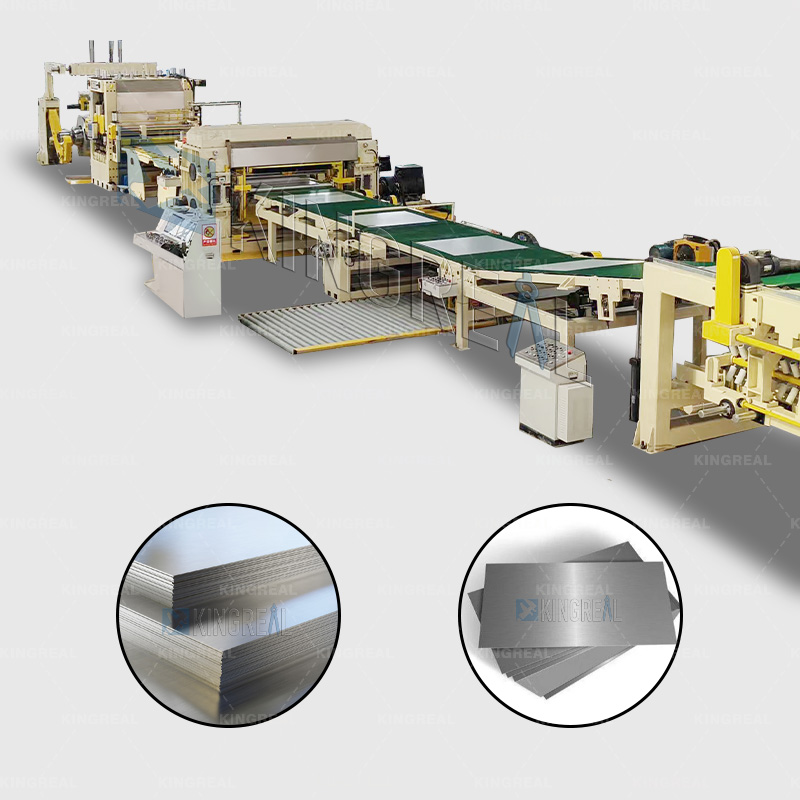
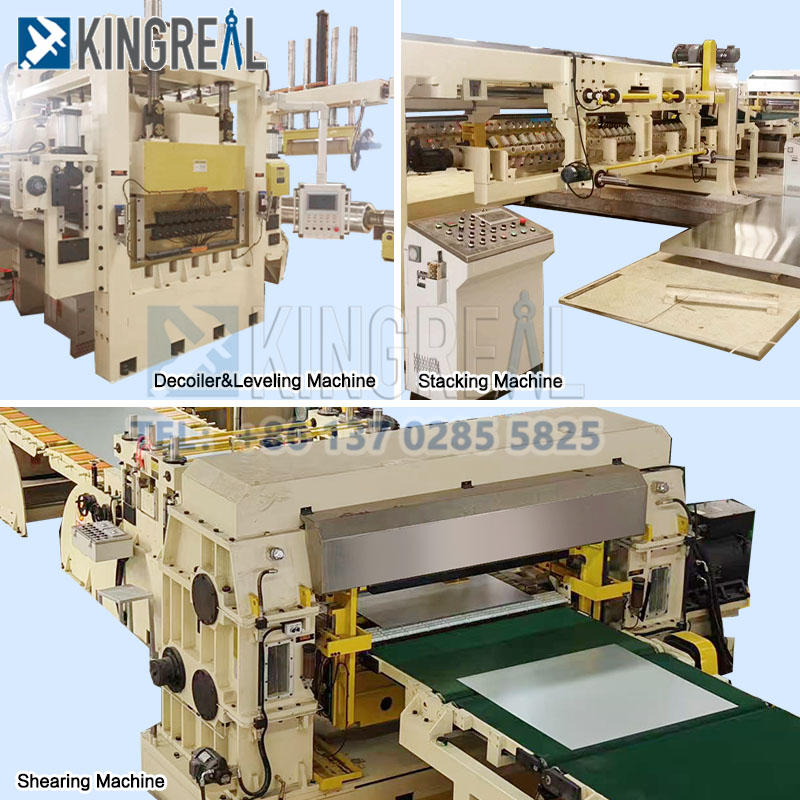
The cut-to-length line achieves full automation from coil intake to finished product stacking. Standard process steps include:
-Uncoiling: Smoothly unwinding the coil.
-Leveling: Eliminating internal coil stress and restoring flatness.
-Shearing: Real-time, fixed-length cutting.
-Stacking: Automatic alignment and neat stacking.
 |
 |
This highly automated production model significantly reduces manual intervention; it not only lowers labor intensity but, more importantly, eliminates quality fluctuations caused by manual handling, thereby ensuring dimensional accuracy and production stability.
Different industries have vastly different requirements for sheet metal, necessitating tailored functional configurations for cut to length machines.
1. Automotive Industry
Automotive OEMs and Tier 1/2 suppliers are frequent users of cut-to-length lines.
Application scenarios: Primarily used for producing body panels (doors, roofs), chassis stampings, and structural reinforcements.
Technical requirements: The automotive industry demands extremely high material utilization rates. Consequently, these cut to length machines are often equipped with swing shears capable of cutting trapezoidal, triangular, or other irregular shapes to match stamping die contours, thereby minimizing scrap waste.
2. Home Appliances
Demand for sheet metal in the home appliance industry centers on the manufacture of casings for refrigerators, washing machines, air conditioners, and microwave ovens.
Technical Challenge: Home appliance exterior components impose extremely stringent requirements regarding sheet flatness and surface quality.
KINGREAL STEEL SLITTER Cut-to-Length Line Solutions:
-6-High Leveler: By increasing the number of backup roll layers, the system prevents work roll deformation under load, effectively eliminating wavy edges and transverse warping.
-Dual-Leveling Solution: The cut to length machine is equipped with two consecutive levelers to perform secondary precision leveling.
-Surface Protection: PU-coated rollers and an inline film-coating unit are utilized to prevent scratches on stainless steel or PPGI sheets during processing.
3. Construction & Building Infrastructure
This sector primarily serves manufacturers of roofing panels, sandwich panels, and steel structural components.
Application Scenarios: High-volume shearing of raw material sheets used to produce color-coated steel tiles and C/Z-section steel.
Technical Requirements: Emphasis on stable, high-volume output; cut-to-length line must demonstrate durability for prolonged, continuous operation.
4. Cabinets & Enclosures Manufacturing
Covers the production of power distribution cabinets, server racks, fire doors, and office furniture.
Technical Logic: Cabinet manufacturing involves extensive bending processes. Poor sheet flatness leads to cumulative tolerances during bending, preventing the cabinet body from fitting together seamlessly.
Leveling Logic: The precision leveling function of the cut-to-length line is crucial here; it ensures consistent spring-back characteristics in the sheet metal during subsequent bending operations.
5. Heavy Machinery & Shipbuilding
These industries handle structural components for construction machinery (such as excavator booms) and hull plating.
Application Scenarios: Processing medium-to-heavy plates with a wide range of thicknesses.
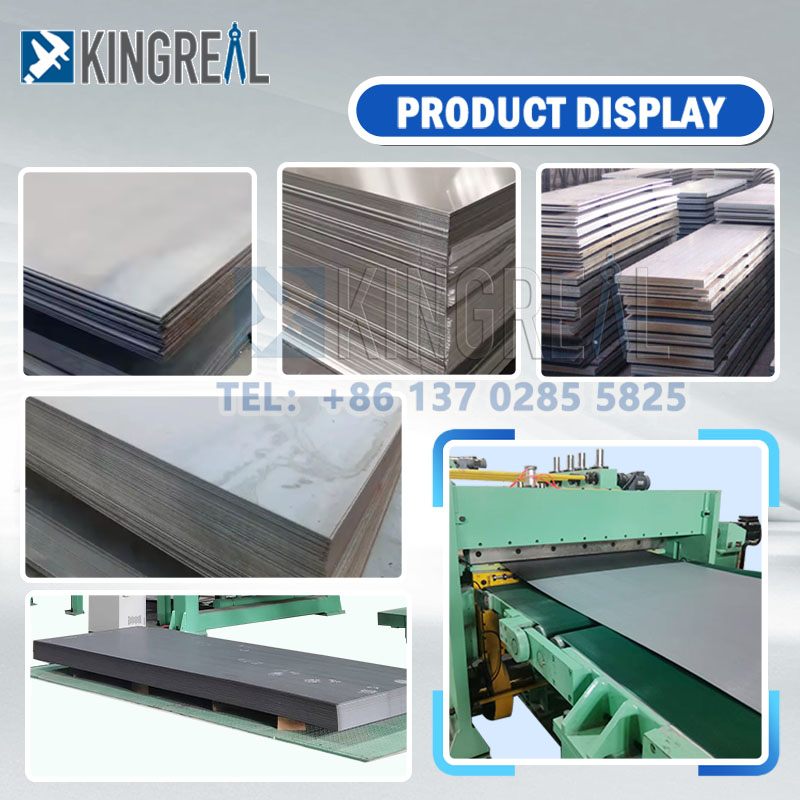
Technical Requirements: High shearing force capabilities are essential. KINGREAL STEEL SLITTER high-strength cut to length machines can process carbon steel coils up to 25mm thick, ensuring that cut edges on heavy plates are vertical and burr-free.
 |
 |
As a primary stage in metal processing, the performance of cut-to-length lines directly impacts the yield rates across the entire industrial chain. Through continuous investment in research and development, KINGREAL STEEL SLITTER is dedicated to optimizing the mechanical structures and control systems of these cut to length machines, aiming to enhance both functionality and flexibility.
Our goal is to ensure that every cut-to-length line perfectly aligns with the specific requirements of our customers' projects. Whether serving the home appliance industry—where superior surface quality is paramount—or the heavy industry sector, which demands high-strength processing and heavy-gauge plate handling, KINGREAL STEEL SLITTER delivers customized cut to length machine solutions.
For further information regarding technical specifications and custom solutions for various types of cut-to-length lines, please contact KINGREAL STEEL SLITTER team of experts directly. We will provide professional guidance on cut-to-length line selection tailored to your material specifications and production capacity requirements.