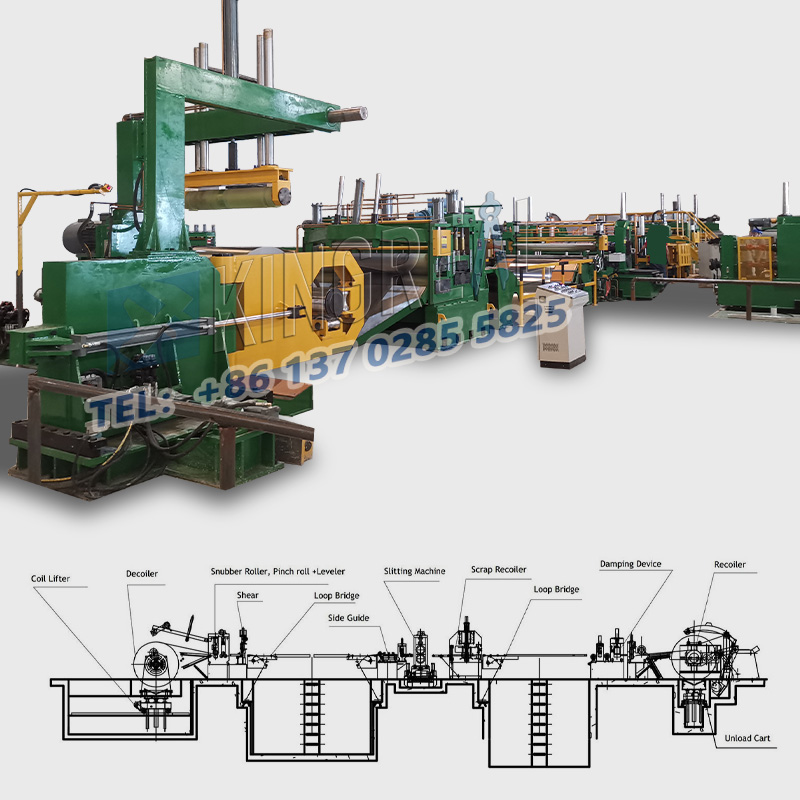
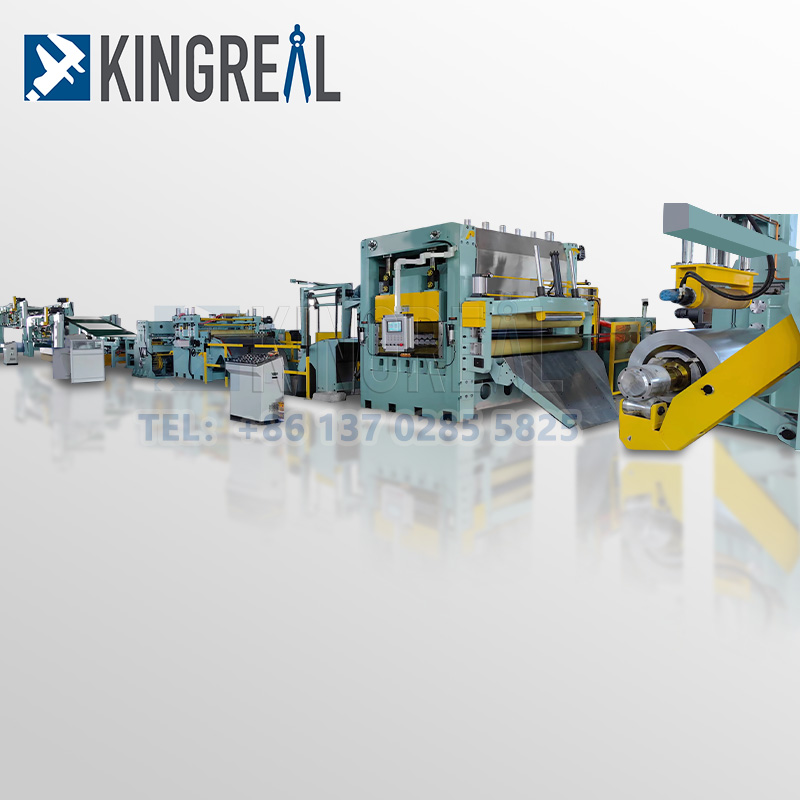
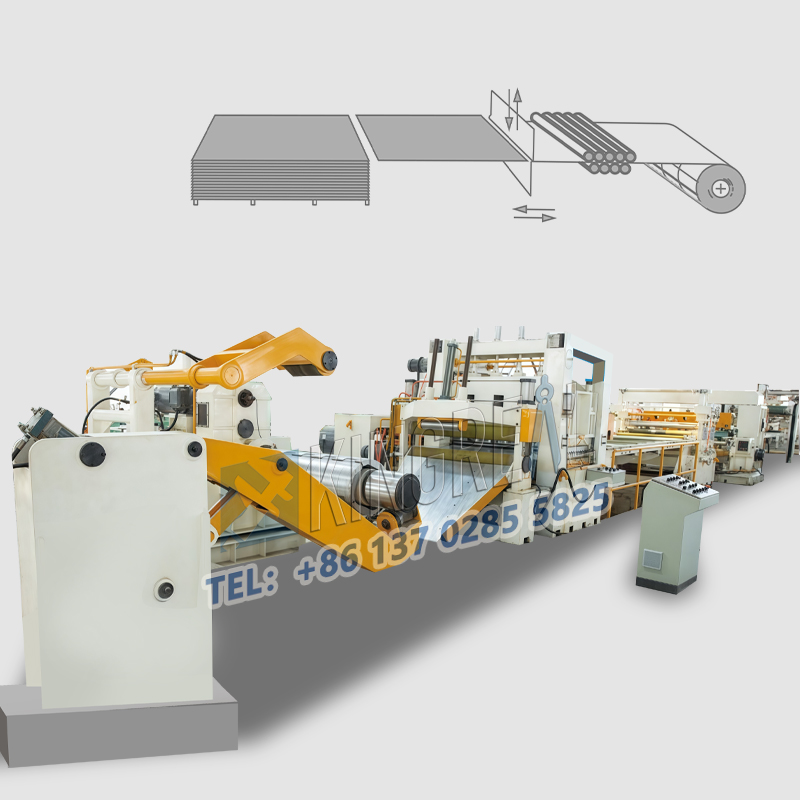
In the field of metal coil processing, the production efficiency and product precision of a sheet metal slitting machine depend largely on the physical condition of its core cutting components—the blades.
Regular replacement and calibration of the blades are essential to ensure the quality of the slit edges, control burr height, and extend the sheet metal slitting line's service life.
In this article, KINGREAL STEEL SLITTER provides a detailed guide on how to replace sheet metal slitting machine blades correctly, efficiently, and safely, along with professional maintenance recommendations.
Operating Procedures for Sheet Metal Slitting Line Blade Replacement
1. Machine Shutdown and Safety Guidelines
Before performing any replacement operations, strict adherence to LOTO procedures is mandatory:
-Disconnect Power: Ensure the main motor and hydraulic station have completely stopped running, and attach a safety warning sign reading "Under Maintenance – Do Not Switch On."
-Release Tension: Ensure the coil material has been fully withdrawn from the slitting zone to prevent accidental entanglement caused by residual tension.
-Wear Protective Gear: Operators must wear cut-resistant gloves, safety goggles, and safety shoes. Circular blades have extremely sharp edges; even old, dull blades remain highly dangerous.
2. Accessing the Blade Installation Area
Locate the cutting section based on the sheet metal slitting machine's structural design:
-Remove Protective Shields: Open the safety guard plates or pneumatic safety doors.
-Position the Cutter Shaft: Use manual inching or an auxiliary turning device to rotate the cutter shaft to an angle that facilitates screw removal.
3. Removal and Cleaning of Old Blades
-Loosen Fasteners: Use a specialized hydraulic wrench or torque wrench to loosen the locking nut at the end of the cutter shaft.
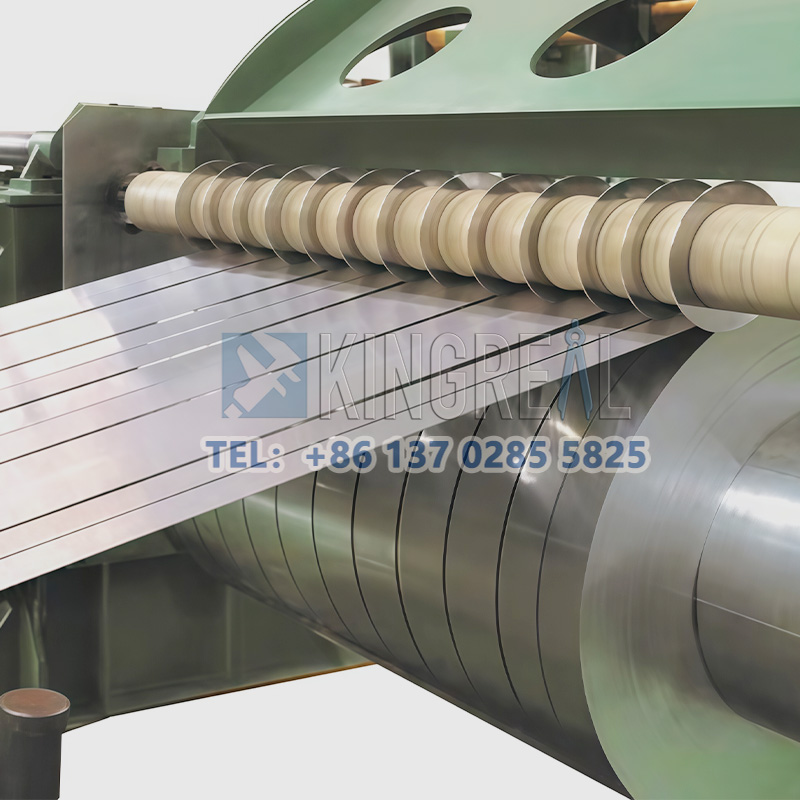
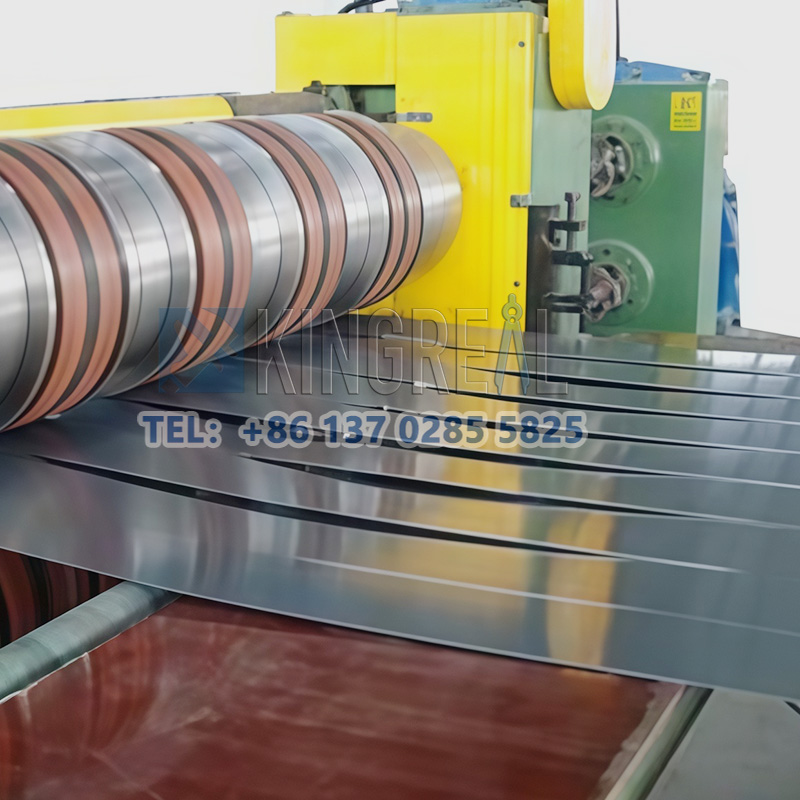
-Remove Components in Sequence: The sheet metal slitting line's cutting system consists of an alternating arrangement of blades, rubber rings, and spacers.
You must strictly record the arrangement order and orientation during removal; using a dedicated storage rack to organize parts by sequence is recommended.
-Thoroughly Clean the Cutter Shaft: This is the most critical step. Wipe the cutter shaft surface using non-woven cloth and specialized cleaning agents. All metal debris, dried lubricant, and rust must be removed. Even 0.01 mm of debris on the cutter shaft can cause radial runout after blade installation, thereby compromising slitting precision.
4. Selection and Installation of New Blades
-Specification Verification: Check the new blade's material, outer diameter, inner diameter, and thickness tolerances. Ensure they meet the technical requirements for the material being processed.
-Alignment and Installation: Gently slide the new blade onto the cutter shaft. Never strike the blade directly with a hammer during installation; if resistance is encountered, re-check the shaft diameter tolerance.
-Matching Arrangement: Ensure the blade positions on the upper and lower shafts align perfectly. Precisely place spacers and rubber rings according to the calculated slitting width to maintain the correct horizontal clearance.
5. Tightening and Pre-lubrication
-Axial Locking: Tighten the end nut to ensure all blades and spacers fit tightly together along the axis.
-Applying Anti-rust Lubricant: Apply a thin layer of high-performance anti-rust oil to the blade edges and exposed shaft sections. This reduces frictional heat during cutting and prevents material debris from adhering to the blades.
 |
 |
Tips of Commissioning Slitter Blades
Production under load must not begin immediately after installation; key parameters must first be measured and adjusted:
-Horizontal Clearance Adjustment: Adjust the horizontal gap between the upper and lower blades based on the material thickness (T). Typically, the clearance is set to 8%–10% of the material thickness.
-Overlap Adjustment: Adjust the vertical overlap depth between the upper and lower blades.
Specialized Maintenance Guide for Slitter Blades
High-performance maintenance can reduce the total procurement cost of blades by more than 30%.
1. Monitoring and Resharpening of Dull Edges
-Inspection Standards: Use a professional edge inspection tool to measure the edge radius. Professional resharpening is required if the radius exceeds 0.05 mm or if visible edge chipping occurs.
-Resharpening Process: Ensure sufficient coolant is used during resharpening to prevent the blade surface from annealing and losing hardness. Demagnetization is mandatory after resharpening to prevent the attraction of metal dust during slitting operations.
2. Cleaning and Anti-Corrosion Procedures
At the end of each shift or when changing specifications, use a specialized chemical cleaning agent to remove oil residue and metal debris from the blade surfaces.
3. General Equipment Maintenance Recommendations
-Debris Removal: Focus on clearing metal dust from the guide rails, feed rollers, and the scrap winder area.
-Lubrication System: Regularly check the lubrication pump pressure and replenish with industrial-grade grease that meets specifications; ensure that rotating components do not overheat during high-speed operation.
Data-Driven Records and Predictive Blade Maintenance
To achieve intelligent production management, operators should maintain detailed maintenance logs:
-Record Details: Blade installation date, number of regrinds, cumulative slitting length (or tonnage), material types processed, and reports of any anomalies.
-Service Life Analysis: Use statistical software to analyze the average service life of blades based on brand or material. This helps optimize procurement plans and enables preventive blade replacement before fatigue failure occurs, thereby avoiding unplanned downtime.
As a leading global supplier of sheet metal slitting machine, KINGREAL STEEL SLITTER boasts a professional after-sales technical support team. We provide not only high-precision sheet metal slitting lines but also comprehensive operational training, guidance on blade adjustment, and long-term maintenance solutions.
For more information about our sheet metal slitting machines, please contact the KINGREAL STEEL SLITTER team directly!