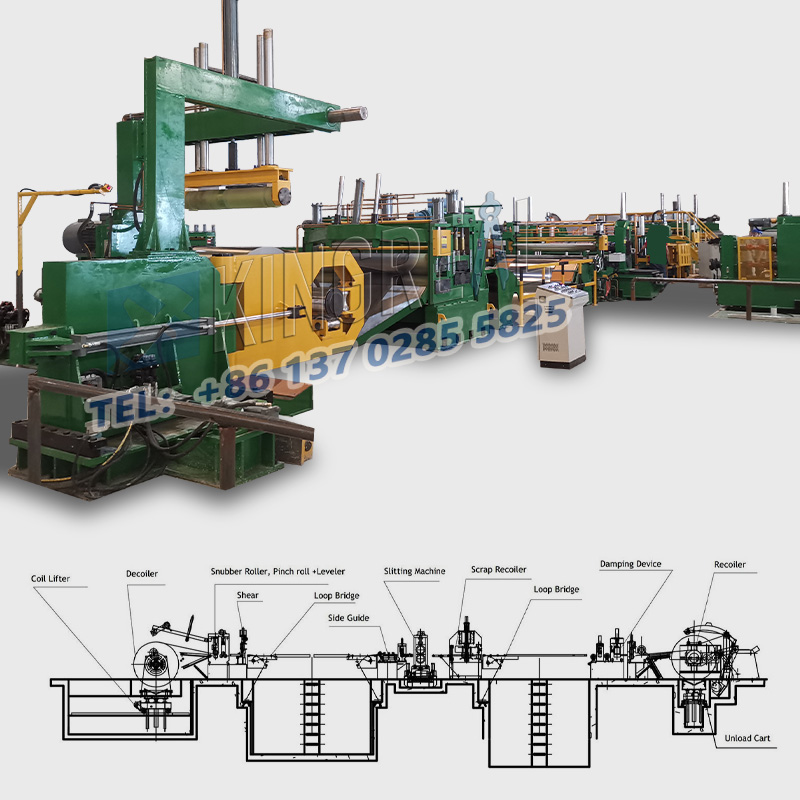
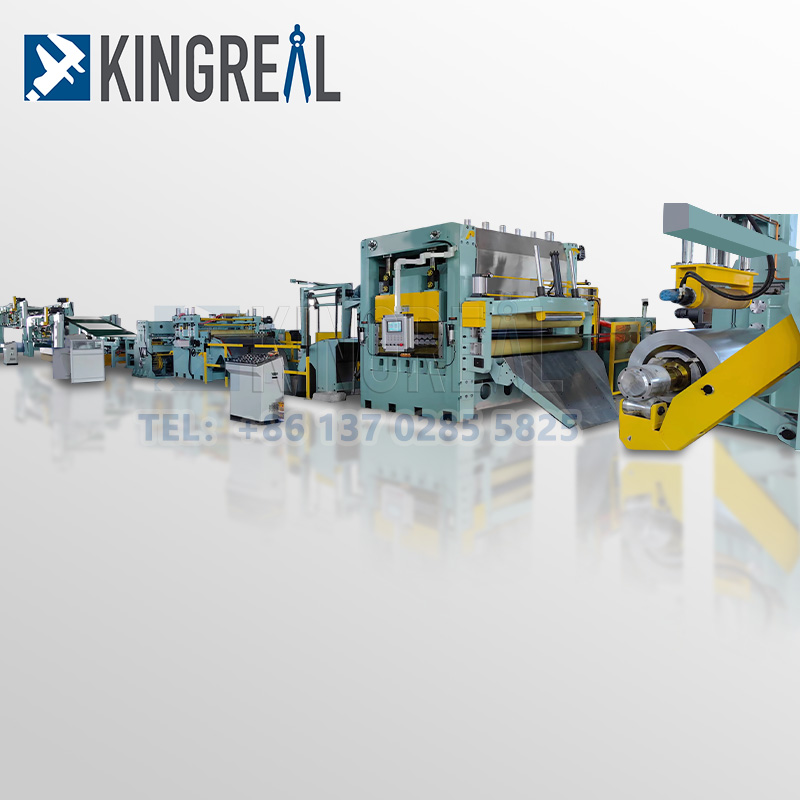
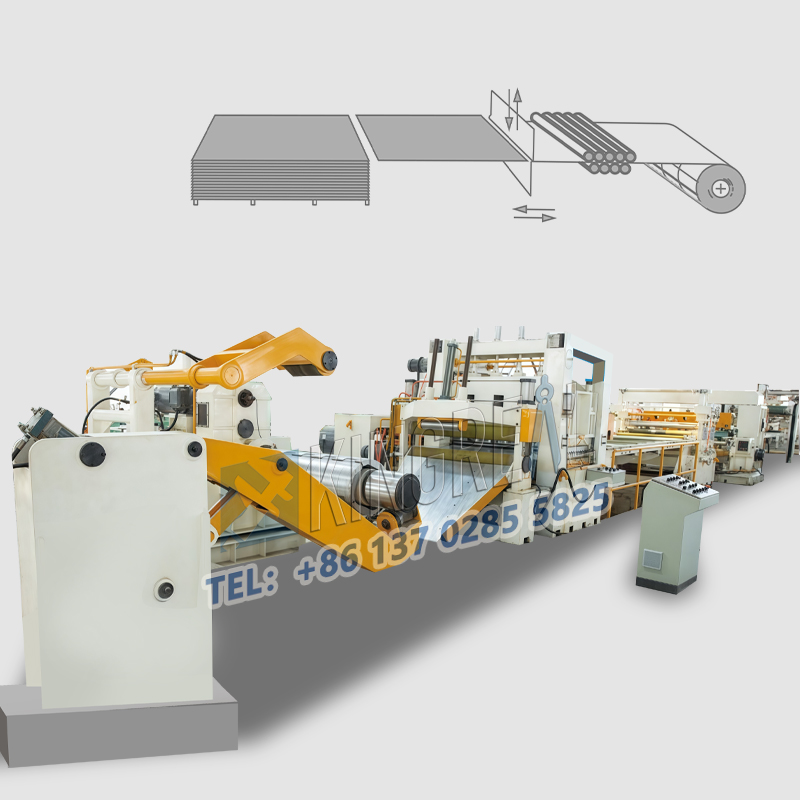
In the field of metal processing, the flatness of the plate is one of the core indicators for measuring product quality.
Whether it is subsequent laser cutting, CNC stamping or welding assembly, there are strict requirements for the flatness of the raw materials. However, during the rolling, shearing, transportation and storage processes of plates, various geometric defects often occur due to uneven stress distribution.
In the metal processing industry, the plate leveller machine not only corrects the appearance of the plate, but also eliminates the residual stress inside the material through physical means. This article will discuss in detail the working principle, structural classification and necessity of plate leveling machines in industrial production.
Working Principle of Plate Leveller Machine
The leveling process is essentially a controlled plastic deformation process. Its core logic is to change the microscopic stress state inside the material through mechanical force.
1. Alternating bending mechanism
The plate leveling machine exerts pressure on the metal sheet through a set of leveling rollers arranged staggered up and down. As the sheet passes through the machine, it undergoes a series of repeated alternating bends:
Entrance area: In the initial stage when the plate enters the plate leveller machine, the leveling roller has a large reduction amount, causing the material to bend beyond its yield point. This step is designed to break the material's original, uneven stress distribution and eliminate the original curvature.
Exit area: As the plate moves toward the exit direction, the reduction amount of the leveling roller gradually decreases linearly. In this way, the bending amplitude of the material changes from strong to weak, so that the originally chaotic stress inside the plate gradually becomes balanced.
Curvature Unification: Eventually, the different curvatures inside the board are unified into a single curvature and reach a zero-curvature state when leaving the plate leveling machine, thus achieving flattening of the board.
2. Elimination of residual internal stress
In addition to correcting visible geometric deformations, the most important function of the leveler is to eliminate "residual internal stress".
During the cold rolling or hot rolling process, a large amount of internal stress will accumulate inside the metal sheet. If laser cutting is performed directly without leveling, the released stress will cause sudden warping of the plate, damaging the cutting head and reducing processing accuracy.
The plate leveller machine neutralizes and releases these stresses by causing plastic extension on both sides of the neutral layer of the material through repeated stretching and compression.
Structural Types and Selections of Plate Leveling Machines
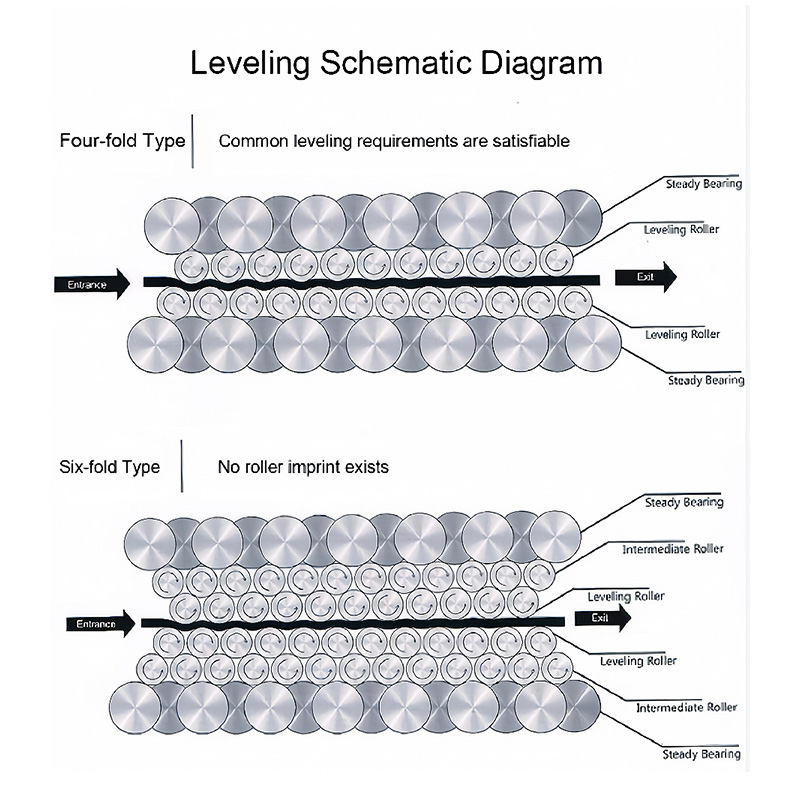
The leveling accuracy of a plate leveller machine largely depends on the configuration of its roller set. According to the different support structures, they are mainly divided into the following two basic types:
1. 4-High Structure
A set of back-up rolls is added to the outside of the upper and lower leveling rollers.
Technical features: The support roller can effectively resist the radial deformation of the leveling roller, increasing the rigidity of the roller system.
Advantages: It significantly improves the leveling accuracy of the plate and reduces the gap between the rollers. It is currently the mainstream choice for medium-precision metal processing.
2. Six-High Structure
A set of intermediate rollers is added between the support roller and the leveling roller.
Technical features: This structure minimizes the empty space between the leveling rollers. The intermediate roller distributes pressure more evenly, ensuring that the roller system remains incompressible under extremely high pressures.
Advantages: This is currently the best solution in the field of high-precision leveling. It is especially suitable for materials with high surface quality requirements (such as stainless steel, aluminum plates) and thin plate processing.
It can effectively avoid indentations or scratches during the leveling process and ensure extremely high flatness tolerances.
Why Do You Need a Plate Leveling Machine?
Metal sheets are prone to a variety of defects during production and processing, and these defects will directly lead to the shutdown of subsequent automated production lines or product scrapping.
Common plate defects include: Edge Waves, Center Buckles, Coil Set, Crossbow, Camber, and residual internal stress.
In precision metal processing, the use of plate leveller machines can significantly improve material utilization. The flat plate can not only ensure the focus stability of laser cutting, but also improve the assembly accuracy of welding and reduce manual rework time, thus significantly reducing the company's comprehensive manufacturing costs.
Key Considerations When Choosing a Plate Leveling Machine
1. Plate technical parameters
The thickness range, maximum width, and most critical yield strength of the material must be clearly defined. Materials with high yield strength require greater leveling pressure and a stronger roller train structure.
2. Flatness accuracy standard
Determine flatness tolerances based on industry needs such as architectural decoration, automotive parts, or electronic enclosures. The higher the accuracy requirements, the more critical the selection of the weight of the roller system (such as four or six) and the roller diameter.
3. Production capacity and automation needs
For large-scale production, the degree of automation of the equipment, such as automatic gap adjustment function, PLC control system, and the ability to operate online, should be considered to reduce manual intervention and improve production efficiency.
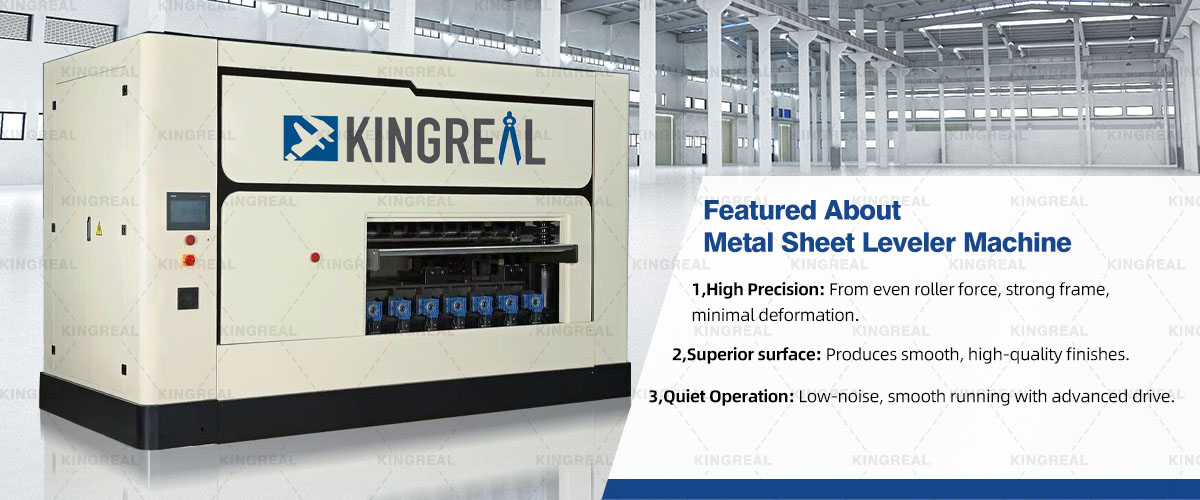
If you are looking for a high-performance, automated precision plate leveller machine, please contact KINGREAL STEEL SLITTER directly.
We provide customized plate leveling machine solutions, covering all-round processing needs from thin plates to thick plates, from ordinary steel to high-strength steel, helping your factory improve production accuracy and competitiveness.