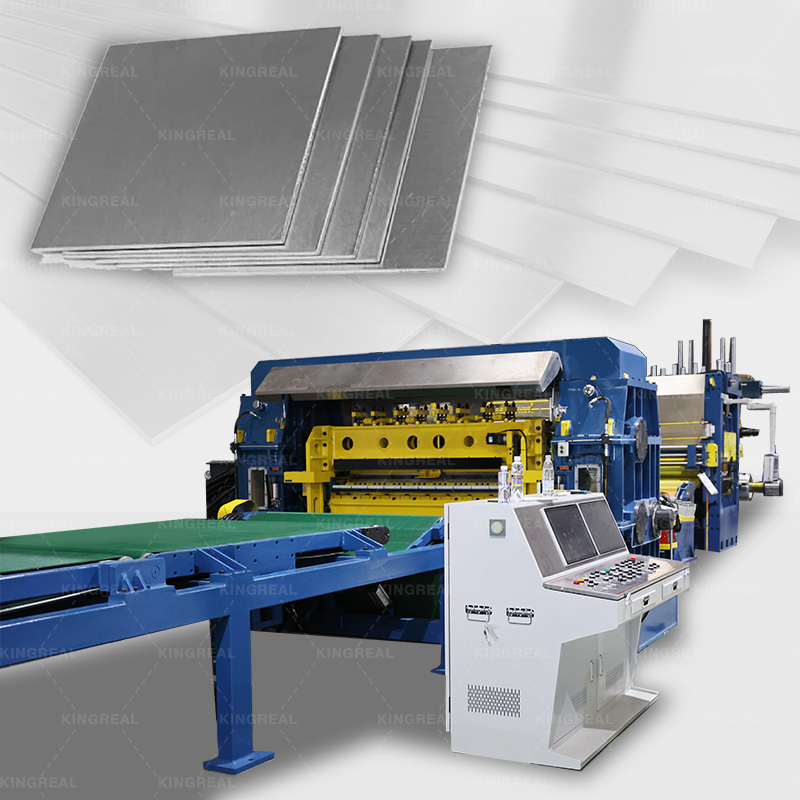
In the metal processing industry, the primary function of a precision cut to length line is to process large metal coils into precision flat sheets of specific lengths. These sheets then enter the downstream production chain for subsequent processes such as stamping, welding, or assembly.
1. Reducing Rework and Material Waste
In metal processing, the precision of the cutting process directly impacts costs. If length tolerances or diagonal deviations fall outside acceptable ranges, positioning failures can occur during downstream operations (such as precision stamping or bending), leading to high rework costs.
Precision cut to length machines can keep these deviations within extremely tight limits.
2. Enhancing Compatibility with Downstream Processes
Modern production lines demand raw materials with exceptional flatness and dimensional consistency. High-quality sheets produced by precision cut to length lines ensure the stable operation of downstream automated equipment and reduce downtime for maintenance.
3. Meeting the Needs of Global Processing Centers
Metal processing centers handle a wide variety of raw material specifications (including cold-rolled steel, hot-rolled steel, aluminum alloys, and high-strength steel). By utilizing precision cut to length machines, these centers can flexibly adjust production parameters to meet the diverse sheet size requirements of various industries.
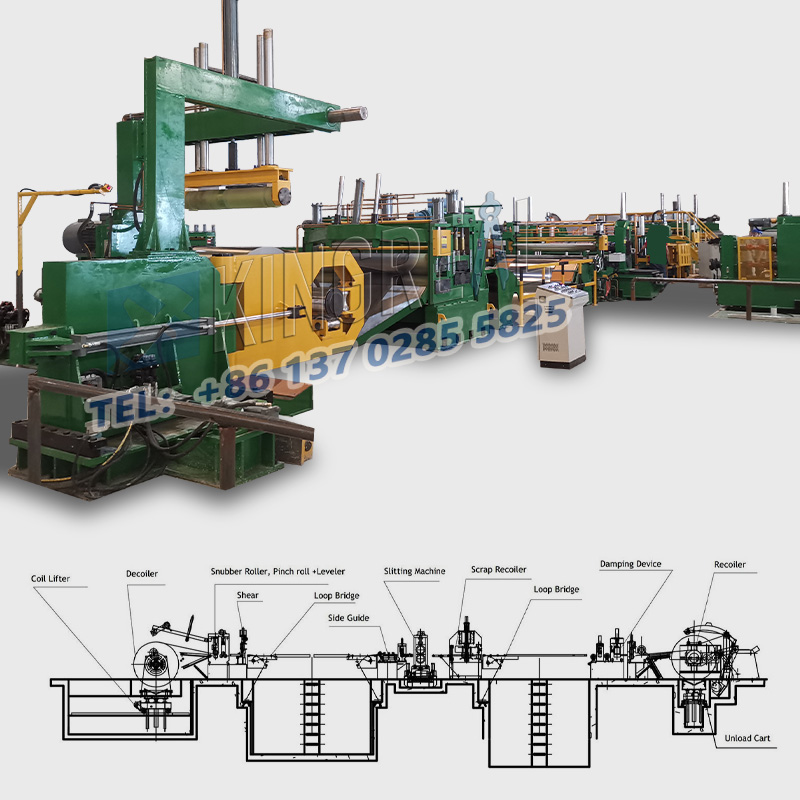
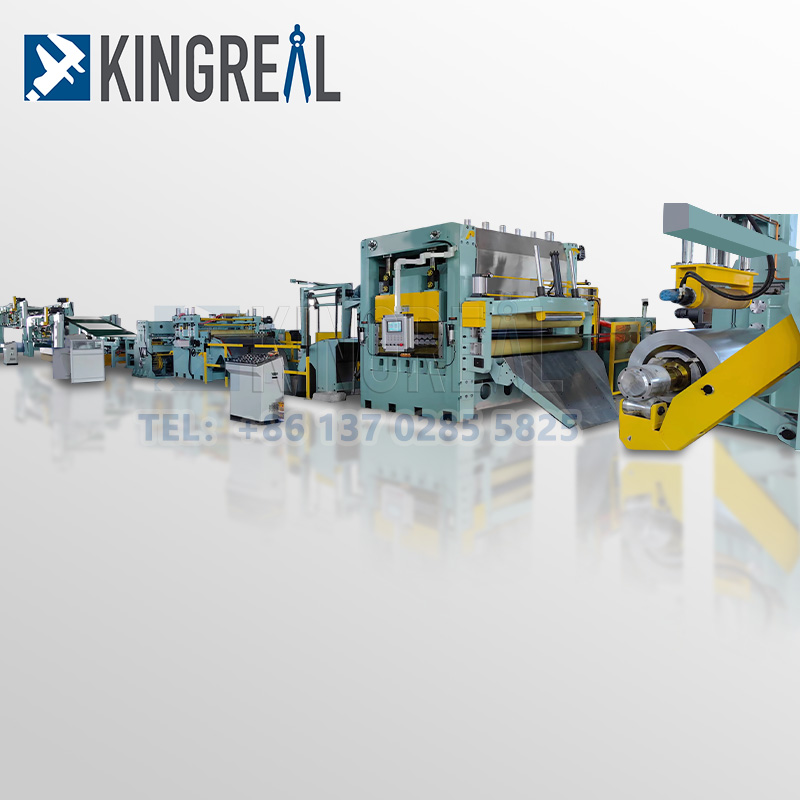
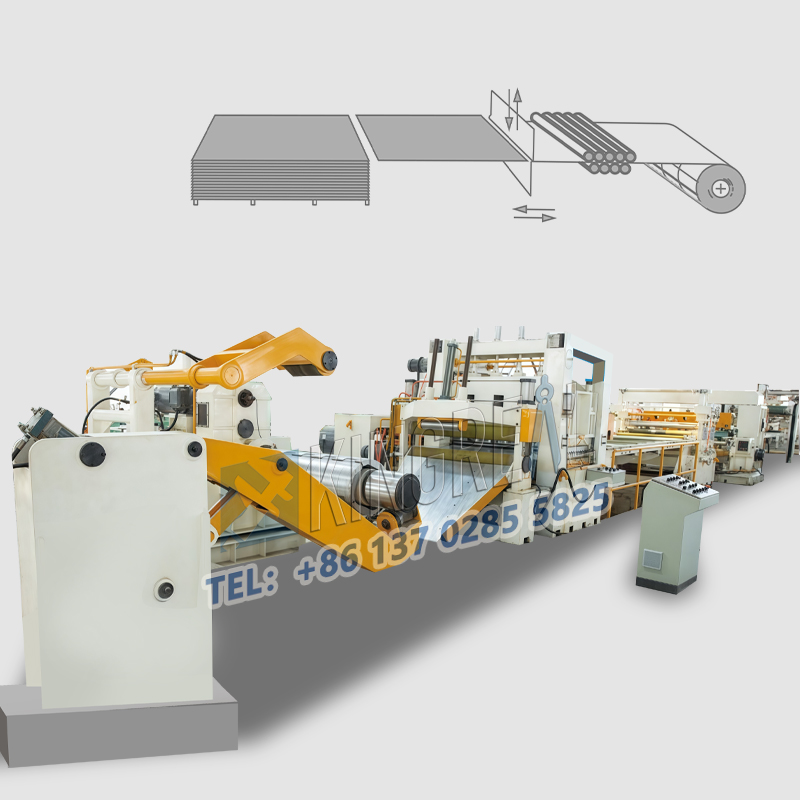
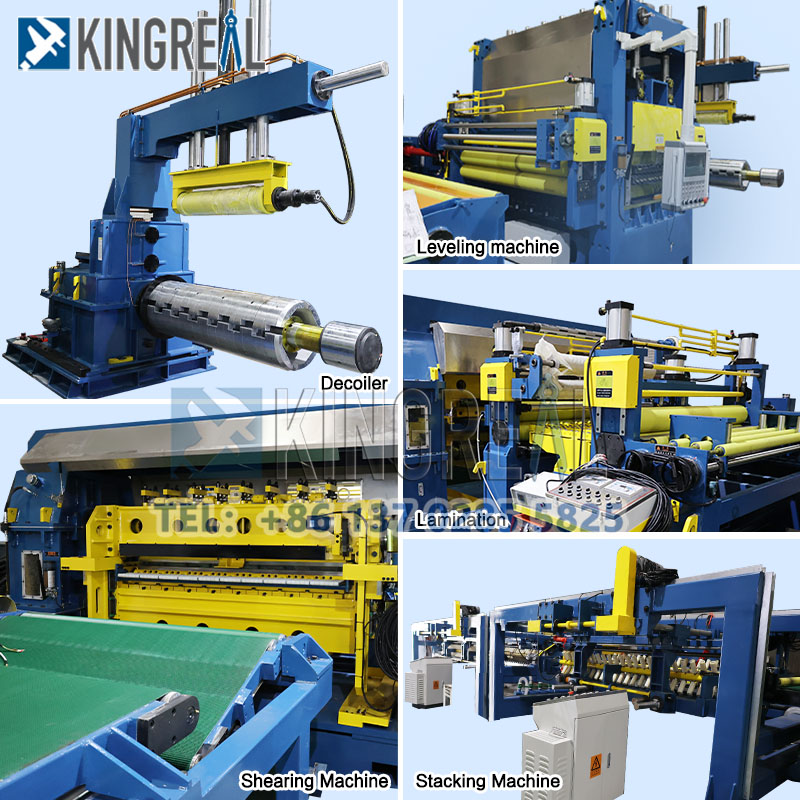
A precision cut to length machine is an integrated automated production system; its standard process flow includes decoiling, leveling, measuring, and shearing to a predetermined length.
Compared to traditional manual operations, automated precision cut to length lines offer significant advantages:
|
High Precision: Length tolerances are guaranteed through servo control systems. High Safety: Fully automated operation minimizes direct contact between personnel and heavy materials. Consistent Quality: Eliminates random errors associated with manual operation, ensuring stable quality in mass-produced sheets. |
 |
1. Leveler for Precision Cut to Length Machine
Leveling is a critical step in the precision cut to length line that determines the final quality of the sheet. During the coiling process, metal coils develop internal stresses and geometric deformations (such as waviness or coil set).
-Structural Classification: Typically equipped with 4-Hi or 6-Hi levelers.
-Working Principle: Repeatedly subjects the material to alternating bending via multiple sets of straightening rolls (work rolls) to eliminate stress and correct deformation.
-Technical Impact: The precision of the leveling machine directly determines whether the sheet metal will experience springback or warping after shearing.
2. Cut-to-length Machine for Precision Cut to Length Line
The cut-to-length machine is configured based on production efficiency and sheet thickness requirements. Common configurations include:
Flying Shear: The shear blade moves synchronously with the material during cutting; no need to stop the feed, making it suitable for high-speed production.
Stop Shear: Cutting occurs after the material feed stops; slower speed, suitable for customers without high-volume output requirements.
Swing Shear: Adjustable cutting angle; used for shearing trapezoidal sheets or special shapes.
Rotary Shear: Achieves continuous, high-speed cutting using blades mounted on rotating drums.
Technical Note: KINGREAL STEEL SLITTER customizes the optimal shearing system for the precision cut to length machine based on the material's mechanical properties and the customer's production capacity targets.
3. Stacker for Precision Cut to Length Line
The stacker receives the sheared flat sheets and stacks them neatly.
-Function: Ensures edge alignment during stacking and prevents surface scratches.
-Efficiency Optimization: High-output lines are typically equipped with a dual-stacker, allowing for switching between stacking positions without stopping the line, thereby ensuring continuous production.
|
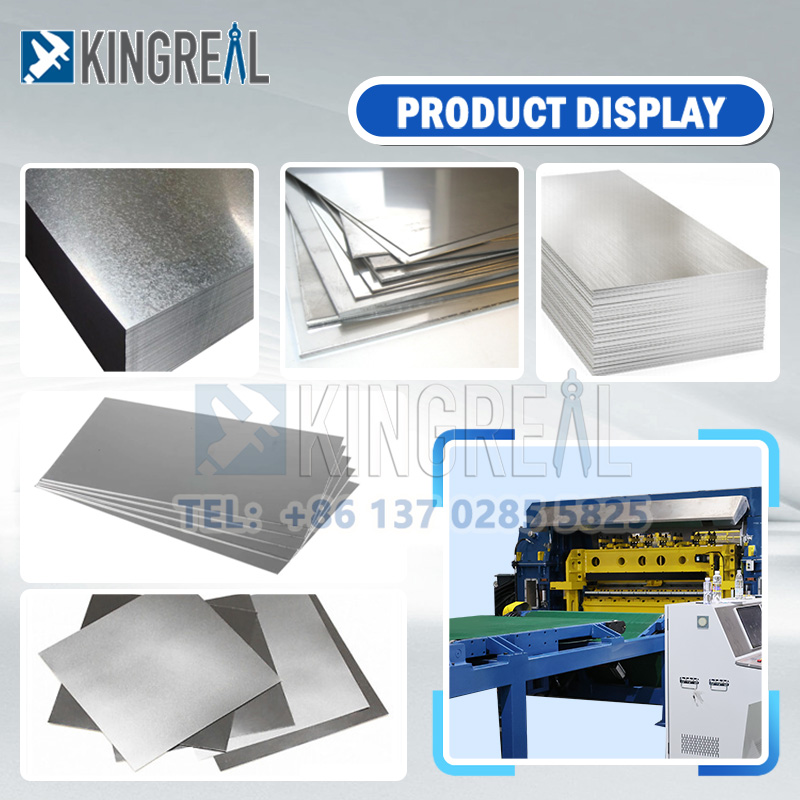
1. Automotive Manufacturing Used to produce body panels, chassis components, and decorative parts. Precision cut to length machines must support rapid batch changes and minimize scrap waste of expensive steel.
2. Construction Industry Processing of roofing panels, steel framing, and architectural cladding. These applications require sheets with excellent flatness and corrosion resistance.
3. Home Appliance Manufacturing Manufacturing refrigerator casings, washing machine panels, and HVAC components. The appliance industry demands extremely high standards for surface quality and dimensional tolerances.
4. Energy Sector Used for processing wind turbine housing components and support structures for solar panel frames. |
 |
1. Enhanced Material Processing Capabilities
With the widespread adoption of Advanced High-Strength Steel (AHSS) in the automotive industry, precision cut to length machines are now equipped with high-hardness alloy blades and highly rigid frame structures to prevent equipment wear or deformation when processing hard materials.
2. Automation and Digitalization of Production Lines
Precision cut to length lines integrate intelligent control systems (PLCs) to minimize manual labor. Equipment monitors operating parameters in real-time and uses data feedback to optimize feeding speeds and shearing pressure, further reducing labor costs.
3. Pursuit of Higher Production Speeds
Currently, KINGREAL STEEL SLITTER precision cut to length machines achieve a maximum stable production speed of 80 m/min. By optimizing servo response times and the power configuration of the leveler, KINGREAL STEEL SLITTER is committed to continuously increasing output while maintaining high precision.
Through high-precision raw material processing, precision cut to length line technology enables manufacturers to achieve efficient, accurate, and low-waste production.
We invite you to visit the KINGREAL STEEL SLITTER official website to learn more about the technical specifications and customized solutions for our precision cut to length machines; we are ready to help you optimize your production processes and enhance your product competitiveness.