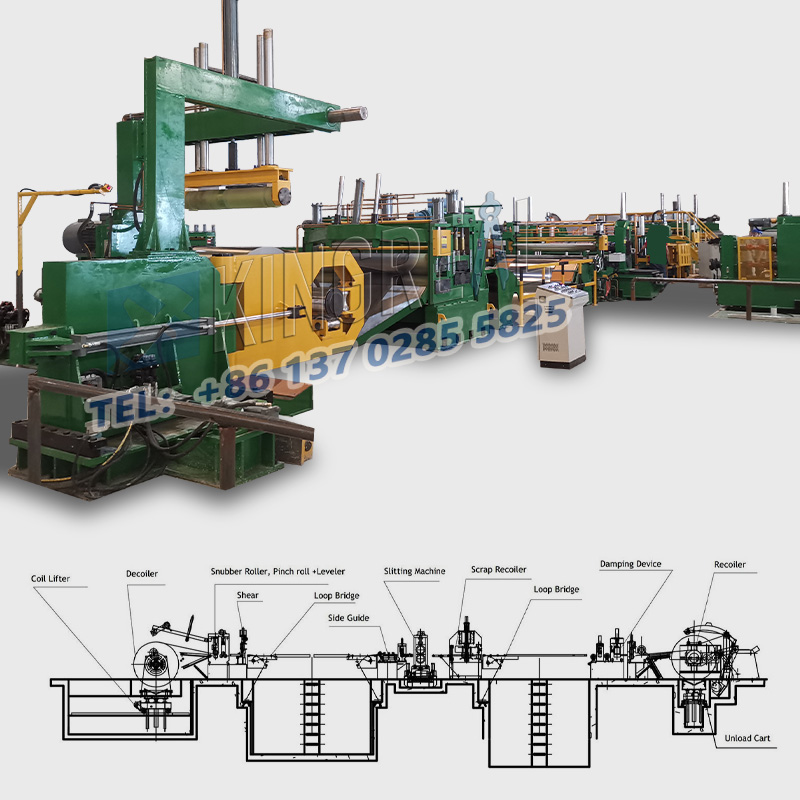
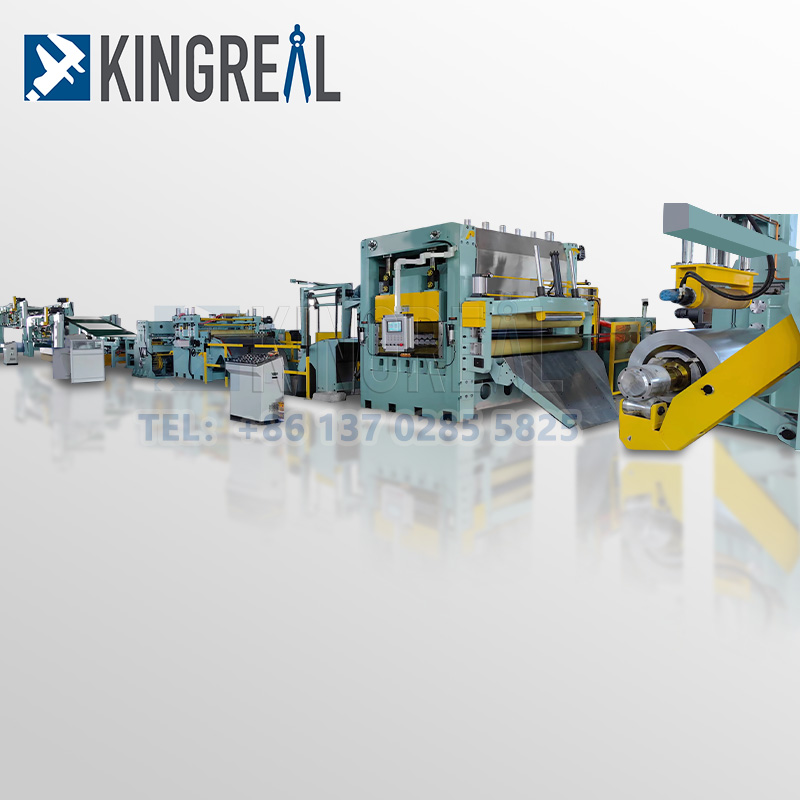
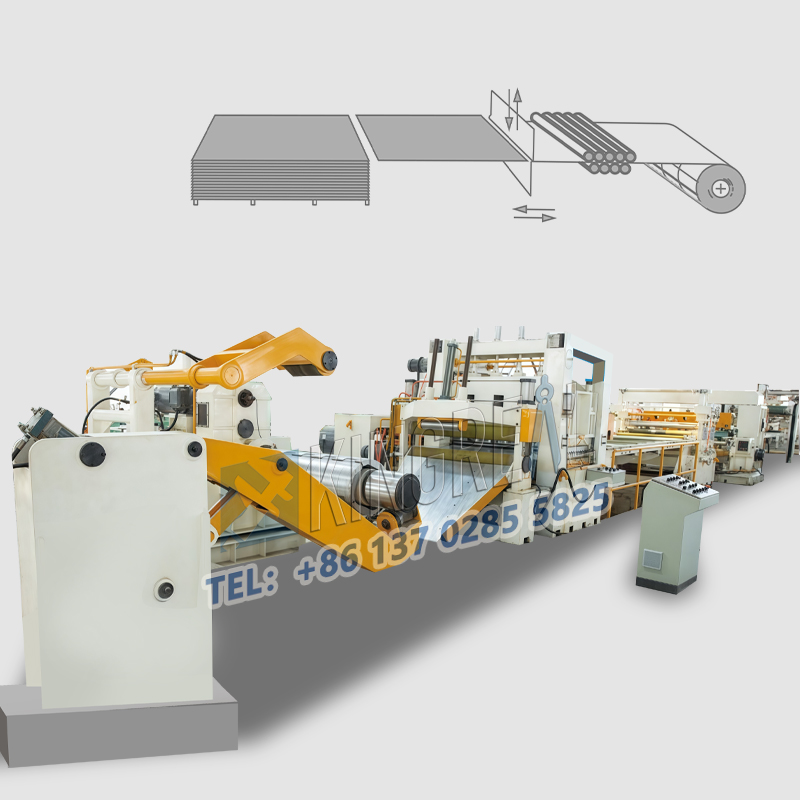
In modern manufacturing, metal slitting machines and coil cut to length lines are core equipment for longitudinal and transverse cutting of metal materials, widely used in industries such as steel, construction, automotive, and electrical appliances. When purchasing metal slitting machines and coil cut to length lines, users need to fully consider their own needs and actual conditions to choose the most suitable equipment. This article will detail the factors to consider when selecting metal slitting machines and coil cut to length lines to help the metal processing industry achieve efficient, precise, and intelligent production.
1. Selecting Metal Slitting Machine Type Based on Material Thickness
When purchasing a metal slitting machine, material thickness is a key factor. Different types of metal slitting machines can be selected based on the material thickness.
1.1 Thin Materials (0.2~3mm)
Applicable Models: Light Gauge Slitting Machine
Key Requirements:
High-Precision Guiding: Guiding accuracy must reach ±0.01mm to ensure accurate and consistent cutting.
Low Tension Control: Thin materials are prone to tensile deformation during processing, therefore an effective tension control system is needed to prevent material deformation.
Thin Blades: Blade thickness should be within the range of 0.3~0.8mm to reduce material loss. The core of a metal slitting machine lies in its guiding accuracy and tension control. These metal slitting machines are typically equipped with advanced tension control systems to ensure material stability during the cutting process.
1.2 Medium Materials (3.0~6.0mm)
Applicable Models: Medium Gauge Slitting Machine
Key Requirements:
Stable Tension Control: Tension control accuracy must be within ±2%~5% to ensure material cutting quality.
High-Strength Tool Holder: The tool holder must possess high strength to effectively prevent tool shaft deformation and improve overall machine stability.
Optional Automatic Grinding System: This feature extends blade life, reduces tool replacement frequency, and saves production costs.
Medium gauge slitting machines need to balance material stability and tool durability to meet the cutting requirements of medium-thickness materials.
1.3 Thick Materials (6.0~16.0mm)
Applicable Models: Heavy Gauge Slitting Machine
Key Requirements:
High-Rigidity Frame: A cast iron or welded reinforced frame is used to ensure the stability of the machine body when cutting thick materials.
High-power motor: Ensures the metal slitting machine has sufficient shearing force to process thick materials.
Wear-resistant carbide blades: Wear-resistant blades maintain sharpness under high loads, reducing blade change frequency.
When selecting a metal slitting machine, considering material thickness is fundamental to ensuring smooth equipment operation. Choosing the appropriate metal slitting machine type for different material thicknesses can significantly improve production efficiency.
2. Comparison of Tension Control Methods
Tension control is a crucial factor in the slitting process. Different tension control methods are suitable for different processing scenarios; users must select according to their actual needs.
|
Tension Control Type |
Precision |
Applicable Scenarios |
Advantages and Disadvantages |
|
Mechanical Tension |
±10% |
Low speed, low cost requirements |
Low price √ prone to fluctuation × |
|
Hydraulic Tension |
±5% |
Medium-thick standard slitting |
Good stability √ higher energy consumption × |
|
Servo Closed-Loop Tension |
±1% |
High-precision thin plate slitting |
Fast response and energy saving √ higher cost × |
|
Magnetic Powder Braking Tension |
±3% |
Medium-speed slitting (copper and aluminum processing) |
Easy adjustment √ high heat generation × |
3. Blade Selection and Life Optimization
Blades are an important component in metal slitting machines, and their selection directly affects cutting results and material loss.
3.1 Blade Material Comparison
|
Material |
Applicable Materials |
Lifespan |
Cost |
|
High-Speed Steel (HSS) |
Ordinary Steel, Aluminum |
Medium |
Low |
|
Hard Alloy (Tungsten Steel) |
Stainless Steel, Silicon Steel |
Long |
High |
|
Ceramic Coated Blades |
High-precision thin plates |
Longer |
Higher |
3.2 5 Tips to Extend Blade Life
Regular Grinding: It is recommended to check and grind the blades every 8 hours to ensure a sharp cutting edge.
Reasonable overlap: The overlap is typically set at 10%~15% of the material thickness to ensure smooth cutting.
Lubrication and cooling: Using lubricating oil during cutting reduces deformation caused by thermal stress.
Avoid overloading: Reasonably control cutting speed and material thickness to avoid overloading the equipment.
Use an automatic tool setting system: Automatic tool setting reduces human error and improves accuracy.
1. Define processing requirements
When purchasing a coil cut to length line, first define your processing requirements, including material type, specifications, and production efficiency.
1.1 Material type and specifications:
Users should confirm the type of material to be processed (e.g., silicon steel, carbon steel, stainless steel, etc.) and its thickness and width range to ensure the selected coil cut to length line can cover the required material specifications and leave some room for expansion. For example:
Light gauge cut to length line: Suitable for shearing materials with a thickness between 0.2-3mm.
Medium gauge cut to length line: Suitable for shearing materials with a thickness between 0.3-6mm.
Heavy gauge cut to length line: Suitable for shearing materials with a thickness between 6-25mm.
1.2 Production Efficiency Requirements
Based on production scale and output requirements, select an appropriate shearing speed and degree of automation. For large-volume production, a high-speed model is recommended; for high precision requirements but small production batches, a low-speed, high-precision model is more suitable.
2. Focus on Core Performance Parameters
2.1 Tooling System
The material of the tool, such as cemented carbide or high-speed steel, will affect machining accuracy and durability. Generally, the higher the cutting edge precision, the better, typically within ±0.01mm. Furthermore, the ease and cost of tool replacement should be considered; a tooling system that allows for quick replacement should be preferred to reduce downtime.
2.2 Transmission Method
The transmission method of the coil cut to length line is also a key indicator. Servo motor-driven models typically offer higher precision and lower noise, suitable for thin plates and precision machining; while hydraulically driven models provide more powerful output and are suitable for thick plate shearing operations.
2.3 Positioning Accuracy
Positioning accuracy directly affects the straightness and dimensional consistency of the cut. A repeatability accuracy of ≤±0.02mm is recommended to ensure efficient and stable production.
2.4 Control System
Prioritize control systems from well-known brands (such as Siemens). Their user-friendly interface supports CAD import or custom programming, making them more convenient to use and effectively improving production efficiency.
3. Safety and Maintenance Considerations
3.1 Safety Configuration
Ensure the coil cut to length line is equipped with photoelectric protection devices, emergency stop buttons, and fully enclosed protective covers to ensure operator safety. These safety features not only reduce the risk of accidents but also comply with relevant industry safety standards.
3.2 Ease of Maintenance
Users should also consider the ease of coil cut to length line maintenance, including the ease of checking the lubrication system, the ease of tool replacement, and whether the coil cut to length line's structural design facilitates daily maintenance and repair. Furthermore, understanding whether the manufacturer provides long-term supply support for vulnerable parts is also crucial.
4. After-Sales Service
Choosing a manufacturer that provides comprehensive after-sales service is essential to ensure the long-term stable operation of the coil cut to length line. Good after-sales service should include installation and commissioning, operation training, coil cut to length line troubleshooting, and spare parts supply to help users solve various problems during use.
5. On-site Trial and Verification
When selecting a coil cut to length line, on-site trial is recommended. Request the supplier to provide processed samples to visually evaluate the shearing quality of the coil cut to length line. This includes burrs on the cut, perpendicularity, and dimensional accuracy, factors that directly affect the quality of the final product.
By thoroughly understanding and mastering these factors, users can achieve efficient, precise, and intelligent production in the metal processing field. If you have specific needs regarding metal slitting machines and coil cut to length lines, please feel free to contact KINGREAL STEEL SLITTER. We will provide you with professional service and support!