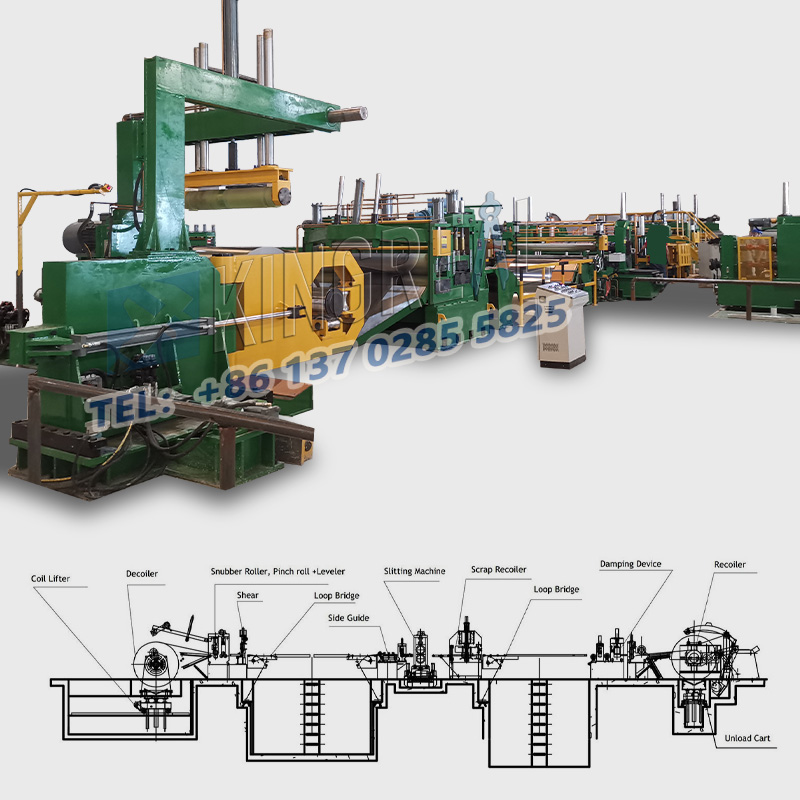
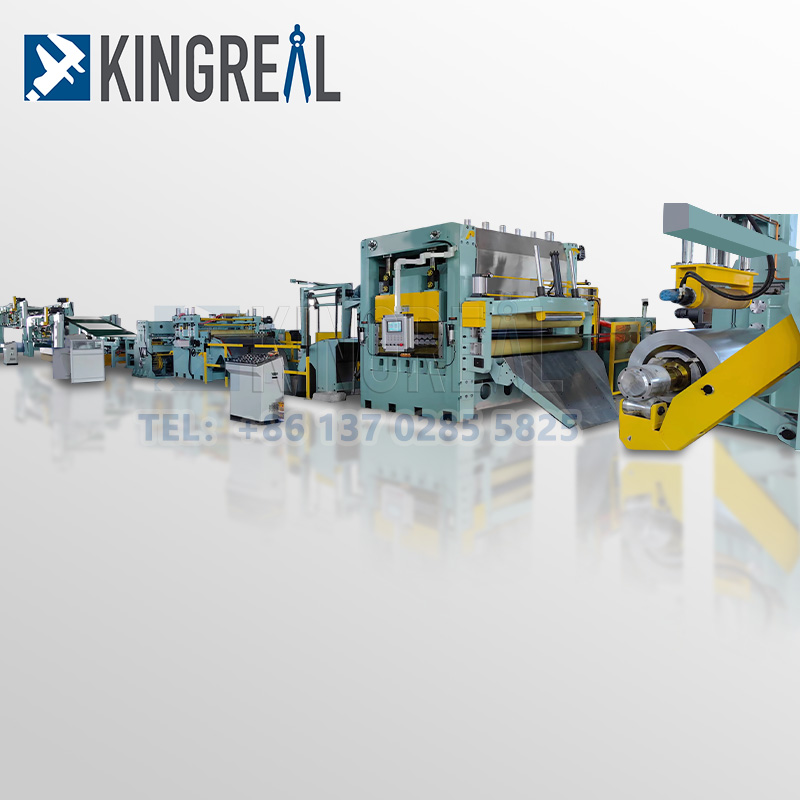
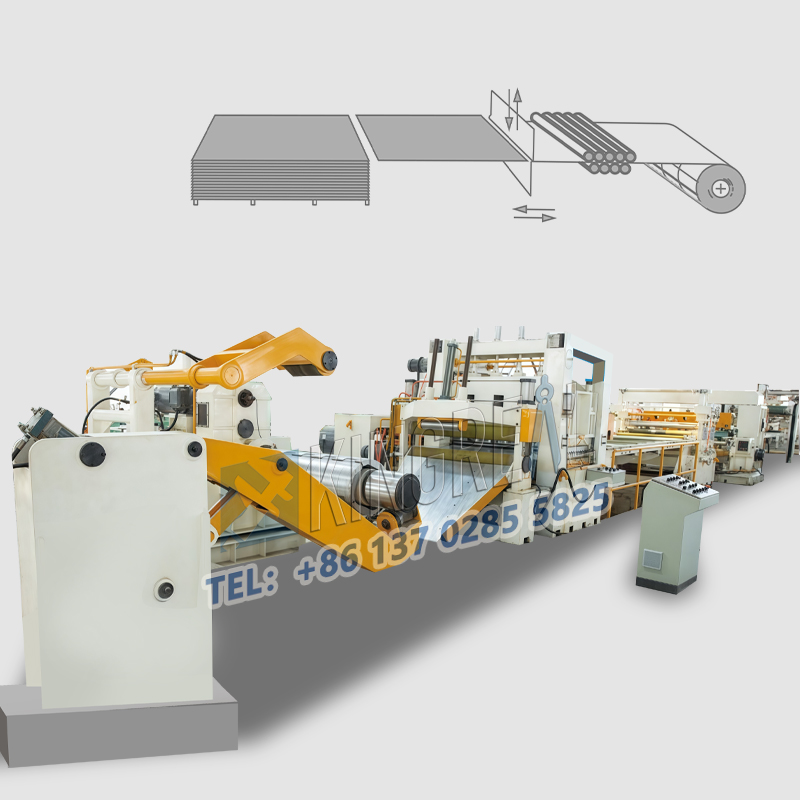
In the metal coil processing industry, sheet metal slitting machines are used for longitudinally cutting various metal coils, and are widely used in the fine processing of raw materials such as steel, aluminum, and copper. High-performance professional sheet metal slitting lines in the industry can reach speeds of up to 230 m/min, ensuring the stability and precision of the entire sheet metal slitting machine's high-speed operation, significantly improving the production efficiency of metal coil processing, and meeting the needs of large-scale, high-precision industrial production.
Many users focus on the maximum operating speed of sheet metal slitting lines when purchasing and using them. However, the actual operating speed of a sheet metal slitting machine is not fixed and is constrained by multiple factors. To fully utilize the 230 m/min high-speed performance of a sheet metal slitting line, it is necessary to comprehensively understand the various core factors affecting its operating speed.
1) Material Thickness
The greater the thickness of the metal material, the greater the shearing and compressive force required for the sheet metal slitting machine, resulting in a higher load on the equipment. High-speed operation can easily lead to incomplete cutting and sheet misalignment. Therefore, when processing thick metal coils, the slitting machine's operating speed must be reduced to ensure cutting quality.
2) Material tensile strength
High-strength metal materials such as stainless steel and high-strength steel are hard and difficult to cut, significantly increasing the cutting load on the sheet metal slitting line blades. Forcing high-speed operation will accelerate blade wear and cause burr defects. Therefore, processing high-strength materials directly reduces the maximum safe operating speed of the sheet metal slitting machine.
3) Surface friction
Variations in the smoothness and texture of metal coil surfaces directly alter the strip tension and traction during slitting. Excessive friction can cause strip jamming, while insufficient friction can cause strip slippage, both interfering with the stability of the sheet metal slitting line at high speeds.
4) Material quality
If the metal coil has uneven thickness or surface defects such as scratches, bumps, or wrinkles, uneven force will occur during high-speed cutting by the sheet metal slitting line. To avoid scrap and protect the cutting tools, the operator will proactively reduce the sheet metal slitting machine's speed, severely restricting production efficiency.
1)Blade Sharpness
A dull blade on the sheet metal slitting line significantly increases cutting friction, generating a large amount of heat during operation. This not only causes burrs and deformation on the sheet metal edges but also increases the operating load on the equipment, forcibly limiting the sheet metal slitting machine's speed. Only by maintaining a sharp and intact blade can the slitting machine operate at high speed continuously.
2)Motor Power
Motor power affects the sheet metal slitting line's power output. The power of the winding and unwinding motors directly determines the maximum traction force of the equipment. Insufficient power cannot support the tension control of the strip at high speeds, directly capping the sheet metal slitting machine's operating speed.
1) Tension Control
Sheet metal slitting machines equipped with precise automatic tension control systems can dynamically adjust the strip tension in real time, eliminating problems such as strip slack, pulling, and misalignment caused by tension fluctuations, ensuring the sheet metal slitting line maintains a stable high-speed operating state.
2) Core Alignment Accuracy
Poor core alignment in the sheet metal slitting machine will cause uneven winding and inconsistent tension of the roll material. During high-speed operation, this can easily lead to roll misalignment and roll collapse, forcing the equipment to slow down or even stop.
The biggest factor restricting the overall production efficiency of sheet metal slitting machines is not cutting speed, but non-production time. Traditional sheet metal slitting lines are time-consuming and prone to downtime in the loading, blade changing, and unloading processes, significantly reducing overall capacity. Addressing this industry pain point, KINGREAL STEEL SLITTER has specifically optimized the sheet metal slitting machine's structural design, comprehensively shortening non-production time.
1) Loading Process
KINGREAL STEEL SLITTER can equip sheet metal slitting lines with multiple storage platforms. After the sheet metal slitting machine finishes processing the current roll of material, the storage platform can quickly transport new rolls to the worktable, eliminating the need for prolonged machine downtime while waiting for loading. Simultaneously, operators can hoist new rolls to an idle storage platform for later use. The entire process is seamless, significantly reducing the sheet metal slitting line's loading and waiting time.
2) Blade Changing
The sheet metal slitting machine features a dual slitter head structure. While one slitter head is operating at high speed, operators can change, adjust, and calibrate the blades on the other slitter head offline.
3) Unloading
The KINGREAL STEEL SLITTER sheet metal slitting line is equipped with a piano-type trolley and a cross-type turnstile coil-storage arm. After the sheet metal slitting machine finishes cutting the roll of material, the piano-type trolley quickly transports the finished sheet to the cross-type turnstile coil-storage arm for offline packaging and storage. The trolley then quickly resets, ready to assist the sheet metal slitting line in the next round of production. The entire process requires no machine downtime while waiting for unloading.
As a high-performance processing equipment, the KINGREAL STEEL SLITTER sheet metal slitting machine boasts a maximum stable operating speed of 230m/min. It is highly adaptable and can efficiently slit various metal coils, including stainless steel, galvanized sheet, cold-rolled copper strip, and aluminum strip. Operators can flexibly adjust the combination of the sheet metal slitting line's main blades and spacers according to production needs, processing finished coils of different widths. A precise tension clamping process then achieves perfect rewinding of the sheet metal.
While achieving an ultra-high production speed of 230m/min, the KINGREAL STEEL SLITTER sheet metal slitting machine maintains high-precision slitting standards, balancing production efficiency and finished product quality, perfectly adapting to various high-precision, high-volume metal coil processing scenarios.
For customized needs regarding high-speed, high-precision sheet metal slitting line, please contact KINGREAL STEEL SLITTER directly!