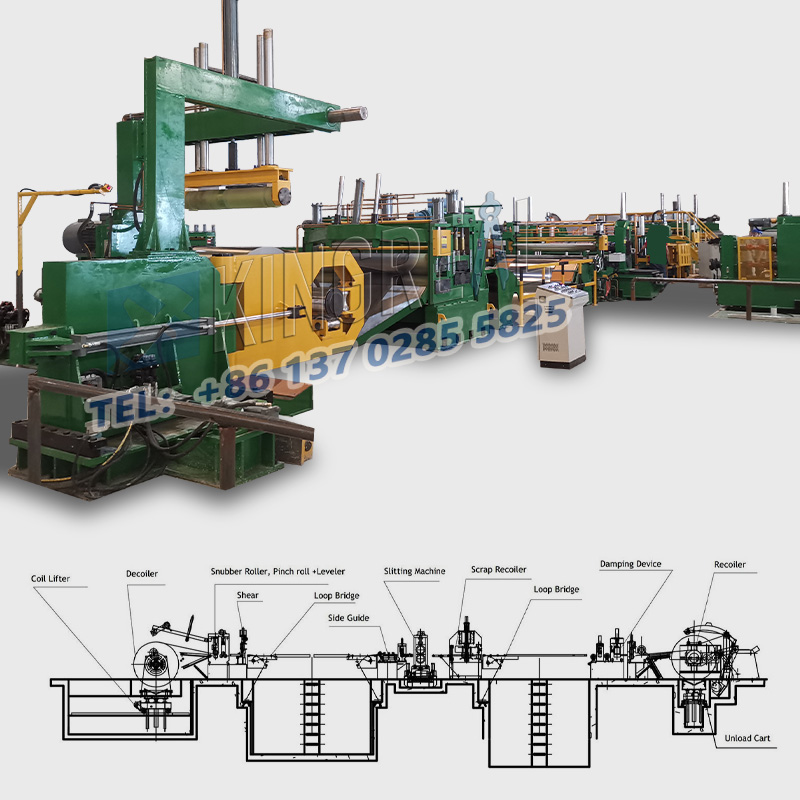
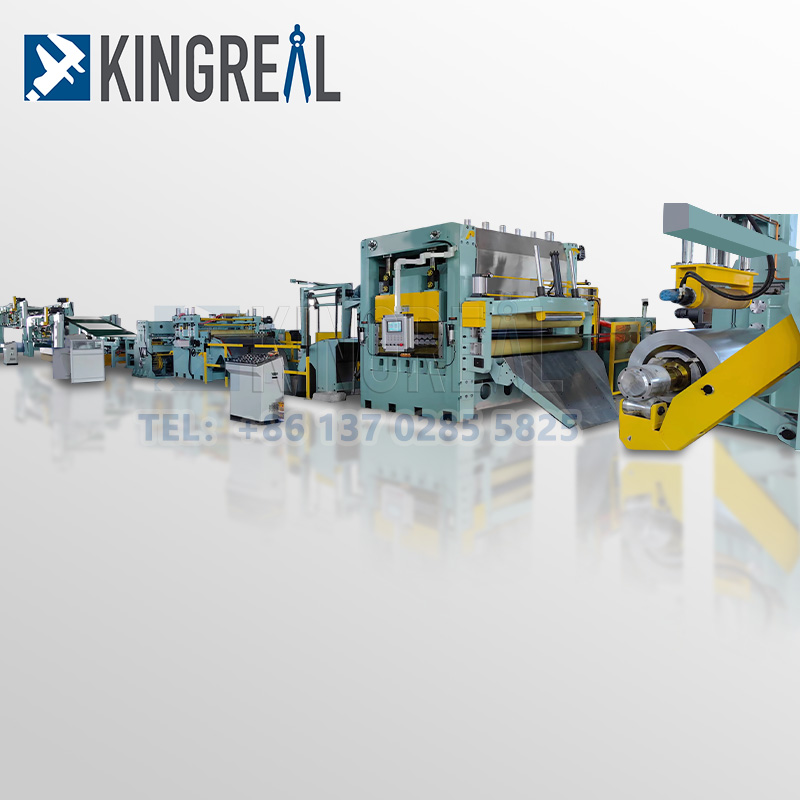
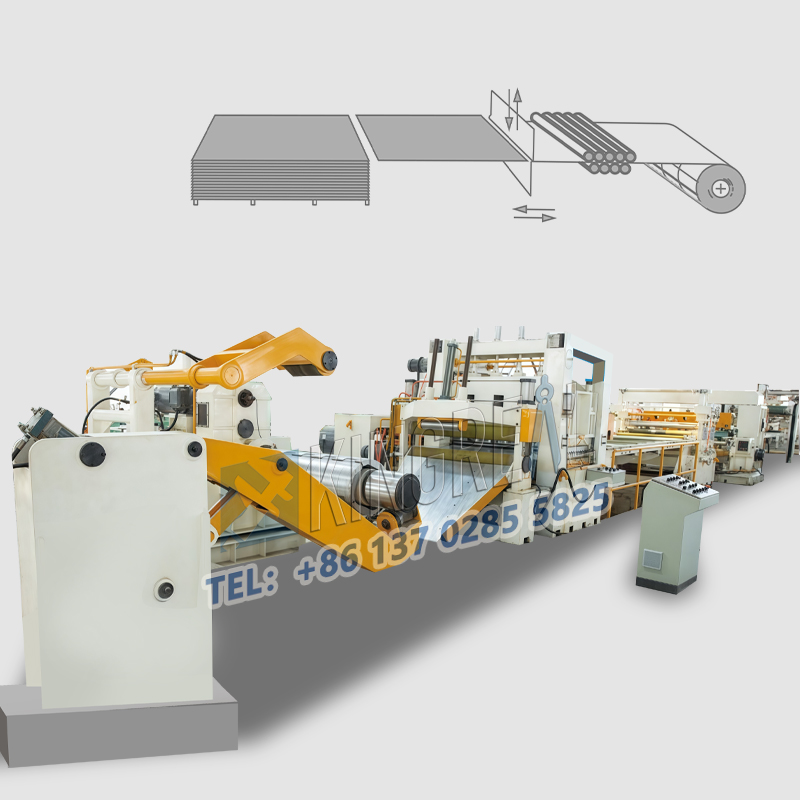
A steel coil slitting line is an important coil processing line designed to longitudinally cut wide metal coils into multiple narrow strips for subsequent processing. The steel coil slitting machine can handle a variety of materials, including steel, stainless steel, silicon steel, aluminum, copper, and PPGI. KINGREAL STEEL SLITTER steel coil slitting lines, with their high efficiency and precision, are the preferred choice for many manufacturing customers. This superiority stems from the perfect coordination of the steel coil slitting machine's internal precision mechanics and electronic components. Understanding the various components of a steel coil slitting line not only helps operators improve productivity but also minimizes downtime and ensures consistent slitting quality. Next, KINGREAL STEEL SLITTER will discuss the main components of a steel coil slitting machine in detail.
1. Decoiler
The decoiler is the primary component of a steel coil slitting line, responsible for clamping and conveying large metal coils to subsequent processing equipment. The decoiler must convey material with stable tension and a uniform speed to accommodate heavy metal coils of different types and weights. To ensure safe and efficient operation, the decoiler is equipped with a pneumatic expansion shaft or mechanical chuck to clamp the coil core and features a hydraulic or pneumatic lifting system for safe loading of heavy coils. Furthermore, the decoiler is equipped with a braking and tension control system to prevent overwinding or slack. An edge alignment system (EPC) also plays a crucial role in the decoiler, ensuring accurate centering of the coil upon entering the slitting area.
2. Main Slitter
The slitter is the core processing unit of the steel coil slitting line, responsible for longitudinally shearing wide metal sheets into narrow strips of a preset width. This unit boasts extremely high shearing precision, ensuring the quality of the final product. The slitting section typically employs upper and lower cutter shafts equipped with circular or razor blades for efficient cutting. Moreover, the main slitter has a blade holder for cutting width adjustment and a quick-change blade setup. Blade pressure modifications for materials of varied thicknesses also allow for accurate control of the cutting process. To further cutting precision and cut down on setup time, modern steel coil slitting machines often make use of servo-driven cutter shafts and automatic positioning systems.
3. Waste Collection Device
During the operation of a steel coil slitting line, the generated scrap edge material needs effective processing. The waste collection device works in conjunction with the steel coil slitting machine to synchronously coil up the scrap edge material generated during slitting, facilitating subsequent recycling.
4. Tension Station
The tension station plays a crucial role in a steel coil slitting machine, its main function being to provide stable tension during the sheet material transport process. Stable tension prevents the sheet material from becoming too loose or too tight during transport, ensuring a smooth slitting process. Tension control systems typically include load cells or tension rollers to monitor tension in real time. The associated automatic feedback control device can adjust the motor torque or braking force to maintain stable tension. This is crucial for ensuring the stretching and contraction of the metal material and avoiding uneven edges.
5. Recoiler
In the final stage of the steel coil slitting machine, the recoiler is responsible for rewinding each slit narrow strip into smaller coils. This process directly affects the quality of the final coil product. Key components of the recoiler include two or more rewinding shafts (center-driven or surface-driven) and a torque-controlled motor for precise control of winding tension. Pressure rollers are also an indispensable part of the recoiler to ensure tight and uniform coil production. To improve production efficiency, modern recoilers are also equipped with automatic unwinding or shaft changing systems, effectively achieving high-speed production. Some high-end steel coil slitting machines use differential shaft designs to compensate for tension differences between strips, ensuring perfect coil alignment.
6. Hydraulic System and Control Console
The hydraulic system is the power core of the steel coil slitting line, providing stable power to various hydraulic actuators and ensuring normal equipment operation. The design of the hydraulic system is crucial to the stability and production efficiency of the entire production line. The control console serves as the central hub of the entire system, responsible for setting processing parameters, monitoring operational status, and achieving overall operation and control. Through the console, operators can obtain key data in real time and make necessary adjustments to ensure the coordinated operation of all components.
Every part of the steel coil slitting machine—from uncoiling to recoiling—is vital in producing accurate, stable, and effective slitting results. Operators can maximize settings, minimize waste, and guarantee consistent coil quality by means of a complete knowledge of every part. Consequently, investing in suitable steel coil slitting lines has become absolutely critical for contemporary manufacturing companies to improve competitiveness. For more advanced steel coil slitting machine manufacturing solutions, please contact KINGREAL STEEL SLITTER—a professional manufacturer and supplier of precision steel coil slitting machines, committed to providing high-quality equipment and services for modern intelligent production lines.